"Young children are the most vulnerable group to pneumococcus, especially when infected with highly virulent types," stated Doctor Truong Huu Khanh, Vice Chairman of the Ho Chi Minh City Infectious Diseases Association. He made this comment at a scientific workshop on serotype dynamics in pediatric pneumococcal disease models, co-organized by the Ho Chi Minh City University of Medicine and Pharmacy last week.
According to Doctor Khanh, the invasiveness and virulence of pneumococcus vary among serotypes, necessitating a prevention strategy that broadly covers high-risk types. Pneumococcus is currently a leading cause of antibiotic resistance (AMR)-related deaths across all age groups. A 2019 study published in The Lancet estimated approximately 600,000 deaths linked to drug-resistant pneumococcus, with about 125,000 directly caused by this pathogen. Pneumococcus ranks among the top 4 most dangerous pathogens, contributing to the global burden of AMR-related mortality.
The World Health Organization (WHO) reports that each year, 1,6 million people die from pneumococcal disease, with about one million of these deaths occurring in children under 5 years old. This pathogen causes dangerous illnesses such as pneumonia, otitis media, and invasive infections like meningitis and sepsis. Vietnam is among the 15 countries with the highest rates of pneumonia in children, and it stands as a leading cause of morbidity and mortality in children under 5 years old.
Currently, over 100 pneumococcal serotypes have been identified. Among these, 23 serotypes account for 80-90% of invasive cases in children, including high-risk types such as 1, 3, 5, 6A, 7F, 8, 11A, 12F, 15A, 19A, 19F, and 31. Many studies indicate that young children face a high risk of infection with virulent pneumococcal types. Invasive infections can leave severe neurological, cardiovascular, and renal sequelae, with an estimated 25-50% of survivors experiencing long-term complications.
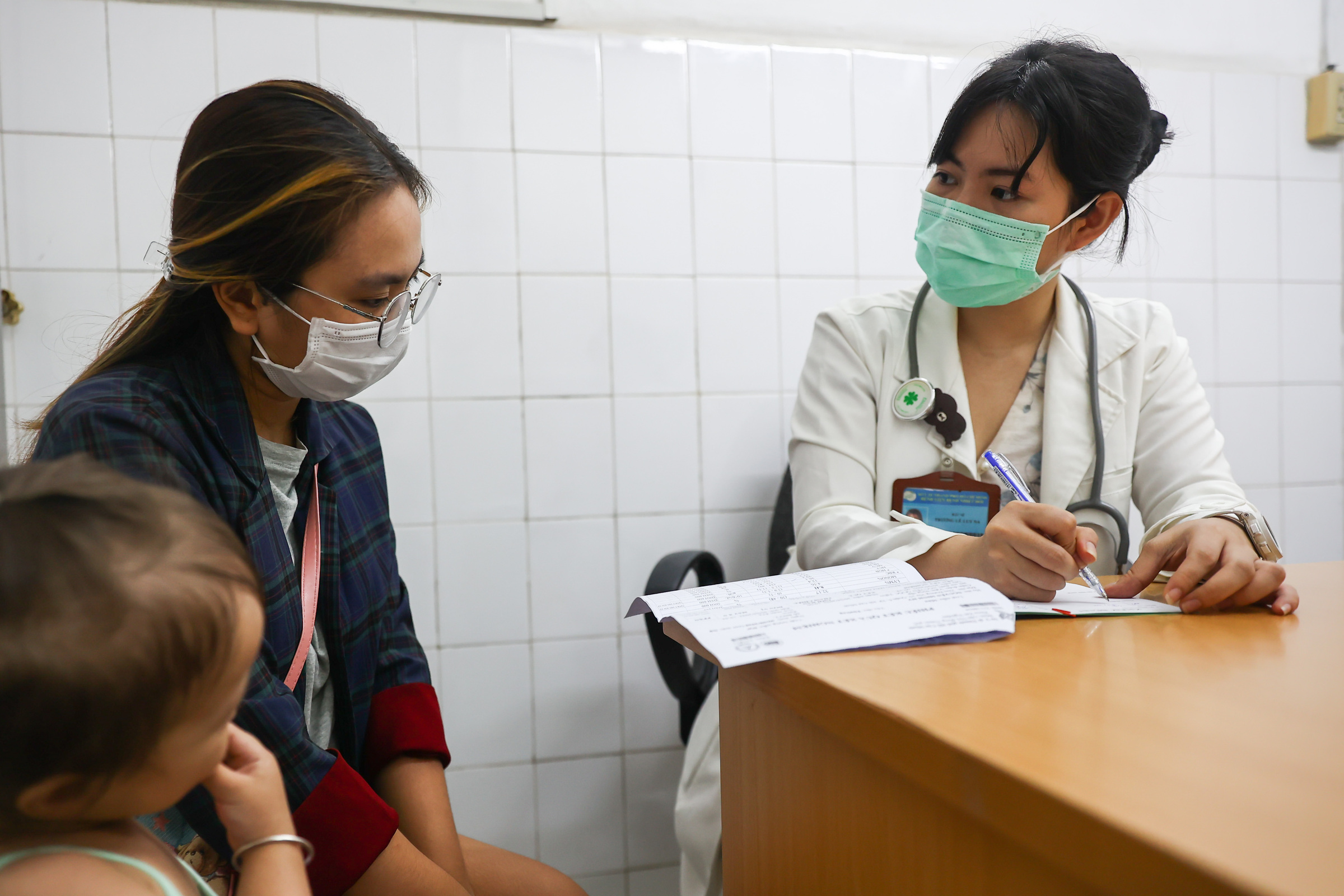 |
A doctor examines a child at Ho Chi Minh City Hospital for Tropical Diseases. Photo: Quynh Tran |
Given the escalating severity of antibiotic resistance, experts emphasize proactive prevention as the foremost strategic measure. This aligns with the direction of Resolution 72, which shifts the focus from treatment to disease prevention. This strategy involves raising community awareness, enhancing personal hygiene and living environments, and actively implementing early prevention.
Professor Javier Diez Domingo, from the Vaccine Research Institute, Fisabio Public Health Agency, Spain, asserted that the continuous circulation and evolution of pneumococcal serotypes create an urgent need for close monitoring to better control outbreaks. Implementing advanced prevention solutions that broadly cover high-risk types is a necessary approach to reduce the risk of illness and death, while proactively and sustainably protecting children's health.
According to WHO, vaccination is one of the most effective measures to reduce the disease burden. It not only protects individuals but also creates a "shield of immunity" for the community. Alongside vaccination, it is crucial to strengthen personal hygiene and living environments and to enhance community awareness about pneumococcal disease and its early warning signs for timely treatment.
The Vietnam Ministry of Health has currently licensed 5 types of pneumococcal vaccines. Four of these utilize conjugate technology, which helps create immunological memory and reduces pneumococcal carriage in the nasopharynx, contributing to long-term protection and enhanced community immunity.
Le Phuong