The 5:2 diet is an intermittent fasting regimen. In this method, individuals eat normally for five days a week and restrict calorie intake to 500-600 calories on the remaining two days.
Doctor Vo Tran Nhu Thao, from the Department of Endocrinology - Diabetes at Tam Anh General Hospital TP HCM, states that the 5:2 diet aims to reduce calorie consumption on fasting days to 25%—one-fourth of the normal intake on non-fasting days.
This diet offers flexibility, freeing individuals from daily restrictions. Instead of continuous dieting, participants focus on strict calorie restriction for two days each week. On these two days, despite limited calorie intake, the body continues to expend energy as usual, aiding weight loss. Dieters can choose any two non-consecutive days during the week. For example, if Monday is a calorie-restricted day, Thursday could be the next.
According to doctor Thao, on non-fasting days, individuals can eat normally but should limit high-sugar, high-fat, and processed foods. These often include refined carbohydrates like bread, pasta, and white rice, and excess fats such as cooking oil, animal fat, and cheese. Overeating during the five normal days to compensate for the two restricted calorie days can lead to weight gain rather than loss.
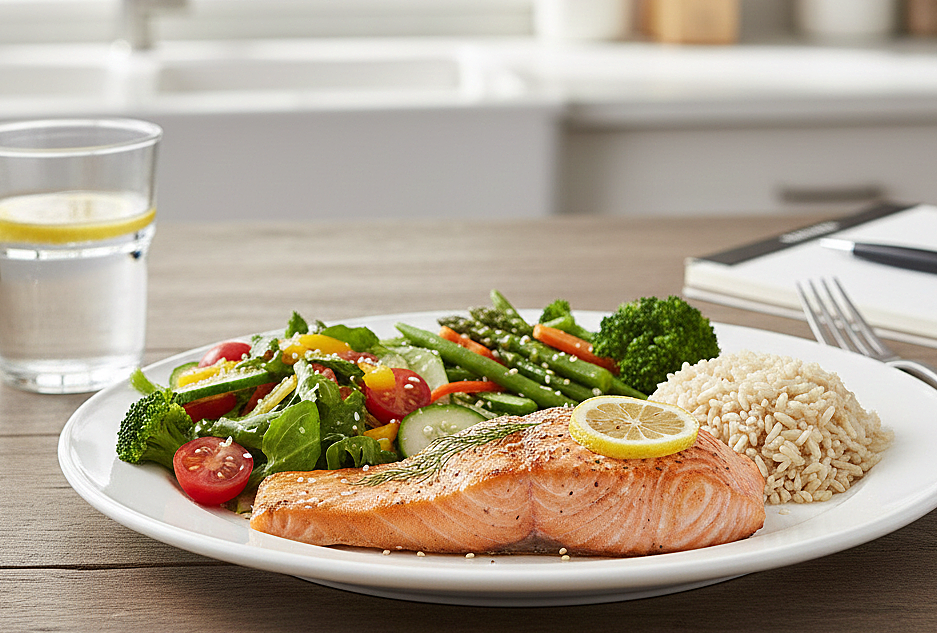 |
Salmon is rich in healthy lean protein, supporting weight loss. *AI generated image*.
To optimize weight loss with the 5:2 intermittent fasting method, consume three small meals (breakfast, lunch, dinner) or two slightly larger meals (lunch and dinner only) on the two restricted days. The main focus on these days is to reduce calorie intake. Prioritize nutrient-rich, high-fiber foods to promote satiety without consuming excessive calories.
The 5:2 diet may not be suitable for individuals with a history of eating disorders, those who frequently experience hypoglycemia, pregnant or breastfeeding women, or those with nutrient deficiencies.
Duc Hanh
| Readers can submit questions about endocrine diseases here for a doctor's response. |