Response from Master, Doctor Vu Viet Ha Vuong, Deputy Director of the Center for Reproductive Support at Post Hospital:
Infertility has various causes, including poor sperm quality, high rates of sperm abnormalities, or in women, ovarian dysfunction, blocked fallopian tubes, uterine conditions, ovulation disorders, thin uterine lining, or cervicitis.
Currently, assisted reproductive technology (ART) in Vietnam is advancing. Various treatment methods are available, such as intrauterine insemination (IUI), which involves injecting sperm into the uterus, and in vitro fertilization (IVF). For obstructive azoospermia, percutaneous epididymal sperm aspiration (PESA) is used to extract sperm from the epididymis through the skin. Non-obstructive azoospermia cases are suitable for testicular sperm extraction (TESE) or microdissection testicular sperm extraction (Micro TESE). However, approximately 50% of Micro TESE procedures do not yield sperm, necessitating sperm donation for conception, meaning the child will not carry the father's genes.
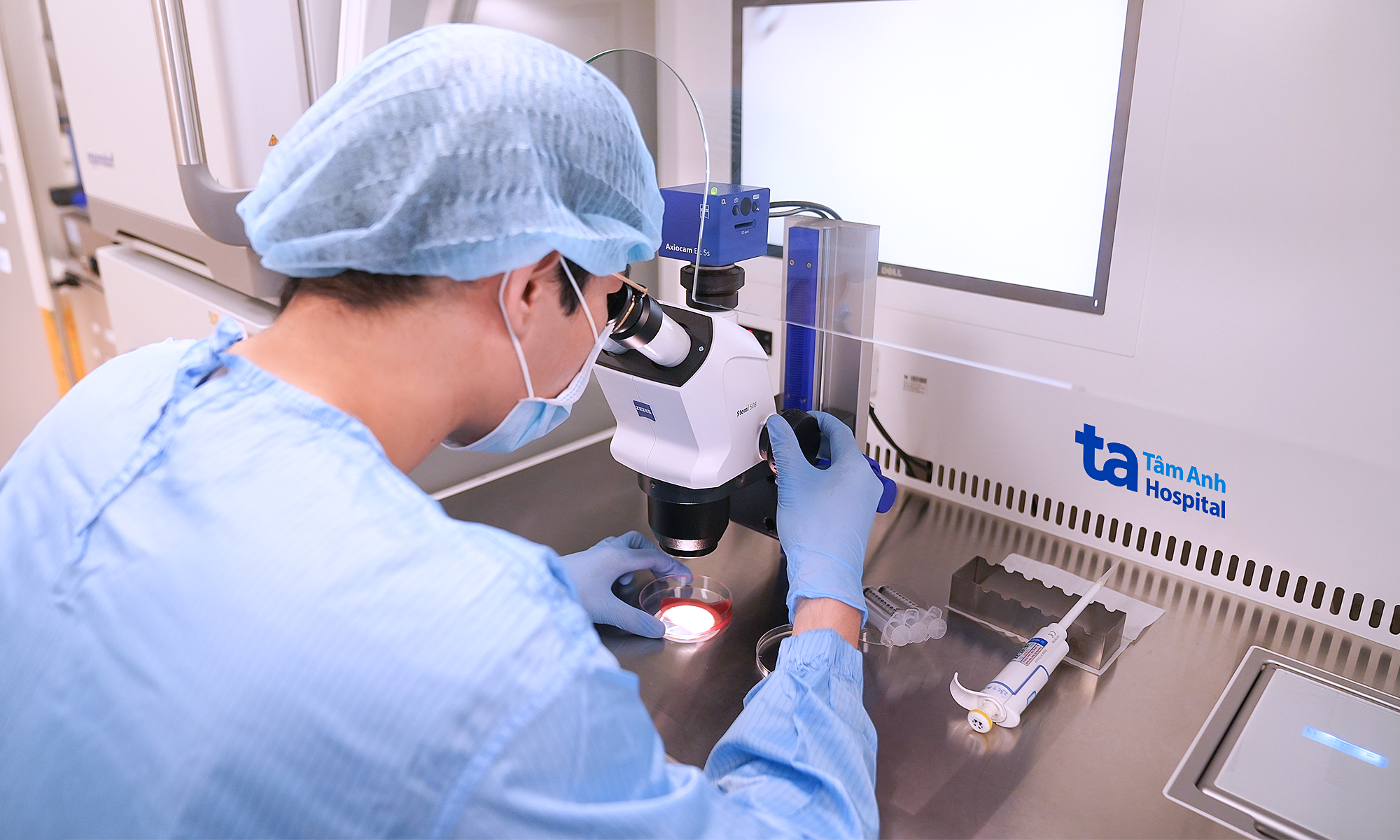
For men with no mature sperm, doctors can use round spermatid injection (ROSI), where round spermatids are injected into the oocyte cytoplasm and then cultured for fertilization. Specifically, using a super-magnified microscope, doctors locate immature sperm—pre-spermatozoa (spermatids before maturing into spermatozoa)—to fertilize the wife's egg. This technique demands meticulous skill, making its success significantly more challenging than fertilization with mature sperm.
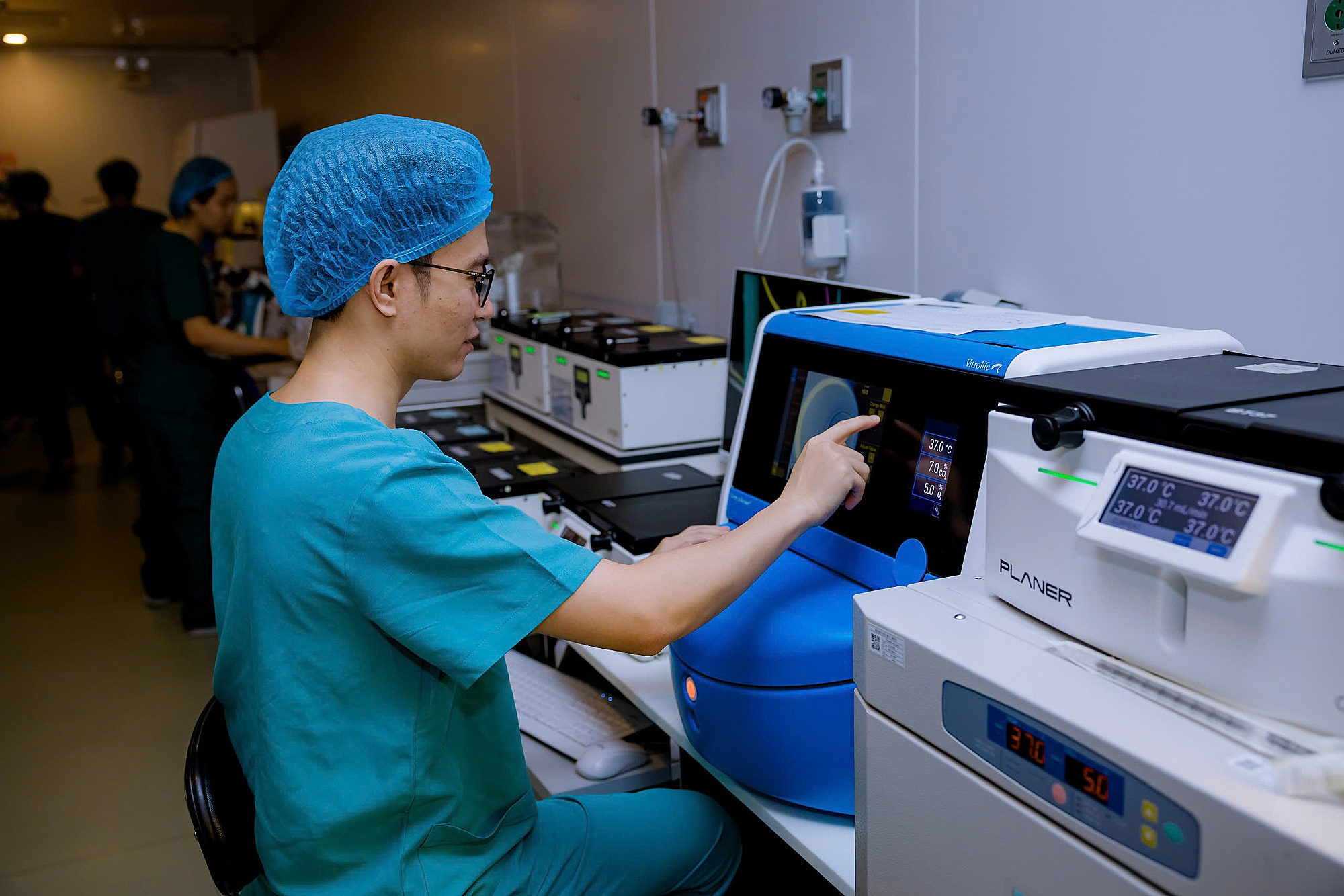 |
A lab at Post Hospital, where embryos are stored for patients. *Photo: Hospital provided* |
Doctors advise couples to undergo pre-marital health check-ups to rule out the risk of genetic diseases. If, after six months to one year of unprotected intercourse following marriage, conception has not occurred, seeking early medical consultation is recommended.
Master, Doctor Vu Viet Ha Vuong
Deputy Director, Center for Reproductive Support, Post Hospital