Individuals with high uric acid levels must always exercise caution in their daily diets. However, managing this condition can become simpler with a common beverage. A recent study indicates that this affordable drink acts as a natural "uric acid excretion promoter," aiding in lowering uric acid and improving kidney function indicators.
A study published in the International Journal of Rheumatology in 12/2025 revealed that daily consumption of fresh squeezed lemon water significantly reduces uric acid levels, particularly in gout patients and individuals with hyperuricemia. Researchers divided participants into three groups: gout patients, hyperuricemia patients, and a healthy control group. These participants drank diluted lemon water, prepared from two fresh lemons in two liters of water, daily for six weeks.
The results demonstrated an average uric acid reduction of 1,25 mg/dL in gout patients and 1,31 mg/dL in hyperuricemia patients, whereas the healthy group saw a reduction of only 0,85 mg/dL. Notably, kidney function indicators (glomerular filtration rate) in gout patients also improved significantly, proving the dual benefits of lemon water for this group.
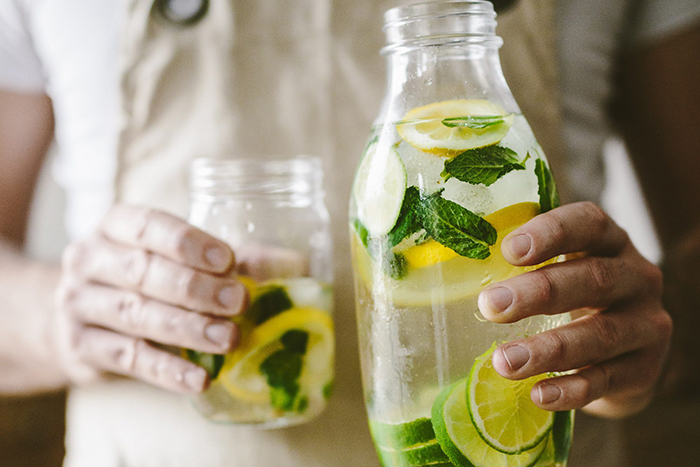 |
Illustrative photo: Emory Healthcare
Lemon water's effect in lowering uric acid stems from a "dual mechanism." Dr. Zhao Jijun, Head of Rheumatology and Immunology at Sun Yat-sen University First Hospital, told the Yangcheng Evening News that lemons are rich in natural citrate. After metabolism, citrate produces bicarbonate ions, which alkalize urine and raise its pH. This process enhances the dissolution and promotes the kidneys' excretion of uric acid, thereby limiting the deposition of urate crystals.
Additionally, Dr. Zou Benliang, Head of Endocrinology at Xiyuan Hospital of China Academy of Chinese Medical Sciences, stated that the abundant vitamin C in lemon water has also been shown by numerous studies to promote uric acid excretion.
While lemon water offers many benefits, users must consume it correctly to ensure effectiveness and safety. Lemon water should be mixed with warm water below 40°C to preserve its vitamin C content. Limit adding sugar, honey, or other sweeteners, as these will increase calorie and sugar intake, negatively impacting weight control and metabolism. Individuals with excess stomach acid, reflux, or ulcers should drink sparingly and only after meals to avoid stimulating acid secretion. After drinking, it is essential to rinse your mouth immediately with clean water to protect tooth enamel from erosion and mineral loss caused by the acidic environment.
Alongside proper lemon water consumption, managing uric acid also requires reducing intake of beverages that increase the risk of disease. Alcoholic beverages, including beer, white wine, whiskey, sake, and shochu, all elevate gout risk; higher consumption leads to greater risk. Therefore, it is advisable to abstain completely or substitute with tea during social gatherings.
Carbonated soft drinks, bottled fruit juices, milk tea, flavored coffee, and other fructose-containing drinks will worsen the condition. Fructose promotes uric acid production and hinders its excretion. Even pure fruit juice contains high levels of fructose, so it should be consumed minimally. Finally, seafood soups (such as shrimp, clams, and crab), hotpot broth after dipping meat, mushrooms, and seafood, along with thick, milky meat stews, contain very high purine and fat content, which can easily trigger acute gout attacks.
Binh Minh (According to HK01)