The prostate is a small gland located under the bladder, surrounding part of the urethra and responsible for producing seminal fluid. Prostate cancer often progresses slowly and silently, typically causing no symptoms in its early stages. Early detection, while the cancer is localized, provides patients with more treatment options and a better prognosis.
Doctor of Oncology II Ngo Truong Son, Deputy Head of the Oncology Department at Tam Anh General Hospital Hanoi, advises men to begin prostate cancer screening if they fall into a high-risk group. This includes men over 50 years old, those with a family history of prostate cancer, individuals carrying the BRCA2 mutation, or possessing other genetic predispositions. Doctors tailor screening and diagnostic methods based on individual risk factors and health status.
The prostate-specific antigen (PSA) blood test is often the initial screening method for prostate cancer. However, PSA levels offer supportive information and are not sufficiently specific for a definitive diagnosis. Elevated PSA can also result from benign prostatic hyperplasia, prostatitis, or other medical conditions, not just prostate cancer.
If a patient presents with elevated PSA levels, doctors may recommend additional diagnostic tests for prostate cancer, including MRI scans or biopsies.
 |
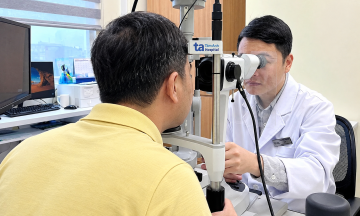
Doctor Son advises a patient on when to screen for prostate cancer. *Photo: Tam Anh General Hospital*.
A prostate MRI scan helps detect and assess suspicious lesions, pinpointing their location and level of concern. This information guides the decision on whether a biopsy is necessary.
Doctors typically interpret prostate MRI results and classify them using the PI-RADS system (Prostate Imaging-Reporting and Data System), ranging from 1 to 5, to indicate the level of suspicion for prostate cancer. PI-RADS 1 suggests a very low likelihood, PI-RADS 2 a low likelihood, PI-RADS 3 an intermediate or undetermined level of suspicion, PI-RADS 4 a high likelihood, and PI-RADS 5 a very high likelihood.
It is important to note that PI-RADS is not a definitive cancer diagnosis. Doctors integrate PI-RADS scores with PSA levels, PSA density, family history, and other risk factors to determine if a patient requires a biopsy.
A biopsy involves taking tissue samples from the prostate for histopathological examination. This procedure is crucial for confirming cancer presence, assessing its aggressiveness, identifying the histological type, and determining the cancer stage, all of which are vital for crafting an effective treatment plan.
Doctor Son emphasizes that prostate cancer screening should be tailored to individual risk profiles. Timely screening is crucial for detecting the disease in its early, localized stages, when a broader range of treatment options is available. This significantly improves the chances of disease control and enhances a patient's long-term prognosis.
By Hieu Nguyen
| Readers can submit their cancer-related questions here for expert medical advice. |