After drinking alcohol, it is difficult to pinpoint exactly when alcohol has been completely eliminated from the body. Allowing your body sufficient time to process alcohol helps reduce strain on the liver over time.
How is alcohol metabolized by the body?
After alcohol consumption, alcohol is absorbed through the digestive tract, enters the bloodstream, and distributes to body tissues. The liver metabolizes most alcohol in several ways, primarily through two types of enzymes responsible for breaking down alcohol molecules. These enzymes convert alcohol into intermediate products, which are then further broken down into water and carbon dioxide for bodily excretion.
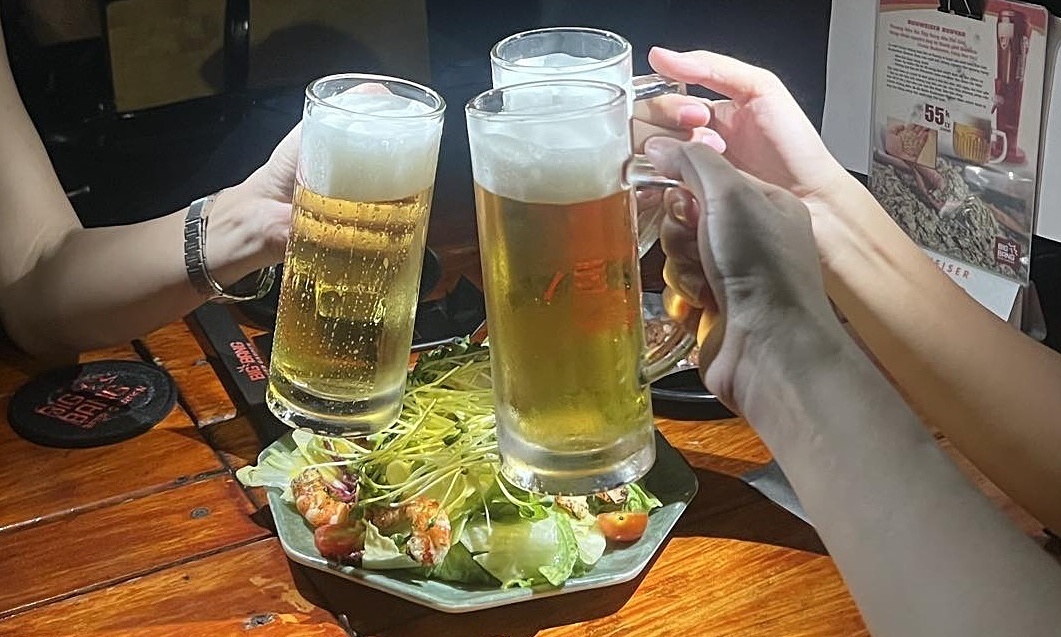 |
Alcohol in beverages requires time for the body, mainly the liver, to metabolize and eliminate. *Illustration: Anh Ngoc* |
Time for the body to eliminate all alcohol
No fixed time applies to everyone. For the same amount of alcohol, blood alcohol concentration and the time the body takes to process it can vary among individuals.
According to the National Institute on Alcohol Abuse and Alcoholism (NIAAA), the body metabolizes alcohol at a specific rate. Therefore, when drinking heavily or continuously in a short period, absorbed alcohol can exceed the liver's processing capacity, leading to an increase in blood alcohol concentration.
You cannot speed up this process by simply drinking coffee, taking a cold shower, or exercising. Feeling sober or no longer intoxicated does not mean the alcohol has left your system.
Factors affecting alcohol elimination time
The amount of alcohol consumed and drinking speed are two key factors. Drinking heavily or continuously causes blood alcohol concentration to rise quickly, extending the time the body needs to process it. Physical condition, age, biological sex, liver health, and certain medications can also affect how the body absorbs, metabolizes, and reacts to alcohol.
Beverage type also influences alcohol intake. High-alcohol beverages can lead to greater alcohol intake for the same volume. Food can slow alcohol absorption, especially when eaten before or during drinking. However, this does not mean food helps the liver break down alcohol faster.
Drinking water can limit dehydration but does not make the liver metabolize alcohol faster. Similarly, eating after drinking cannot remove alcohol already in the bloodstream. Coffee can make a drinker feel more alert due to caffeine stimulating the nervous system, but it does not reduce blood alcohol concentration.
The only way for the body to process alcohol is to wait for the liver to metabolize and eliminate it. Therefore, if you have consumed alcohol, do not rely on feeling sober or self-estimating the hours passed to decide to drive. When travel is necessary, use alternative transportation or ask someone who has not consumed alcohol to drive.
Bao Bao (Compiled)