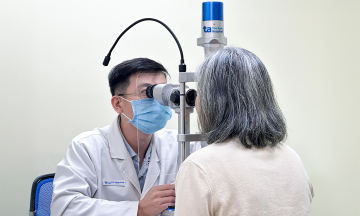
Early-stage lung cancer typically refers to stage one or two. At this point, the tumor is small, localized, and has not metastasized to lymph nodes or other organs in the body. The disease in its early stages often presents no symptoms and is usually discovered incidentally during routine health check-ups.
Master of Science, Doctor Vuong Ngoc Duong, Deputy Head of the Radiation Therapy Department at Tam Anh General Hospital Hanoi, stated that surgery is a common method for treating early-stage lung cancer, with the goal of radical treatment and preventing recurrence. However, some patients are not eligible for surgery due to factors such as inability to undergo anesthesia, advanced age, or severely weakened cardiovascular and respiratory functions. Some patients, despite being indicated for surgery, refuse it due to an aversion to invasive procedures.
For these cases, doctors prescribe stereotactic body radiation therapy (SBRT) as an alternative to surgery. "This technique can radically treat or control tumors as effectively as surgery", Doctor Duong said. SBRT is an advanced external beam radiation technique, similar in principle to stereotactic radiosurgery (SRS) for the brain, focusing very high and precise doses of ionizing radiation on the tumor to create a biological effect that destroys cancer cells.
 |
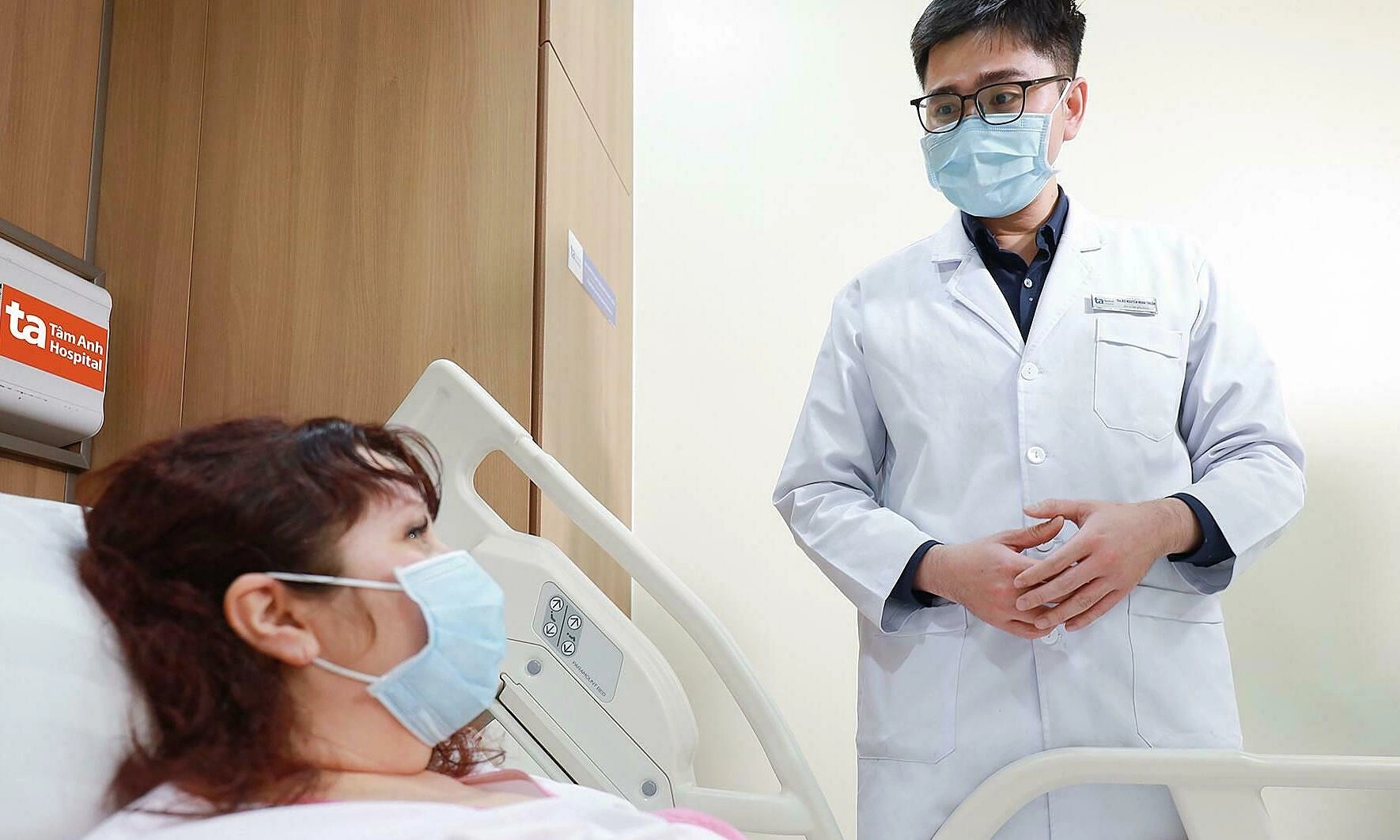
Doctors prepare a patient for lung cancer radiation therapy. Photo: Tam Anh General Hospital
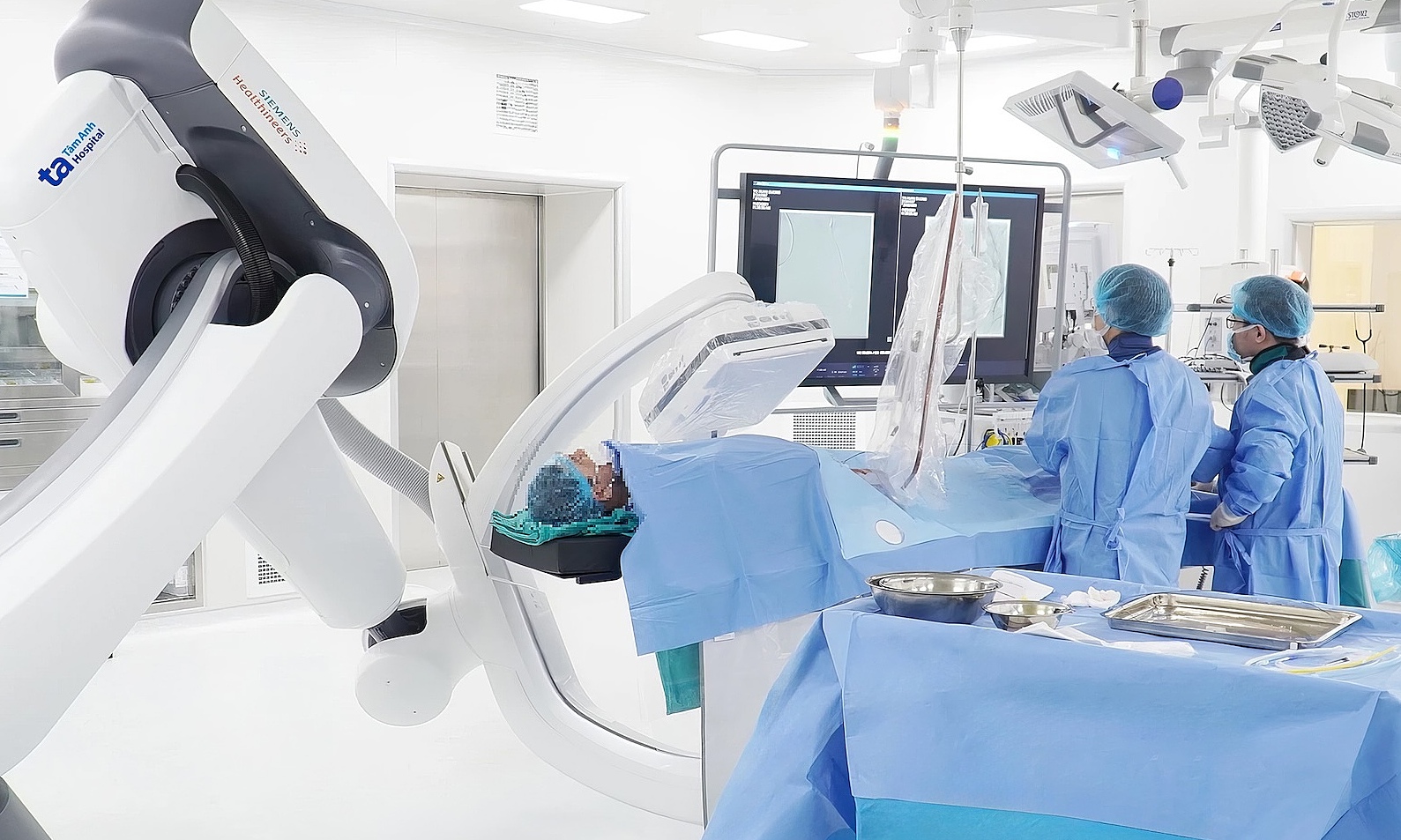
Unlike brain tumors, which move little, tumors in the body, especially lung tumors, often shift significantly when the patient moves, changes position, or breathes. Therefore, SBRT for lung tumors is more challenging and requires advanced techniques to ensure precise targeting of radiation beams, such as:
4D CT simulation: This technique is an improvement over 3D CT simulation, capturing three-dimensional images of the tumor within the body continuously throughout the respiratory cycle, from inhalation to exhalation. This allows doctors to accurately assess the extent of tumor movement with the patient's breathing, enabling more precise radiation therapy planning.
Image-guided radiation therapy (IGRT): Doctors perform on-site CT scans before each radiation therapy session to match the actual tumor position with the established treatment plan. If discrepancies are found, doctors adjust the patient's position or the treatment table before proceeding with irradiation, ensuring the radiation beam reaches the correct target throughout the entire course of treatment.
Surface-guided radiation therapy (SGRT): Systems scan the body using 3D camera arrays, creating a surface map of the body to monitor the patient's position in real time. If the patient moves or changes position beyond the permissible threshold, the system will issue a warning or automatically stop radiation delivery to ensure safety.
Intensity-modulated radiation therapy (IMRT, VMAT): The radiation machine uses a multi-leaf collimator system, with ultra-thin, fast-closing and opening leaves, to shape the beam precisely to the tumor's contour. This ensures the tumor receives the highest treatment dose while vital surrounding organs such as the heart, esophagus, spinal cord, and healthy lung tissue are maximally protected.
 |
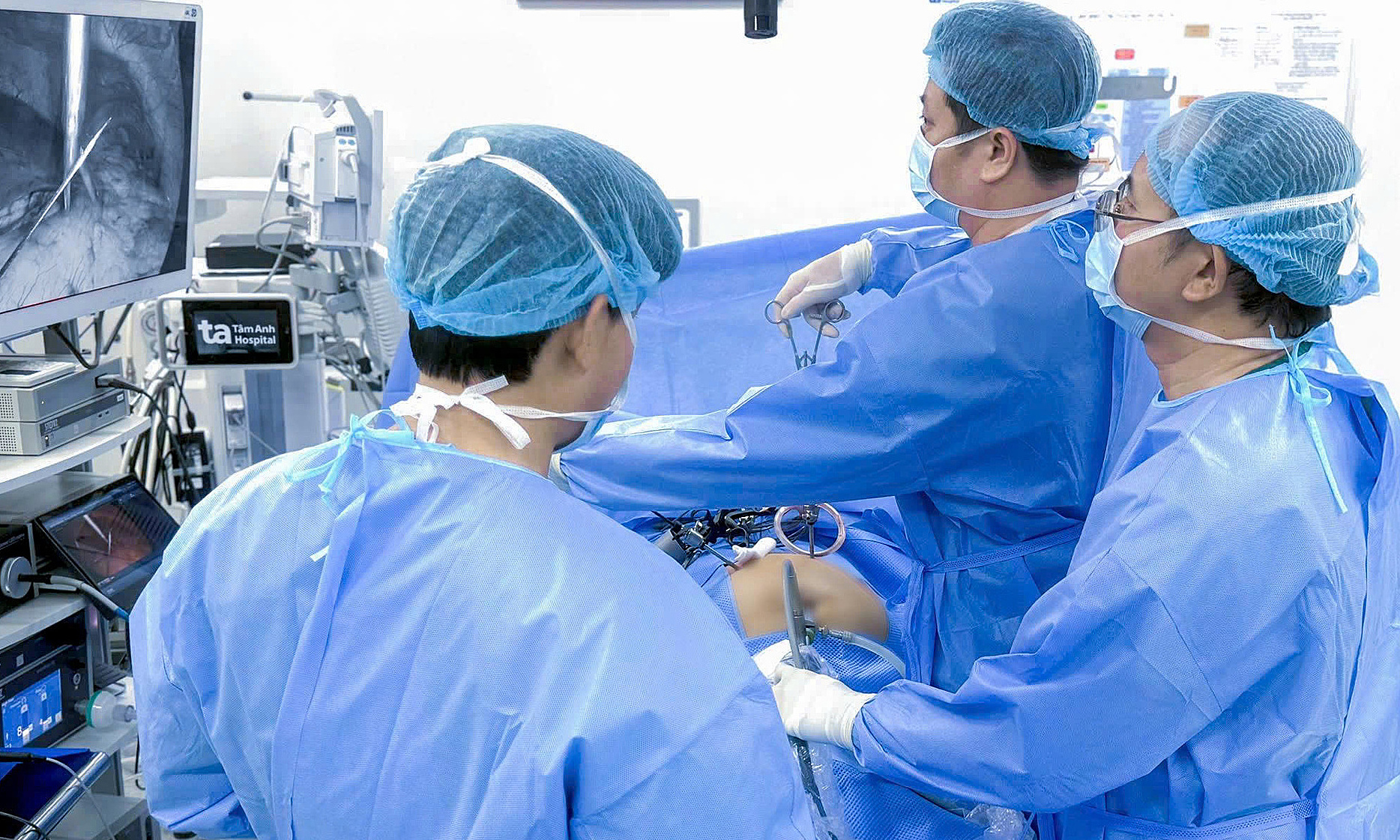
Doctors plan lung cancer tumor radiation therapy. Photo: Tam Anh General Hospital
Doctor Duong advises everyone to maintain regular health check-ups. Individuals at high risk, such as heavy, long-term smokers, those frequently exposed to toxic chemicals, or with a family history of lung cancer, should undergo lung cancer screening as advised by a doctor. Detecting the disease in its early stages increases the chance of radical treatment. Patients should visit multi-specialty hospitals with advanced radiation therapy units equipped with synchronized machinery for appropriate consultation and treatment.
Thanh Long
| Readers can submit questions about cancer here for doctors to answer |