Master, Doctor Phan Thi Hong Dang, from the Department of Radiation Therapy, Oncology Center, Tam Anh General Hospital Ho Chi Minh City, explains that skin is directly exposed to radiation during cancer treatment. She outlines common skin changes during radiation therapy and how proper care can aid recovery.
Redness
Skin redness, or radiation dermatitis, is a common side effect during and after radiation therapy, as radiation passes through the skin to target and destroy cancer cells. Damaged cells trigger a bodily response, increasing blood flow to the affected area for healing, leading to redness, tingling, burning sensations, or mild swelling. This redness may intensify over time as radiation therapy is administered daily or for several weeks to the same site.
Patients can alleviate these symptoms by using mild, alcohol-free moisturizers and bathing with warm water to keep the treated skin clean and dry. It is important to avoid vigorous rubbing and refrain from using cosmetics with strong detergents.
Flaking and Itching
Skin may become dry and mildly flaky due to moisture loss. This occurs when cells in the epidermis and dermis are damaged, leading to cell death, particularly in thin or folded skin areas. Normally, skin cells continuously divide to replace older layers. However, radiation's high energy can slow this regeneration, accelerating water loss and causing dry, tight skin. Patients should hydrate their skin with moisturizers, shield the treated area from sun exposure, and drink adequate water daily.
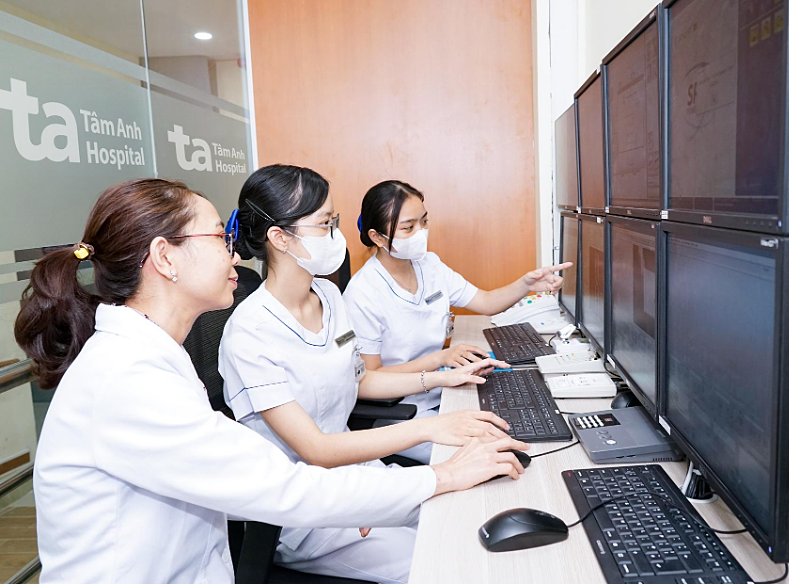 |
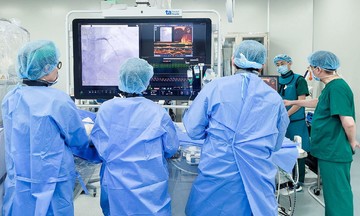
Doctor Dang (far left) monitors a patient undergoing radiation therapy via a computer system. Photo: Tam Anh General Hospital |
Doctor Dang (far left) monitors a patient undergoing radiation therapy via a computer system. Photo: Tam Anh General Hospital
Skin Darkening
Radiation therapy stimulates the body to produce more melanin, the skin pigment, as a protective mechanism, leading to skin darkening. Extended radiation regimens can cause prolonged and more intense skin darkening. However, as damaged cells heal post-radiation, the darkened areas will gradually fade.
Skin Thickening and Hardening
Post-radiation, skin can become thick or hardened, a condition known as soft tissue fibrosis. This occurs when radiation damage impedes tissue nourishment, leading to calloused, less elastic, and easily atrophied skin that may feel somewhat firm. Patients should consult their radiation oncologist for guidance on massage exercises or specialized products to soften tissues and enhance flexibility in the affected skin post-radiation.
Doctor Dang emphasizes that skin changes vary based on the radiation site, dose, duration, and individual physiology. All skin side effects post-radiation can be managed and typically improve over time. Patients should wear loose clothing, avoid direct harsh sunlight, and follow their doctor's care instructions to minimize and manage side effects, aiding faster recovery.
Nhat Minh