This data, included in WHO's Vietnam Hypertension Profile 2025, was presented by Professor Dr. Pham Manh Hung, President of the Vietnam National Heart Association, at the 20th National Cardiovascular Congress on 3/10. The event drew over 2,500 delegates, including 30 international experts and over 500 presentations.
Hypertension is a significant risk factor contributing to the rise of cardiovascular disease in Vietnam. Other factors include dyslipidemia, diabetes, smoking, overweight and obesity, physical inactivity, poor diet, and an aging population.
Hypertension is defined as blood pressure that is excessively high, exceeding the normal reading of 120/80 mmHg. Individuals with hypertension should aim for control below 130/80 mmHg, especially those with cardiovascular disease, diabetes, or chronic kidney disease. Effective blood pressure control, specifically a 5 mmHg reduction, can lower stroke risk by 13%, heart failure by 13%, ischemic heart disease by 8%, and cardiovascular mortality by 5%.
According to WHO, approximately 16,9 million Vietnamese adults aged 30-79 years live with hypertension. Of these, 51% have been diagnosed, 32% are receiving treatment, but only about 15% have their condition controlled.
Cardiovascular disease remains the leading cause of death worldwide. WHO estimated that in 2022, approximately 19,8 million people died from cardiovascular diseases, accounting for about 32% of global deaths. Around 85% of these fatalities were linked to heart attacks and strokes.
Addressing the low control rate, the Vietnam National Heart Association launched Charter 50/30. This initiative aims for at least 50% of hypertension patients to achieve target blood pressure control by 2030. According to Professor Hung, achieving this goal requires comprehensive hypertension management solutions from the health sector, including risk factor control, blood pressure measurement, early disease detection, appropriate treatment, treatment adherence, and long-term monitoring.
"Hypertension management is not solely the responsibility of tertiary hospitals," he stated, emphasizing the need for early detection, appropriate treatment access, and regular monitoring within the entire healthcare system. This necessitates strengthening the role of primary healthcare and community-based chronic disease management.
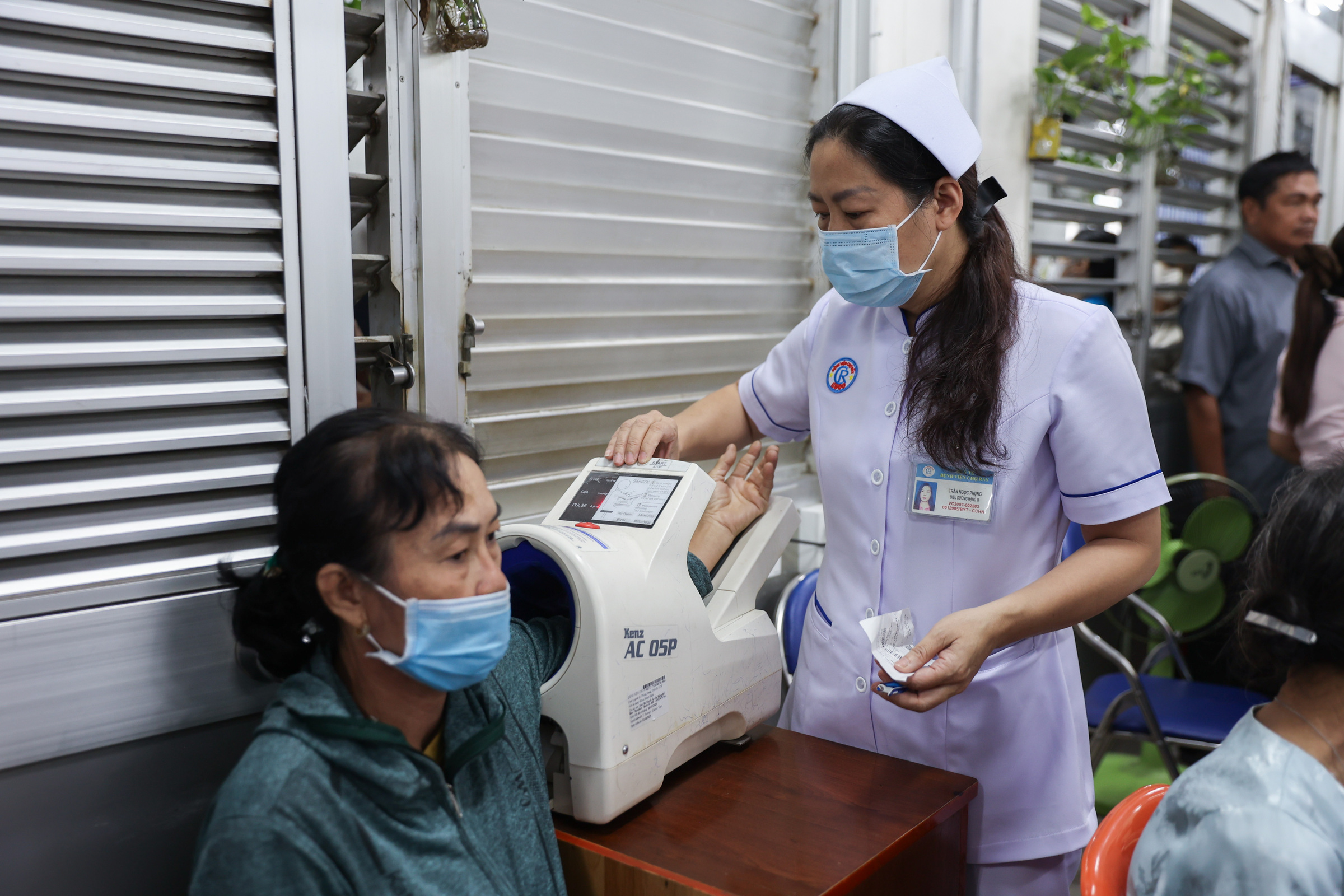 |
A patient has their blood pressure measured at Cho Ray Hospital. *Photo: Quynh Tran* |
At the conference, Dr. Ha Anh Duc, Director of the Department of Medical Examination and Treatment Management under the Ministry of Health, highlighted that cardiovascular disease remains a significant health challenge. The health sector must develop specialized techniques in tertiary hospitals while also strengthening prevention, early detection, diagnosis, treatment, and continuous patient management.
Dr. Duc asserted that medical advancements and recommendations are impactful when effectively implemented, ensuring that patients everywhere have access to safe, quality healthcare services. Given the large number of individuals with hypertension, relying solely on hospitals for patient management will be insufficient to meet demand. Therefore, primary healthcare must enhance its capacity for long-term patient detection, treatment, and follow-up.
Furthermore, behavioral changes are crucial for controlling risk factors. The public needs to maintain physical activity, adopt a balanced diet, manage weight, limit tobacco use, and proactively monitor blood pressure.
Le Nga