Answer:
Sinuses are hollow, air-filled cavities located within the facial bones. Sinusitis is an inflammation of the mucous membranes lining these cavities, characterized by swelling and excessive mucus discharge, often caused by viruses, bacteria, fungi, or allergies.
Acute sinusitis symptoms commonly include headache, runny nose, nasal congestion, fever, reduced sense of smell, bad breath, and pain around the eyes, nose, and cheeks. Chronic sinusitis persists for over 12 weeks. Recurrent sinusitis is defined as at least 4 episodes of acute sinusitis within one year.
Cold, low temperatures make the mucous membranes more sensitive, leading to moisture loss and reduced ability to filter out dust, bacteria, and airborne allergens. This weakens the respiratory immune system, allowing bacteria, viruses, and allergens to attack, causing the condition to recur and persist. Rhinosinusitis is prone to recurrence if underlying factors like allergic rhinitis, dental infections, or structural abnormalities such as a deviated nasal septum or enlarged turbinates are not well-controlled.
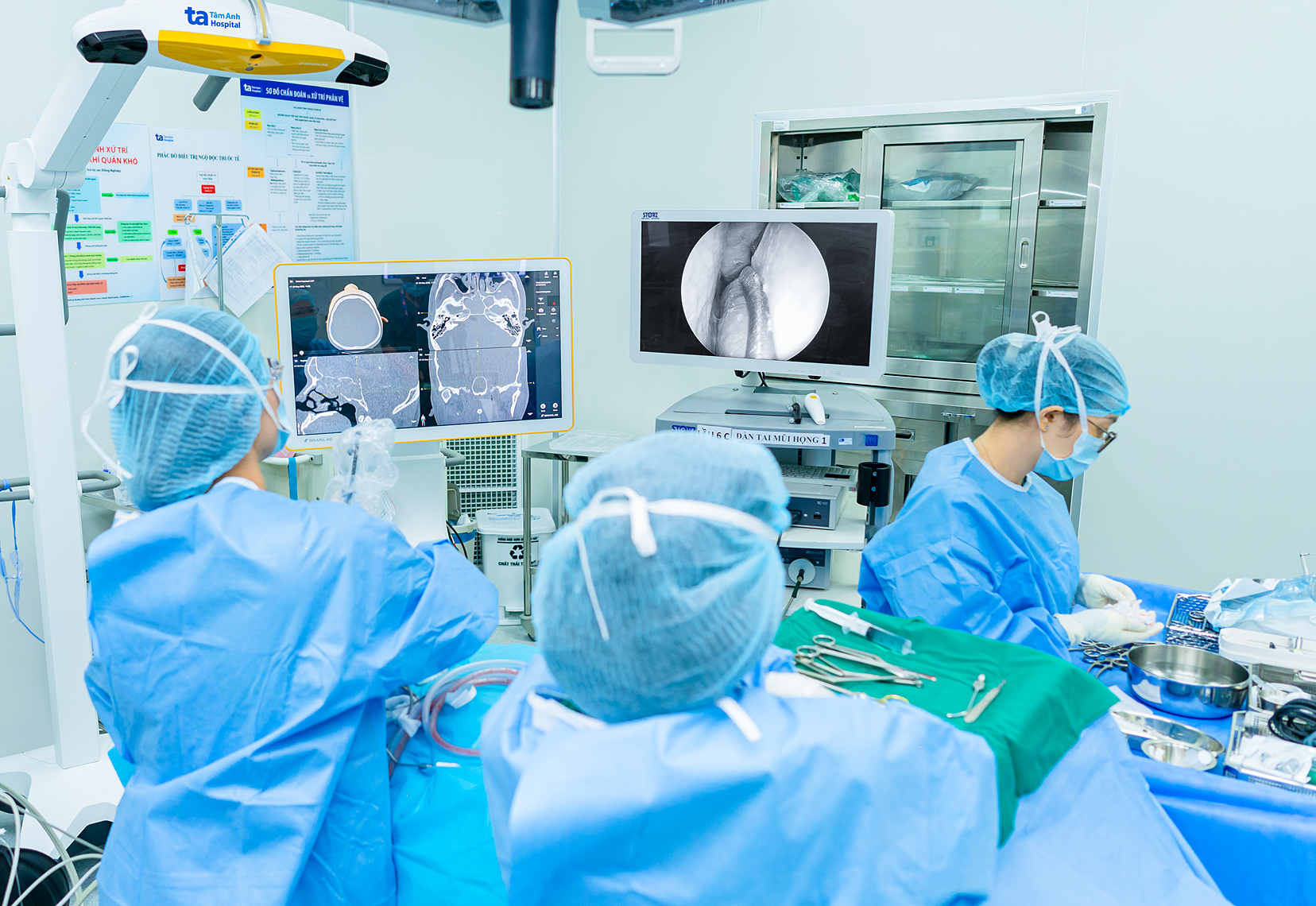 |
A surgeon operates on a patient with complicated sinusitis using an artificial intelligence-powered navigation system. Photo: Tam Anh General Hospital |
To limit recurrence, you should rinse your nose with saline solution two to three times daily to clear mucus, dust, and allergens. Prioritize using a specialized nasal rinse bottle and perform the action gently, avoiding forceful sprays. Keep your body warm in cold weather, wear a face mask, and use a scarf when going outside. Maintain indoor humidity by placing a bowl of water or using a humidifier.
You should avoid contact with people who have colds and potential irritants, and wash your hands before each meal. Drink enough water daily, increase your intake of green vegetables and fruits rich in vitamin C, get sufficient sleep, and avoid stress to boost your immune system. Use medication as prescribed by a doctor, and do not overuse antibiotics or vasoconstrictor nasal sprays, as they can worsen the condition.
If sinusitis is prolonged or recurrent, you should consult an Ear, Nose, and Throat (ENT) specialist for an endoscopy and sinus CT scan. These procedures provide accurate assessment, appropriate treatment, and help prevent complications.
Master of Science, Doctor, Second-Degree Specialist Tran Thi Thuy Hang
Head of Ear, Nose, and Throat Department
Ear, Nose, and Throat Center
Tam Anh General Hospital, Ho Chi Minh City
| Readers can submit questions about ear, nose, and throat conditions here for doctors to answer. |