A young H'Mong boy from Dak Lak was discharged in good health from Children's Hospital 1 on 28/1, 46 days after undergoing the hospital's first stem cell transplant. His recovery is the result of a long battle against a "death sentence" and a miraculous match from his 10-year-old brother.
In May 2025, the patient was admitted in critical condition, experiencing multiple hemorrhages, severe anemia, infectious fever, and malnutrition. Tests revealed a deep reduction in all three blood cell lines. After ruling out other causes, doctors diagnosed him with severe idiopathic aplastic anemia. In this form, the bone marrow is "paralyzed" and cannot produce blood, leading to an 80% mortality rate without specific treatment.
The family faced two options: a stem cell transplant or immunosuppressive drugs. Due to challenges in finding a suitable donor, the parents chose drug treatment. However, over six months of using a combination of three immunosuppressive drugs, the boy's body responded poorly. His survival depended entirely on regular red blood cell and platelet transfusions, while he constantly faced the risk of infection due to low white blood cell counts.
Dr. Ngo Ngoc Quang Minh, Director of Children's Hospital 1, noted that with drug treatment failing, an allogeneic stem cell transplant became the only definitive treatment to save the patient.
During this stalemate, the Hematopoietic Stem Cell Transplant Unit screened relatives and discovered a "golden match". The 10-year-old brother had a perfect 10/10 HLA match with his sibling. This absolute compatibility could lead to a remission rate of up to 90% after five years. A transplant plan was immediately initiated.
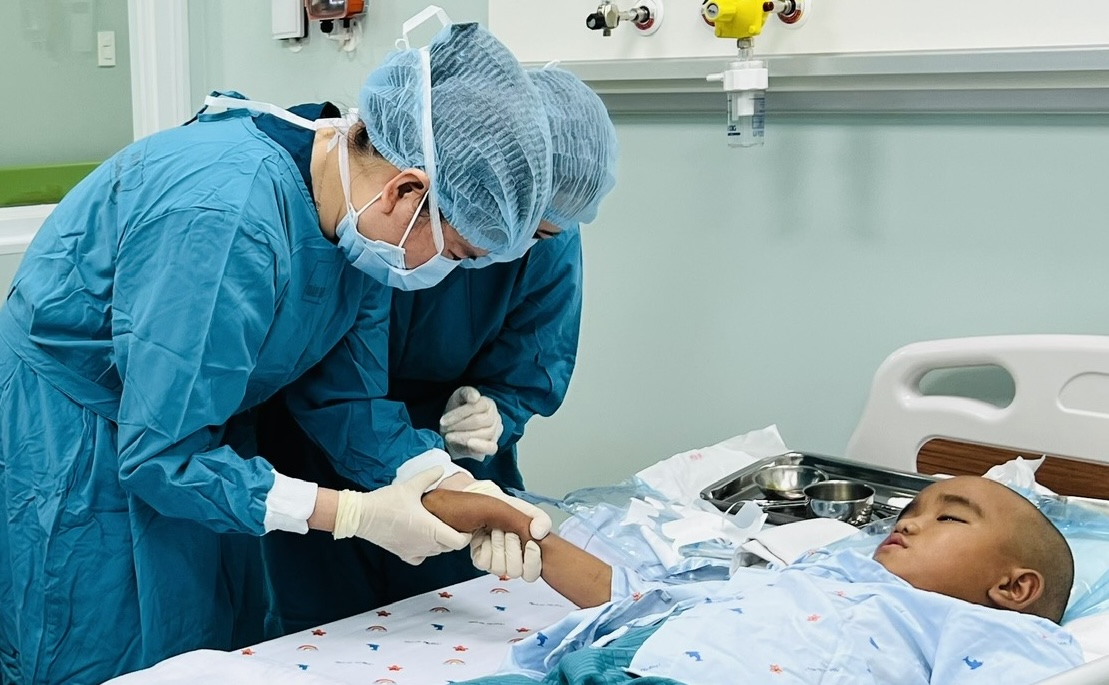 |
The patient underwent a stem cell transplant at Children's Hospital 1. Photo: Hospital provided. |
In early November 2025, the brother was taken to Ho Chi Minh City Blood Transfusion Hematology Hospital to collect stem cells. Meanwhile, at Children's Hospital 1, the younger boy began high-dose myelosuppressive chemotherapy. Overcoming language barriers and fear in the isolation room, the resilient H'Mong boy cooperated to receive the new marrow. On 16/12/2025, the stem cell bag from his brother was transfused into the boy's body under the close supervision of medical teams from both hospitals.
The post-transplant phase presented the most significant challenge. With the new marrow yet to engraft and an almost non-existent immune system, the boy experienced numerous complications, including mouth ulcers, kidney damage, hematuria, and mild graft-versus-host disease. Doctors actively administered antibiotics, provided supportive care, and ensured special nutritional support to keep him safe.
Responding to the medical team's efforts, a miracle occurred. Fourteen days after the transplant, the boy no longer required platelet transfusions; after 24 days, red blood cell transfusions were also unnecessary. By the 31st day, the graft had engrafted and was functioning stably. On the 46th day post-transplant, he was discharged, ready to return to a normal life.
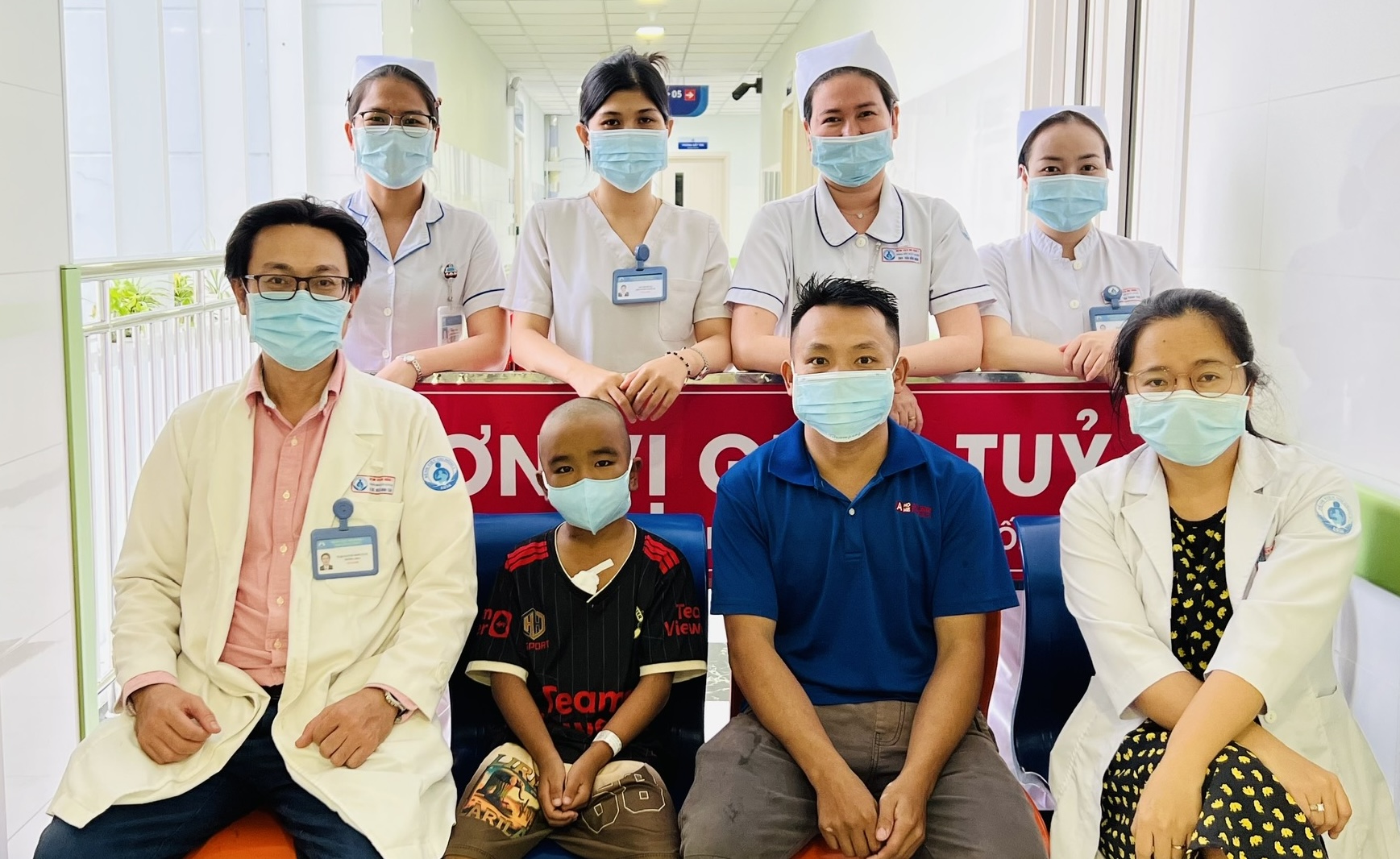 |
The boy with the medical staff before discharge. Photo: Hospital provided. |
This marks the first successful allogeneic hematopoietic stem cell transplant performed at Children's Hospital 1. According to Dr. Minh, the hospital admits approximately 50 children with idiopathic aplastic anemia each year, with over half presenting severe cases requiring specific treatment. The success of this transplant for the two brothers opens up opportunities for many other pediatric patients suffering from severe hematologic, immunologic, and genetic diseases in the future.
Le Phuong