Be Hong's chest X-ray revealed hazy lung hilum and bilateral moist rales. Her nasal mucosa showed pale yellow mucus, and her left ear was inflamed with pus. A papular rash also spread across her entire body.
Be Hong had a history of allergies to seafood and cow's milk protein, and had previously used multiple types of antibiotics. Dr. Luu Hoang Ai Phuong, a pediatrician in the Pediatrics Department at Tam Anh General Hospital, Ho Chi Minh City, described the case as complex. She emphasized the need for careful medication selection to ensure treatment effectiveness and mitigate the risks of allergic reactions and antibiotic resistance.
Be Hong received intravenous antibiotics combined with anti-inflammatory drugs and antihistamines to control the urticaria and reduce itching. After two days, the urticaria rash subsided, and her bronchopneumonia and ear inflammation were under control. Dr. Phuong then switched her to oral antibiotics. Be Hong's cough with phlegm resolved, ear discharge decreased, appetite improved, and she was discharged from the hospital.
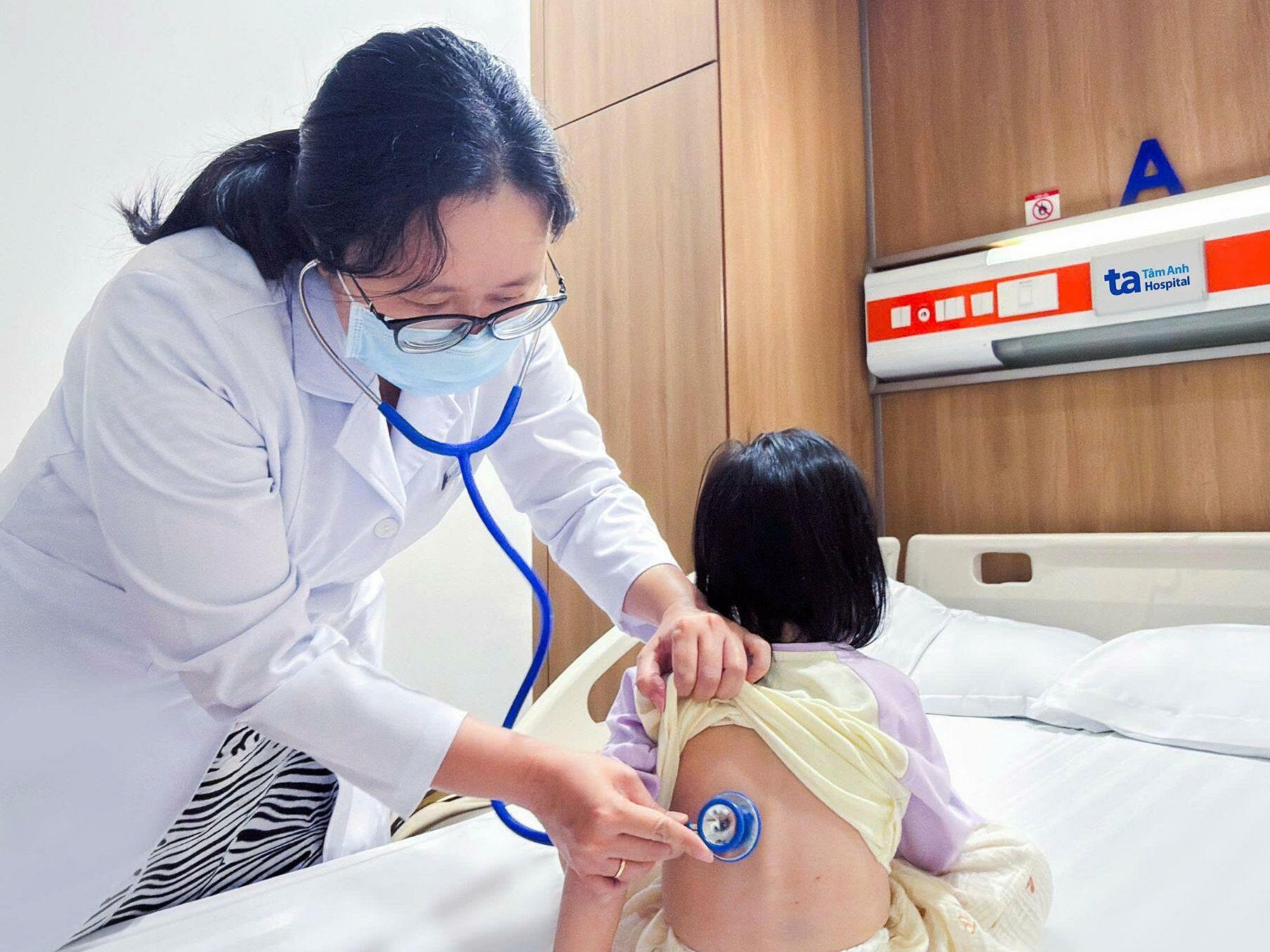 |
Dr. Phuong examining Be Hong. Photo: Gian Don. |
According to Dr. Phuong, children under 5 years old have immature immune systems, making them susceptible to respiratory illnesses. If not properly treated, bronchopneumonia in children can lead to acute respiratory failure, lung damage, and sepsis.
Otitis media in children can be a complication of an upper respiratory tract infection when bacteria or viruses spread from the nose and throat through the eustachian tube to the middle ear. However, improper ear care and hygiene practices can also cause otitis media. The condition causes discomfort, earache, and potentially even hearing loss, perforated eardrum, or meningitis if not treated promptly.
Dr. Phuong advises parents to take their child to the hospital if the child experiences a persistent cough, thick productive cough, high fever unresponsive to antipyretics, difficulty breathing, rapid breathing, refusal to breastfeed, poor appetite, earache, or ear discharge. Parents should not administer antibiotics to children without a doctor's prescription, as this can easily lead to antibiotic resistance, prolonged illness, or complicated developments.
To reduce the risk of respiratory illnesses and otitis media in children, parents should ensure their children receive full vaccinations, maintain good nasal and throat hygiene, and avoid exposure to cigarette smoke and individuals with respiratory illnesses. If a child has a history of allergies, parents must provide comprehensive information to the doctor about any foods or medications the child has previously reacted to.
Gian Don
*Patient's name has been changed
| Readers can submit questions about neonatal pediatrics here for doctors to answer. |