Flat feet is a condition where the sole of the foot is flat, lacking the natural arch (plantar arch). It is most noticeable when standing, with the entire sole touching the ground.
Dr. Nguyen Lam Binh, from the Department of Orthopedic Trauma at Tam Anh General Hospital Hanoi, states that flat feet in children under 5 years old are often physiological. This is because their bones, tendons, and ligaments are not yet fully developed, and the condition may improve naturally with age. However, if flat feet persist after 5 years old, children require a specialist examination for timely assessment and treatment to prevent complications.
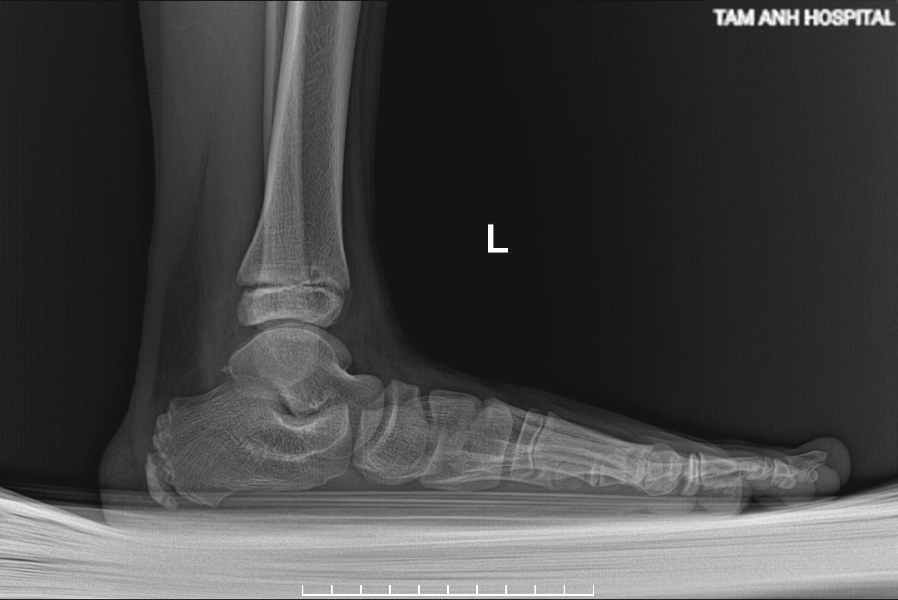 |
Flat feet on an X-ray film. Photo: Tam Anh General Hospital |
Doctors conduct a clinical examination, assessing the foot when the child stands, walks, and stands on tiptoes. They also check the ankle-foot alignment, Achilles tendon, range of motion, pain level, and risk of progressive deformity.
Foot X-rays help assess the degree of deformity in the metatarsal, heel, and ankle bones. Doctors identify any misalignment, abnormal bone structure, or joint issues. Based on the severity and prognosis of deformity progression for each patient, doctors prescribe an appropriate treatment plan.
Dr. Binh explains that with early detection, children with flat feet can undergo conservative treatment. This includes using orthopedic insoles, physical therapy, and guided specialized exercises to strengthen foot muscles, stretch the Achilles tendon, and improve motor function. These methods do not eliminate flat feet but help prevent early complications such as foot pain, ankle misalignment, Achilles tendon shortening, and limitations in the child's ability to walk or play sports.
 |
Dr. Binh consults with parents of a child with flat feet. Illustration photo: Tam Anh General Hospital |
If detected late or if conservative treatment is ineffective and flat feet have caused complications, doctors will recommend surgery. Depending on the condition, soft tissue interventions may include Achilles tendon lengthening, ligament reconstruction, or strengthening the mid-arch tendon.
Doctors may also use specialized orthopedic screws to reconstruct the foot arch. More severe cases often require additional hard tissue interventions such as osteotomy for realignment or fusion of one or more loose joints.
Dr. Binh states that after orthopedic screw placement surgery, children can walk after one to two days. Soft tissue interventions require three to four weeks for recovery. Bone interventions have the longest recovery period, averaging 6-8 weeks, which can extend to 8-12 weeks in older or overweight children. Therefore, many families choose surgery during the summer break to allow children sufficient recovery time, minimizing impact on their studies.
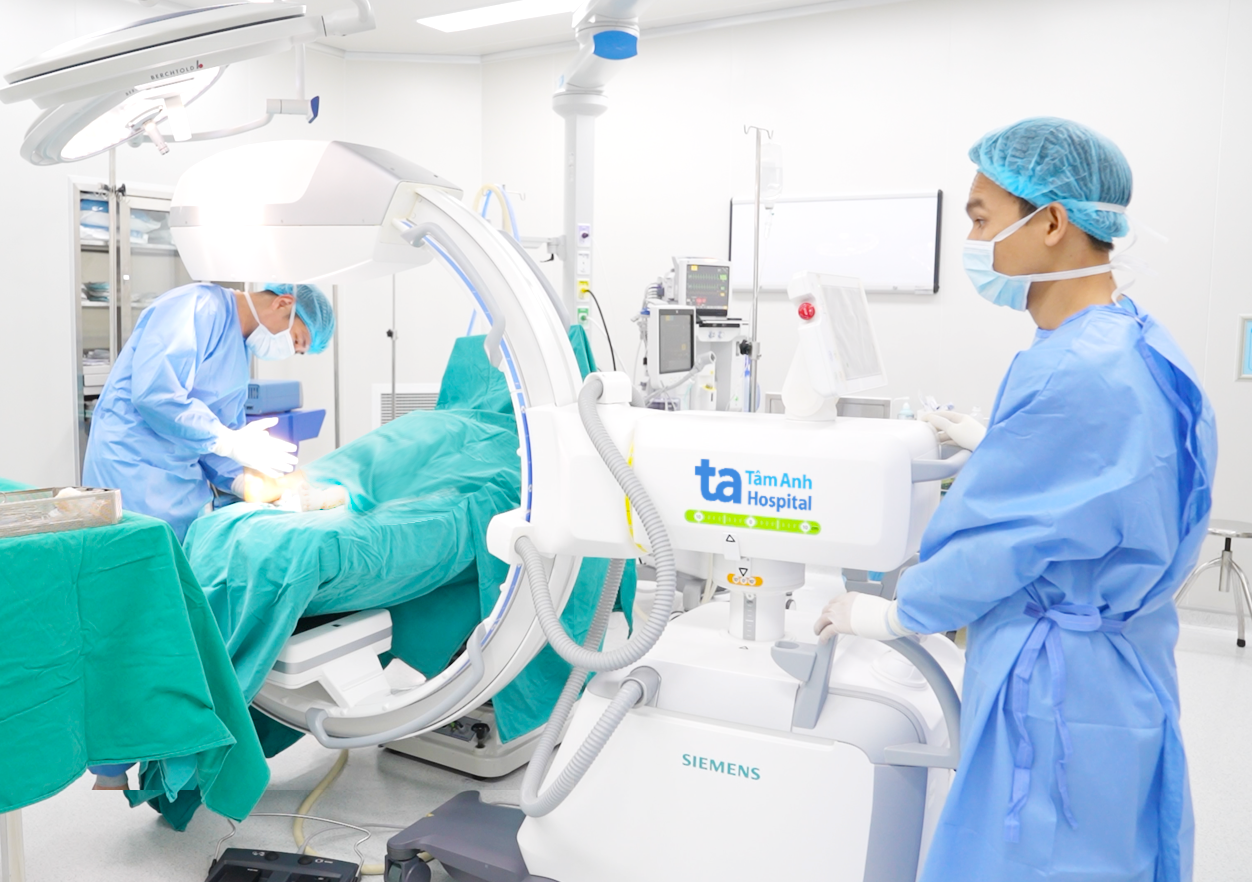 |
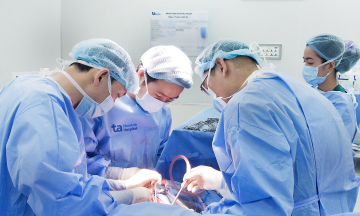
Surgical team operating on a child with flat feet. Photo: Tam Anh General Hospital |
Flat feet are not life-threatening but can cause complications affecting daily activities, movement, and a child's self-confidence. Parents should seek early examination if they notice suspicious signs such as the child lacking a foot arch when standing, the foot rolling inward, tiptoeing, or uneven wear on shoe soles.
Adhering to physical therapy and consistent exercise helps prevent flat feet complications. If surgery is indicated, parents and children should arrange a suitable time for the procedure.
Thanh Long