Nhung had a history of an abortion and an ectopic pregnancy requiring the removal of her left fallopian tube. After four years of secondary infertility, she and her husband sought examination at the Center for Reproductive Assistance, Tam Anh General Hospital Hanoi (IVF Tam Anh). Diagnostic results showed a blocked right fallopian tube, elevated T3 and T4 thyroid hormone levels, reduced pituitary TSH hormone levels, and an enlarged thyroid gland. Doctors diagnosed Nhung with Basedow's disease, an autoimmune disorder linked to an overactive thyroid.
Doctor Nguyen Le Thuy stated that Basedow's disease does not directly cause infertility but can significantly impact female fertility through systemic endocrine disruption. Prolonged elevated thyroid hormone levels disrupt the hypothalamic-pituitary-ovarian axis, leading to ovulatory dysfunction, irregular menstruation, or amenorrhea. Additionally, hyperthyroidism increases metabolism, reduces energy reserves, and affects egg quality, making natural or assisted conception less effective and resulting in infertility.
A multidisciplinary team of endocrinology and nutrition specialists collaborated to examine Nhung and develop a suitable treatment plan. The goal was to stabilize her thyroid hormone levels before proceeding with in vitro fertilization (IVF), ensuring maternal safety and enhancing the likelihood of a healthy pregnancy and birth.
After six months, Nhung's health stabilized. She received a mild dose of ovarian stimulation medication, reducing the number of injections compared to standard protocols. Doctors retrieved 20 oocytes, which were fertilized with her husband's sperm using intracytoplasmic sperm injection (ICSI) to create embryos. The embryos were then cultured in a time-lapse incubator with integrated artificial intelligence, resulting in 7 day-5 embryos for the couple.
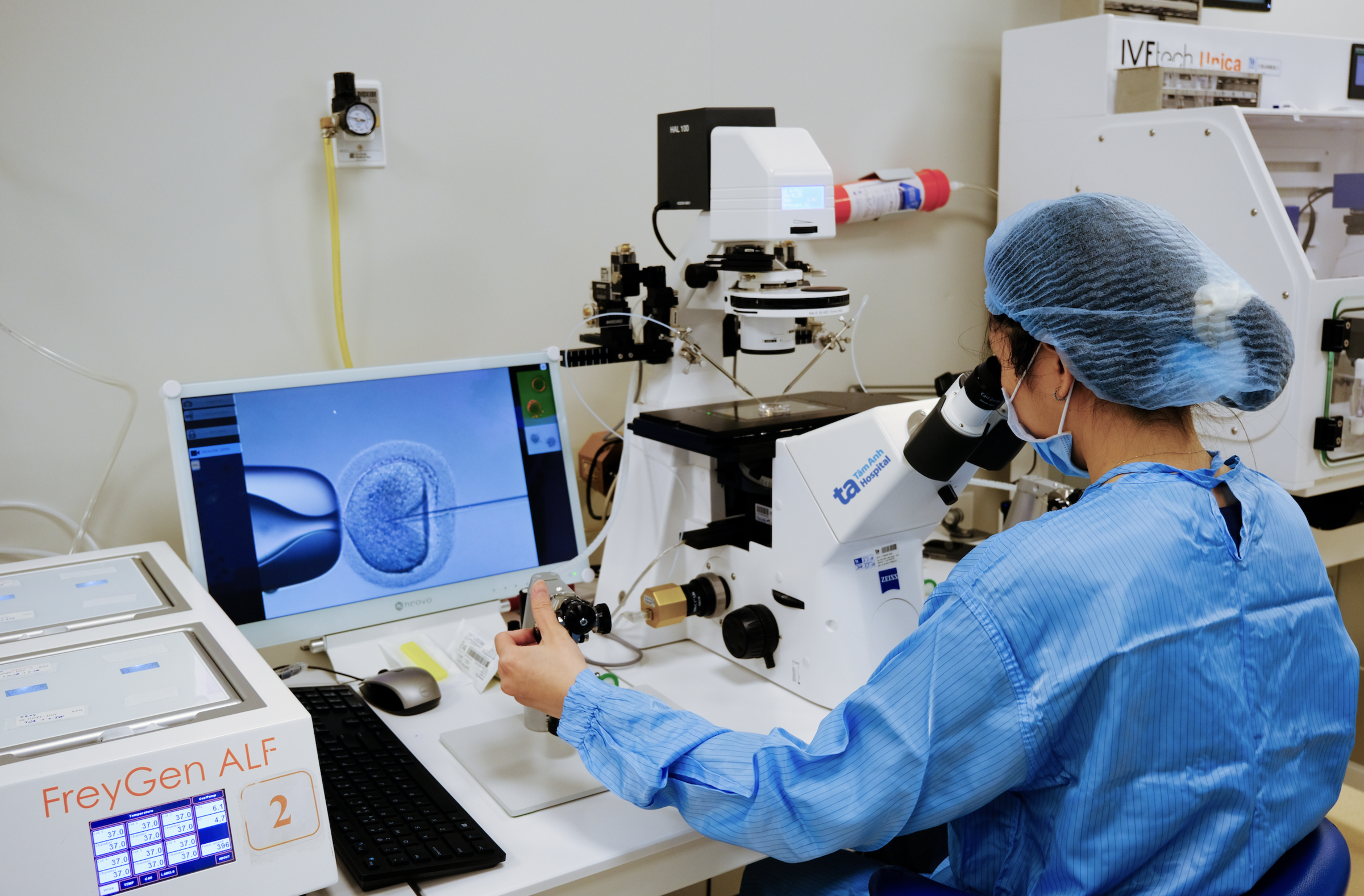 |
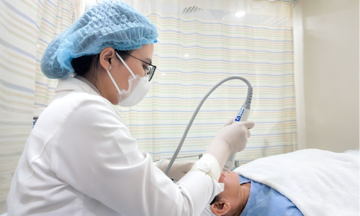
An embryologist performs intracytoplasmic sperm injection to create an embryo. Photo: IVF Tam Anh
Nhung conceived immediately after the first day-5 embryo transfer. She was closely monitored throughout her pregnancy by obstetrics and endocrinology specialists, who regularly assessed her thyroid function and adjusted medication promptly to maintain thyroid hormone levels within a safe range for both mother and fetus. Nutrition department doctors advised on a suitable diet to support fetal development. Nhung successfully delivered a healthy son weighing 4,3 kg via C-section.
Basedow's disease is more prevalent in women than men, typically developing before the age of 40. While the exact cause remains unclear, risk factors include a family history of thyroid disorders, existing autoimmune conditions such as type 1 diabetes or rheumatoid arthritis, chronic emotional or physical stress, pregnancy or the postpartum period, and smoking. Women with the disease commonly experience anxiety, irritability, hand or fingertip tremors, heat sensitivity, increased sweating, weight loss, goiter, menstrual cycle changes, increased bowel movements, bulging eyes, and an irregular heartbeat.
Women undergoing in vitro fertilization (IVF) must maintain stable control of Basedow's disease to avoid impacting the chances of conception. Uncontrolled hyperthyroidism also increases the risk of preeclampsia, premature birth, intrauterine growth restriction, and fetal thyroid dysfunction. Children born to mothers with uncontrolled Basedow's may face severe cognitive and nervous system developmental abnormalities.
Doctor Thuy advised that many internal medical conditions can subtly affect reproductive function, often lacking clear symptoms and thus easily misdiagnosed or overlooked. Couples who have been married for one year (or six months if the wife is over 35) without conceiving should undergo comprehensive health screening for early detection and treatment.
Trinh Mai
| Readers can submit questions about infertility here for doctors to answer. |