Answer:
Having a healthy first child does not guarantee absolute safety for subsequent pregnancies, especially if there is a family history of abnormalities. A preconception check-up helps screen for risks related to changes in the mother's body after the first birth and screens genes to prevent the birth of children with genetic diseases. Specifically, determining genetic status helps couples know precisely if they carry abnormal genes, including common conditions such as thalassemia, spinal muscular atrophy, cystic fibrosis, and phenylketonuria (protein intolerance).
If both parents carry a recessive gene (healthy carriers), the chance of having a child with the disease is 25% in each pregnancy. This probability is independent of previous pregnancies; even if you have one, two, or three healthy babies, it does not rule out the risk for the next pregnancy.
Couples who have not undergone genetic screening should proactively get tested before this pregnancy to accurately assess the risk. Individuals with genetic conditions can still have healthy children with a suitable pregnancy management plan.
During a preconception screening, the mother's reproductive organ recovery is assessed, particularly if she had a caesarean section or severe perineal damage during the previous birth. Based on the condition of the incision, scar thickness, and texture, doctors can predict the risk of placenta accreta or uterine rupture in a new pregnancy.
Doctors also check overall health, liver, kidney, and cardiovascular function, and chronic or potential underlying conditions like diabetes, hypertension, or anemia, to ensure timely treatment and safety for the next pregnancy. Issues from the previous pregnancy, such as anemia, diabetes, or hypertension, are also reviewed to ensure they are fully treated before conception.
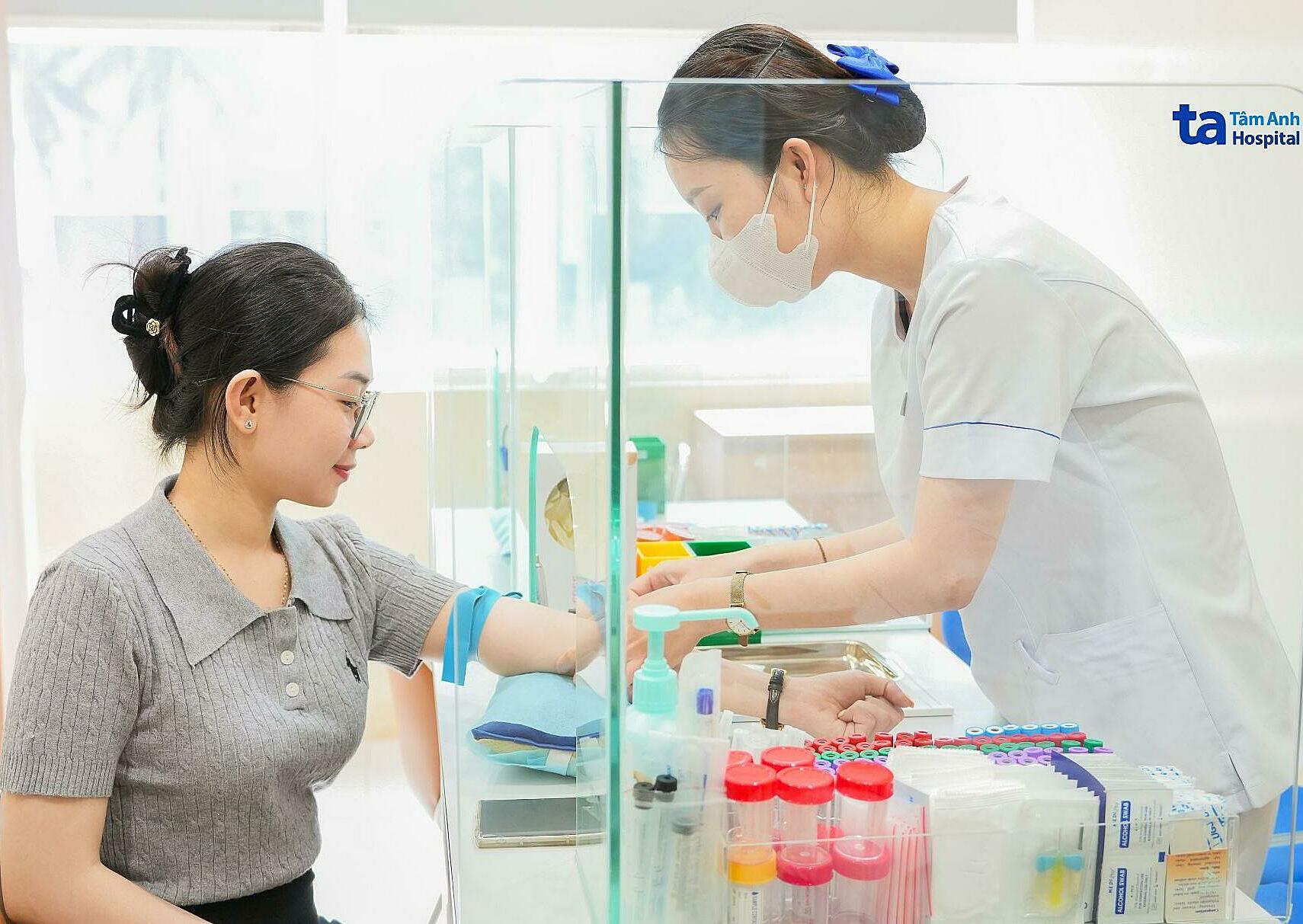 |
Blood test for preconception health check. Photo: Tam Anh General Clinic District 7.
Preconception check-ups also help detect gynecological conditions such as uterine fibroids, endometriosis, or polyps, which can affect conception and pregnancy. Identifying recurrence risks during pregnancy, such as preterm birth, preeclampsia, or gestational diabetes, allows for preventive measures and special monitoring from the outset.
Based on this information, doctors advise on the optimal time for pregnancy, guide the supplementation of folic acid, calcium, or iron depending on each individual's health, and control risk factors to ensure a smooth pregnancy and the birth of a healthy child.
Master, Doctor Nguyen Phuong Thao
Fetal Medicine Specialist
Tam Anh General Clinic District 7
| Readers can submit questions about neonatology here for doctors to answer. |