Chicken is rich in protein, low in fat, and more easily digestible than beef or pork. A 100-gram serving of chicken contains over 20 grams of protein, provides about 200 calories, and offers minerals like calcium, phosphorus, iron, and vitamins A, B, C.
In traditional Eastern medicine, chicken is considered sweet and warming, beneficial for replenishing qi and blood, strengthening the spleen and stomach. It is suitable for nourishing those recovering from illness, individuals with weakened bodies, or postpartum women.
Folk traditions include many dietary prohibitions when preparing chicken; however, most originate from oral tradition or incomplete understandings of traditional Eastern medicine. Many people believe chicken is incompatible with raw garlic and onions, asserting this combination creates a "hot-cold" conflict that harms qi and blood.
According to herbalist Bui Dac Sang of the Hanoi Traditional Medicine Association, in traditional pharmacology, both onions and garlic are pungent and warming. They help alleviate colds and stimulate digestion. Combining chicken with garlic or onions is completely safe; one only needs to avoid consuming excessive raw onions or garlic if suffering from stomach ulcers.
The notion that combining chicken with shrimp, carp, or kinh gioi (Vietnamese balm) causes allergies and itching also lacks scientific basis. Many familiar dishes, such as chicken congee cooked with tia to (perilla leaf) and kinh gioi, or goi ga bop rau ram (chicken salad with Vietnamese coriander), have been consumed by Vietnamese people for a long time without causing digestive harm. The actual phenomenon of itching or hives stems from an individual's protein allergy to chicken or seafood, not from these foods interacting to produce toxins when cooked together.
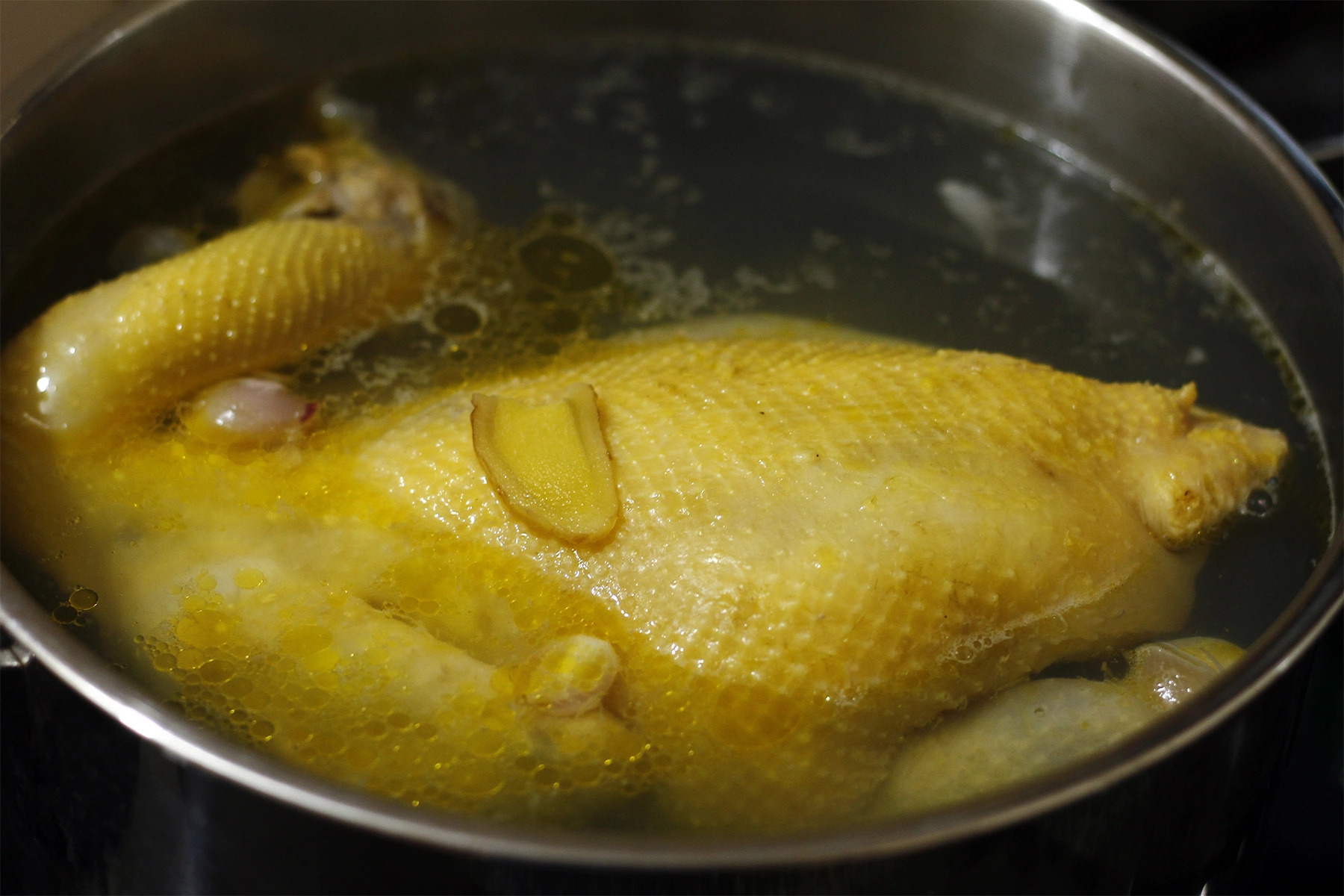 |
Illustration: Bui Thuy |
The popular belief that eating chicken and dog meat together causes dysentery is also a medical misconception. Both types of meat contain high protein levels. When consumed in excessive amounts simultaneously, the stomach may not produce enough digestive enzymes, leading to bloating and indigestion. In contrast, dysentery is an infectious disease caused by intestinal bacteria entering the body through unsanitary food and drink, and cannot spontaneously arise from conflicting foods.
For patients, the notion of completely avoiding chicken when suffering from high blood pressure or having open wounds to prevent keloid scars also lacks scientific basis. Chicken, especially skinless breast meat, is a source of healthy lean protein that helps the body regenerate tissue and recover health. Patients only need to avoid consuming chicken skin and fat if they need to manage cholesterol or blood pressure.
The greatest danger when consuming chicken lies not in folk dietary prohibitions, but in food safety and hygiene. Raw chicken is highly susceptible to salmonella contamination, which can cause acute intestinal poisoning. Home cooks must use separate cutting boards and knives for raw and cooked foods, wash hands thoroughly after preparation, and always cook chicken thoroughly before eating.
Thuy Quynh