Many believe consuming tiet canh (Vietnamese raw blood pudding) and pig liver can replenish blood. However, the notion of "eating like with like" is not always accurate. While cooked pig liver and pig blood can supplement iron and support blood production, tiet canh is not recommended due to severe risks of bacterial and parasitic infections.
Tiet canh is essentially raw pig blood, posing a significant risk of contamination from pathogenic microorganisms, particularly Streptococcus suis. This bacterium can reside in a pig's respiratory tract, blood, or tissues without obvious symptoms, making it undetectable to the naked eye.
Beyond consumption, the bacteria can transmit to humans through skin abrasions during slaughter, preparation, or contact with infected pigs without protective gear.
Individuals infected with Streptococcus suis may develop septicemia, purulent meningitis, pneumonia, myocarditis, or arthritis. Some cases progress rapidly, leading to septic shock, multi-organ failure, and death. Patients often face long-term complications affecting hearing and neurological functions.
The nutritional value of pig blood comes from its iron and protein content, not from consuming it raw as tiet canh. When cooked thoroughly, pig blood provides essential iron and protein, helping to supplement iron for those at risk of anemia, such as women of reproductive age and children. Cooking also effectively eliminates most pathogenic bacteria and parasites.
Only consume pig blood after it has been thoroughly cooked. Adults can eat about 50-100 grams per serving, up to one to two meals per week. Combine it with green vegetables or fruits rich in vitamin C to enhance iron absorption.
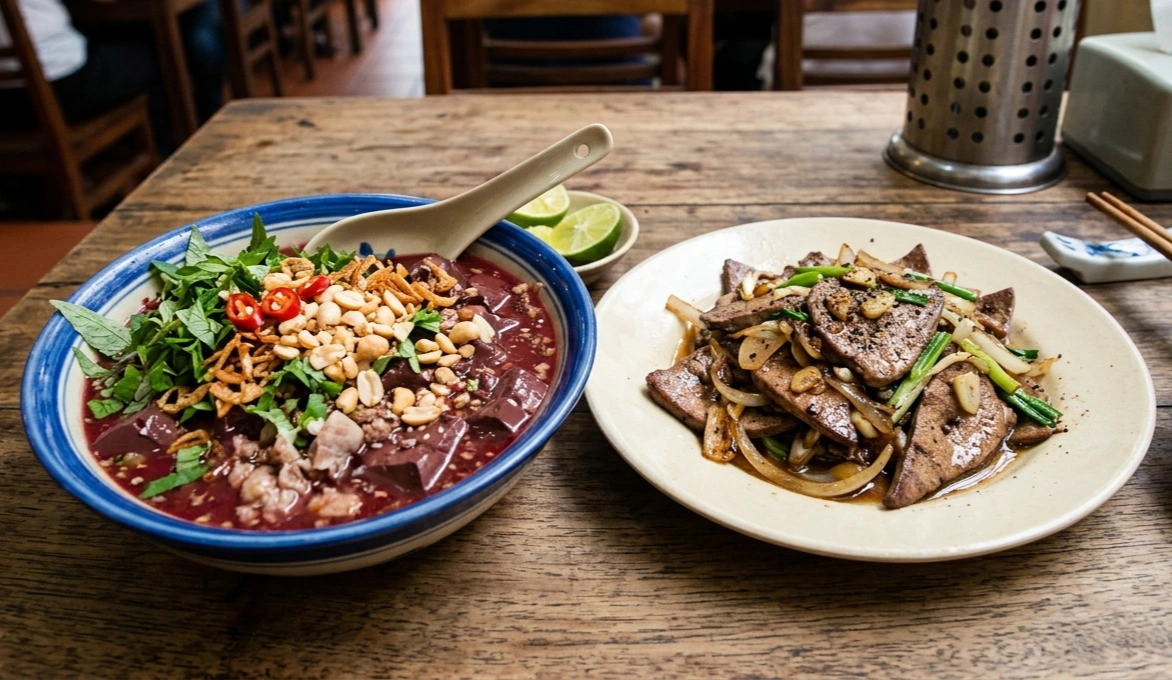 |
Tiet canh and pig liver can harm health if prepared or consumed incorrectly. Photo created by AI |
Healthy pig liver from a reputable source, properly inspected and thoroughly cooked, remains rich in iron, vitamin A, B12, folate, and protein. These nutrients support blood formation, especially in individuals with iron deficiency or at risk of anemia.
Conversely, diseased pig liver, liver exposed to chemicals, or liver not handled according to food safety regulations may contain harmful residues. Uncooked liver also poses a risk of carrying pathogenic bacteria or parasites. Consumers should choose liver from clear sources, with a natural reddish-brown color, a smooth surface, no white or dark purple spots, and no unusual odors.
Healthy adults can consume about 50-100 grams of pig liver per serving, one to two times a week. Individuals with gout, hyperuricemia, dyslipidemia, or cardiovascular disease should limit intake due to its high cholesterol and purine content. If consumed, eat small amounts no more than once a week, and consult a doctor beforehand.
Remember that food items like pig liver and pig blood, when safely prepared, serve only as daily nutritional support. If you experience symptoms suggestive of anemia, such as persistent fatigue, pale skin, dizziness, palpitations, or shortness of breath, you should seek medical attention.
Nutritionist Trinh Ha Nhat Quyen
Department of Nutrition and Dietetics
Tam Anh General Hospital, TP HCM
| Readers can submit nutrition questions here for a doctor's response. |