Master, Doctor Ta Ngoc Ha, from the Department of Orthopedics at Tam Anh General Hospital Hanoi, detected an unusual lump on Mr. Duy’s back, behind his right chest wall. An MRI scan revealed a 46x25 mm tumor at the apex of his left lung and a 100x52 mm tumor in his right lung. This larger tumor had invaded the pleura, chest wall, and spine, creating a "tunnel" that completely destroyed the structure of the D10 vertebra. This progression silently narrowed the spinal canal, compressing the spinal cord and causing Mr. Duy severe back pain.
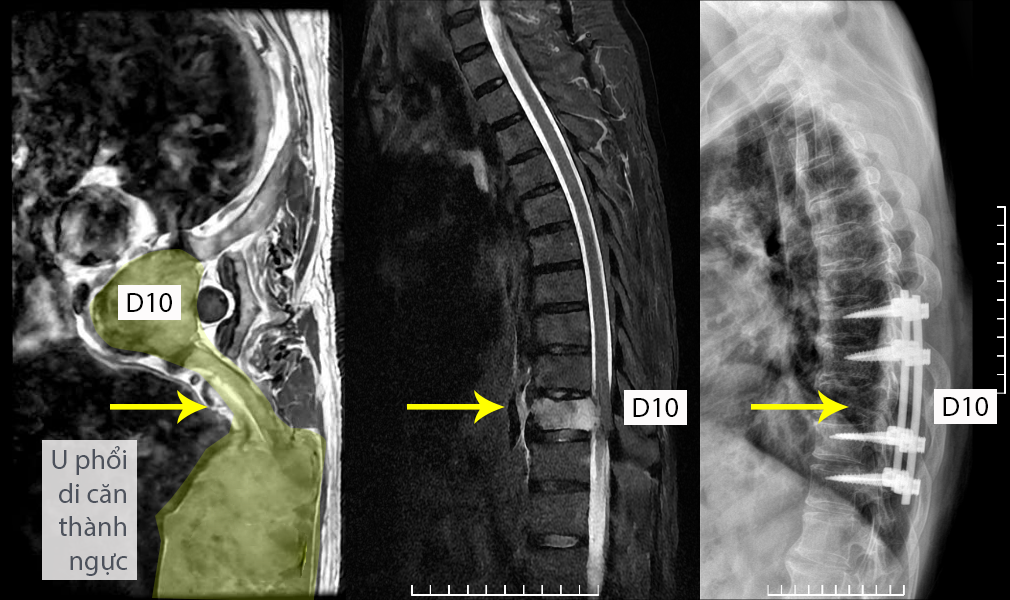 |
Lung tumor invading the chest wall, creating a "tunnel" through the D10 vertebra (left) and after stabilization surgery (right). Photo: Tam Anh General Hospital. |
Doctor Ha consulted with the Departments of Respiratory and Oncology. A chest wall biopsy confirmed Mr. Duy had stage 4 non-small cell lung carcinoma with spinal metastasis, indicated by a SINS score of 13/18 for tumor-induced spinal instability. The D10 vertebra had completely lost its weight-bearing capacity. Without immediate stabilization surgery, Mr. Duy faced a high risk of lower limb paralysis, loss of bowel and bladder control, and even permanent disability.
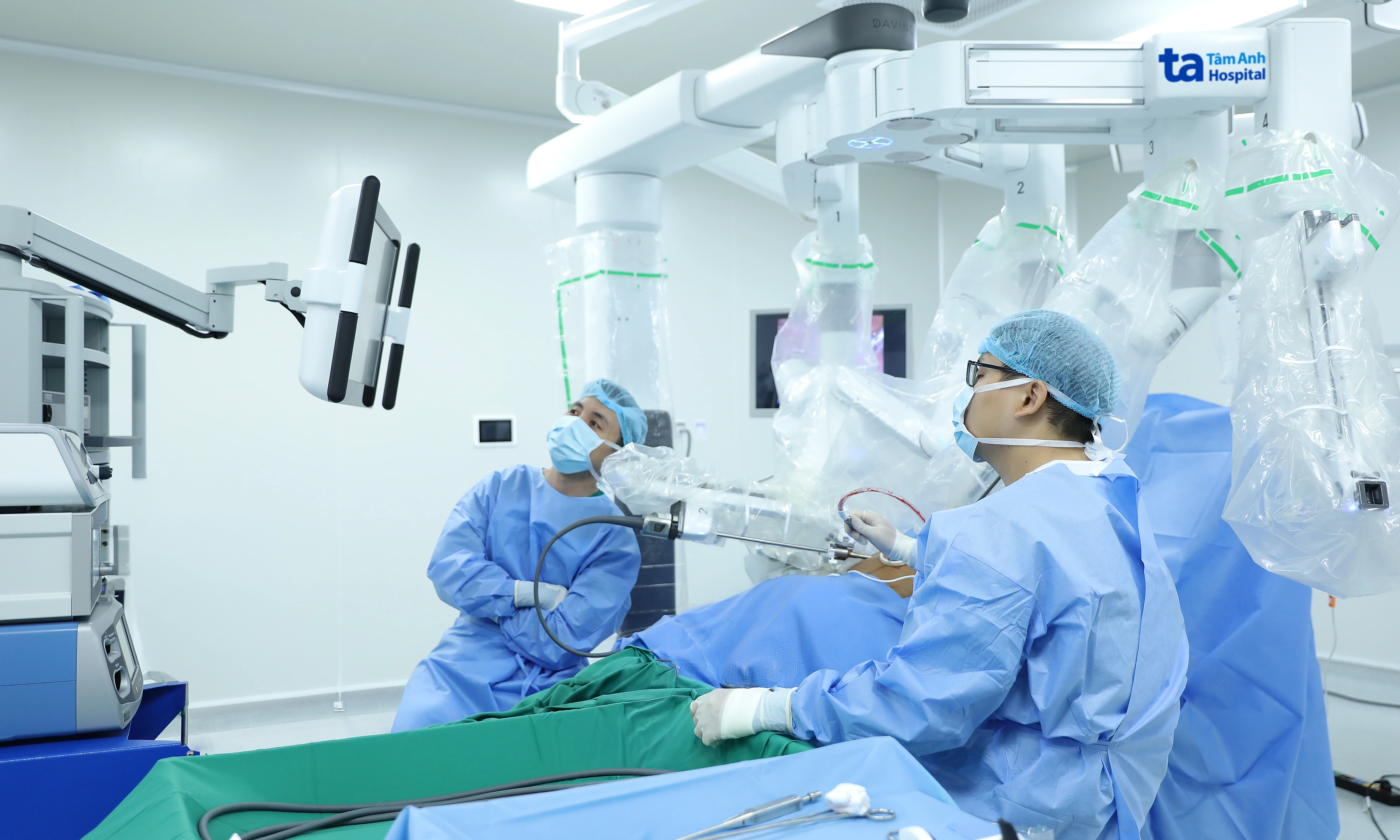
Doctor Ha decided on emergency spinal stabilization surgery for the patient before chemotherapy. The surgical team opened a midline approach to the spine from D8 to D12, inserting 8 pedicle screws into the D8, D9, D11, and D12 vertebrae. For the D10 vertebra, a bone window was opened across the pedicle to decompress the narrowed spinal canal. Doctor Ha then placed longitudinal rods to bridge the four vertebrae, effectively distributing force away from the damaged D10 vertebra.
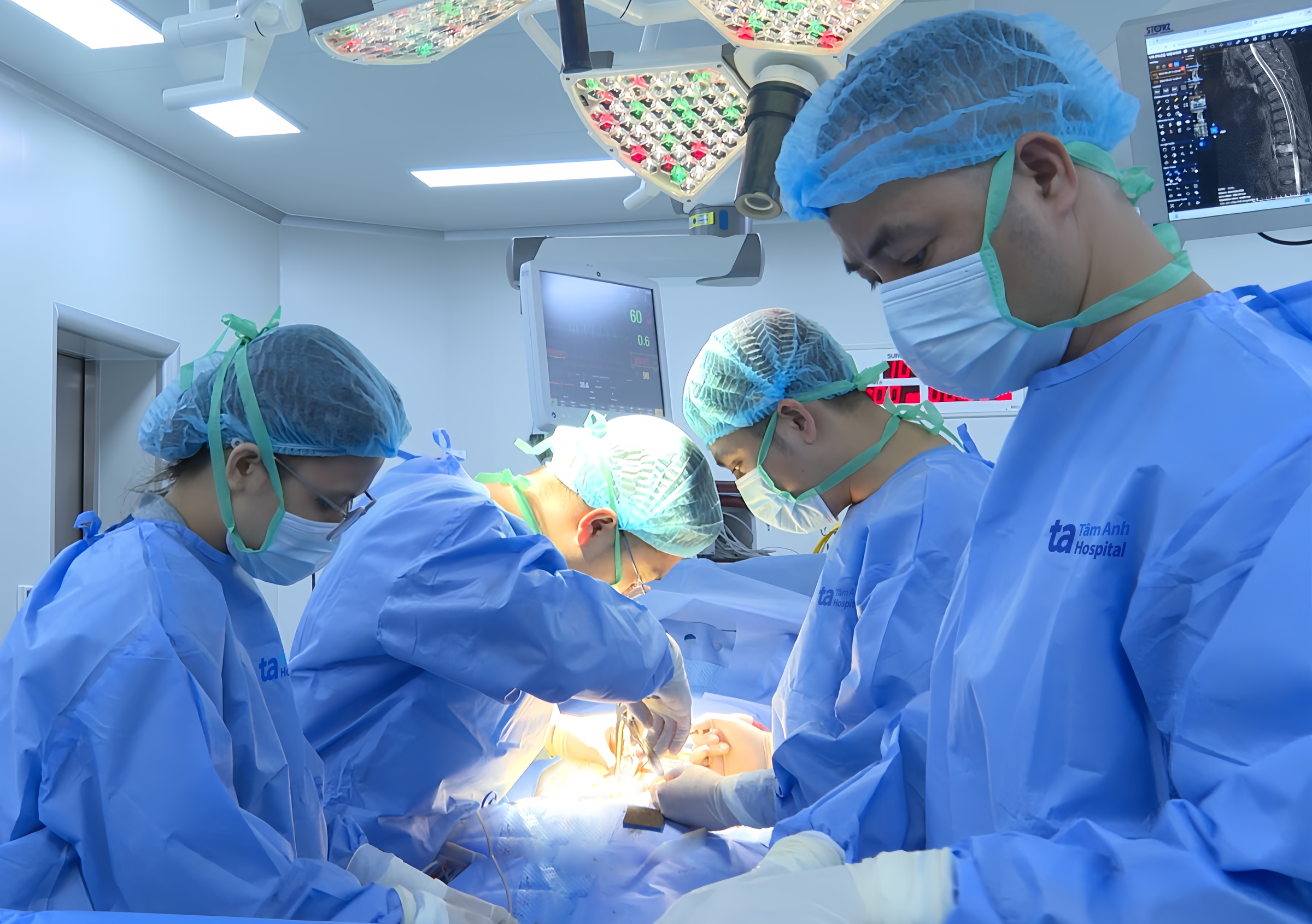 |
Doctor Ha (third from left) with the surgical team operating on Mr. Duy. Photo: Tam Anh General Hospital. |
Following the surgery, Mr. Duy recovered well, experiencing significant pain reduction. He was able to sit up from day one, walk on day two, and was discharged after three days. He ate well, no longer suffered back pain while sleeping, and received instructions for rehabilitation exercises.
Two weeks later, he returned to the hospital to begin a chemotherapy regimen combined with immunotherapy. Doctor Ha also prescribed anti-bone resorption medication to help reduce pain and lower the risk of fractures and vertebral collapse at metastatic sites, providing relief before the chemotherapy and immunotherapy drugs took full effect.
Globocan 2024 reported over 23,000 new lung cancer cases and over 21,000 deaths in Vietnam. Doctor Ha explained that the disease often progresses silently, causing no symptoms until the tumor grows large enough to cause shortness of breath, chest pain, persistent cough, or coughing up blood. Patients are typically diagnosed at a late stage, making treatment difficult and prognosis poor. Tumors at the apex or periphery of the lung often cause few respiratory symptoms, making them easily overlooked. Many individuals only discover the cancer after it has metastasized to bones or the spine due to back pain, leading to a poor prognosis.
Doctor Ha recommends that people aged 50-80 years old undergo lung cancer screening using low-dose computed tomography (LDCT) if they have risk factors such as heavy smoking, a family history of lung cancer, or as advised by a doctor. This radiation-reduced technique can detect very small lesions, enabling early diagnosis of lung cancer for radical treatment, cost savings, and an improved prognosis.
Thanh Long
*The patient's name has been changed.