One evening, while folding clothes with her daughter, Huong, 39, from Hanoi, paused for a few seconds when her 7th-grade daughter asked, "What is HPV, mom?" Her daughter mentioned that a friend at school had talked about cervical cancer and the HPV virus.
"I had prepared myself for discussions about my daughter's menstruation, emotional and psychological changes, and crushes, but not for reproductive health or the HPV virus," she stated.
Initially, Huong thought this knowledge was suitable for older children. However, seeing her daughter's silence, she understood that her child genuinely wanted answers. That evening, she researched the topic and consulted a doctor. The next day, she proactively revisited the conversation, saying, "Yesterday, mom didn't answer very well; let's learn about it together."
Since then, family conversations have expanded beyond grades and daily routines to include teenage life, body changes, personal hygiene, adolescent emotions, the right to refuse unwanted touch, friendships, and reproductive health. These topics are discussed in short, gentle conversations rather than a single, stressful educational session.
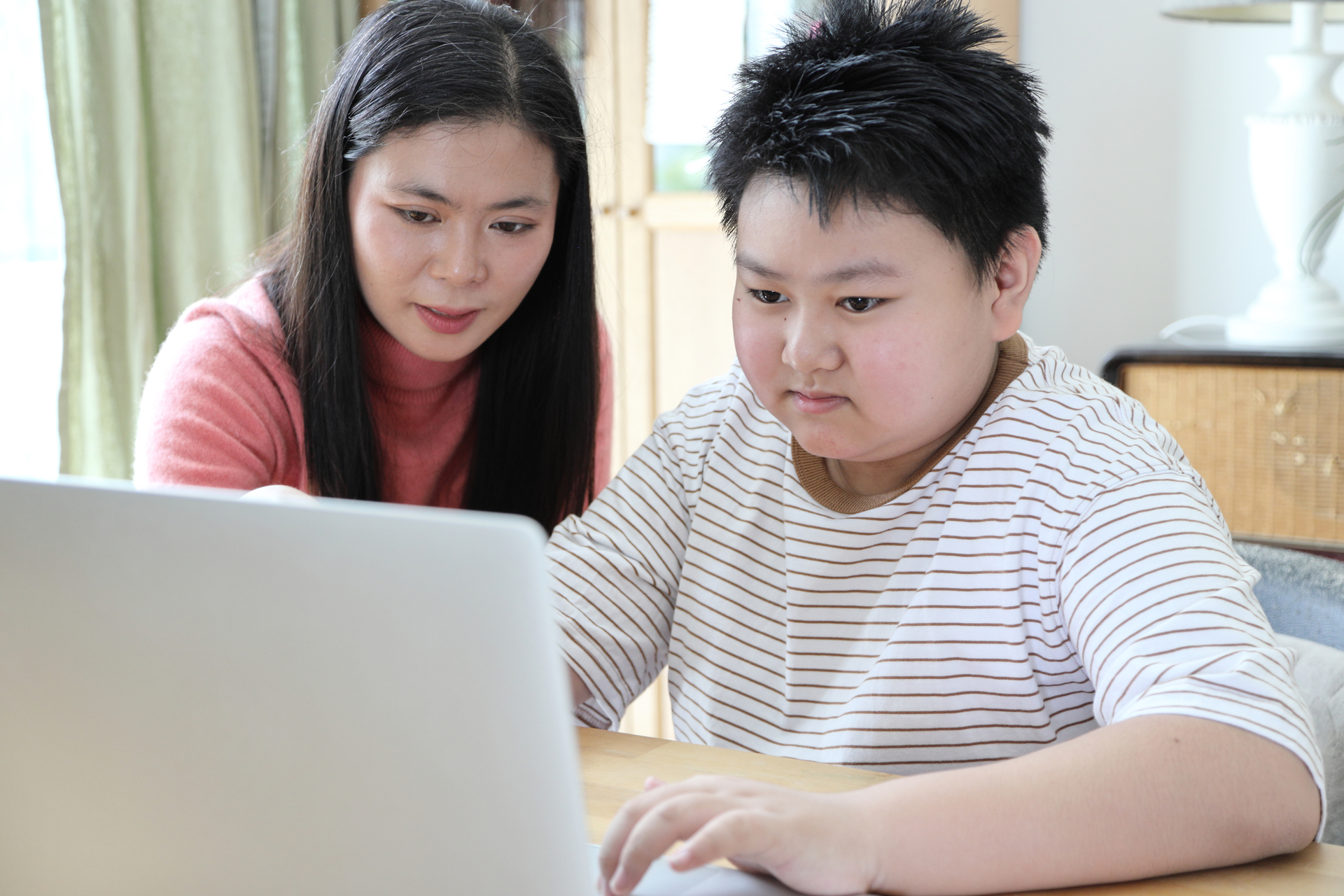 |
A mother guides her son to find information on the internet. Illustration: Vecteezy |
Ngoc Ha, 44, also from Hanoi, experienced similar confusion when her 9th-grade son asked about condoms after an extracurricular class. Her initial reaction was a defensive question: "Who taught you about those things?" Her son immediately changed the subject. Later, Ha realized her panic might have led her son to believe that questions about sexuality were inappropriate.
"I realized I needed to be calmer. If children don't ask their parents, they will still seek answers elsewhere, such as from friends or the Internet, and might get misinformation," she explained.
Puberty often leaves parents feeling flustered due to rapid changes in children's bodies, emotions, and need for privacy. Children are curious about gender, relationships, body image, and online content. Avoiding their questions does not diminish their curiosity; instead, it often leads them to unverified sources of information.
The World Health Organization (WHO) emphasizes that adolescents need access to age-appropriate information, including comprehensive sex education, life skills, relevant health services, and a safe, supportive environment. UNESCO also highlights that comprehensive sex education equips children and adolescents with the knowledge, skills, attitudes, and values to understand their health, well-being, and dignity; develop respectful social and sexual relationships; consider how their choices affect their own and others' well-being; and understand and ensure the protection of their rights throughout their lives for holistic development.
Puberty is an opportune time for parents to help their children build a foundation for long-term health care, preparing them for the future. Beyond personal hygiene, nutrition, exercise, sleep, and mental health, children also need to understand health risks related to viruses, including HPV.
HPV infection is extremely common worldwide. Most sexually active adults will contract HPV at some point in their lives, even if they are unaware of the infection. While most HPV infections are asymptomatic and resolve on their own, persistent infection can lead to conditions such as: genital warts, precancerous lesions, and cancers of the cervix, anus, and genitals in both men and women.
Globally, HPV causes one in 20 (4.5%) of all cancers in both men and women, equivalent to 630,000 new cases annually. According to 2024 data from the U.S. Centers for Disease Control and Prevention (CDC), HPV causes most cervical, vaginal, vulvar, and anal cancers in women. In men, HPV can lead to genital warts and anal cancer. These figures underscore the importance of early health education in helping children understand and protect their bodies as they mature.
 |
HPV causes most cervical, vaginal, vulvar, and anal cancers in women. Illustration: Vecteezy |
However, parents should not turn HPV into a frightening narrative, nor should they frame puberty, gender, or sexuality as inherently dangerous. Instead, HPV should be placed within the broader context of health care: understanding one's body, respecting boundaries, building a healthy lifestyle, and knowing when to seek medical professionals.
Measures for preventing HPV and related conditions should be researched, updated, and implemented according to appropriate guidelines, including: lifestyle changes such as not smoking, increasing physical activity, and maintaining proper nutrition; practicing safe sex and using condoms; proactively consulting medical professionals about HPV prevention at healthcare facilities; undergoing regular cervical cancer screenings for women ages 21-65 as advised by health experts; and, according to some studies, voluntary circumcision may help reduce the risk of HPV infection in men.
For children entering puberty, parents can start with more accessible messages: your body is yours; you have the right to ask about your changes; do not blindly trust all information online; and when you have questions about reproductive health, ask your parents, teachers, or medical professionals.
 |
Families should practice discussing reproductive health, sex education, and scientific self-protection measures with their children. Illustration: Vecteezy |
After several months of practicing conversations with her daughter, Huong realized she did not need to be an "all-knowing mother." What her child needed more was an adult calm enough to listen to questions, honest enough to say "I don't know," and responsible enough to find the correct answers together.
"The hardest part isn't finding information, but overcoming my own embarrassment," she admitted.
Ha, drawing from her experience, learned to listen, respect, and support without imposing her views.
"Some of my son's questions made me blush. But if I kept avoiding them, he would think those topics were forbidden in our family. I want him to know that no matter what happens, he can always come to mom first; parents want to accompany their children through puberty," she affirmed.
Van Ha