Doctor Duong Minh Tuan, from the Department of Endocrinology and Diabetes at Bach Mai Hospital, explained that hair loss is not a specific disease but rather a symptom of many different conditions.
The most common cause is genetic hair loss, also known as male or female pattern hair loss. In men, the hairline often recedes, and hair on the forehead and crown thins over time. In women, the hair part widens, and hair on the crown becomes thinner, though complete baldness is rare. This condition is related to multiple gene inherited from both parents, not solely from the maternal grandfather, as many believe.
Many patients observe diffuse hair loss when washing, brushing, or running their hands through their hair; sometimes, clumps of hair fall out during a single wash. This condition often appears two to three months after an event such as a high fever, infection, surgery, childbirth, prolonged insomnia, stress, rapid weight loss, a nutrient-deficient diet, or iron deficiency.
Regarding endocrine issues, both hypothyroidism and hyperthyroidism can lead to dry, brittle, and diffuse hair loss. However, "one should not self-diagnose thyroid disease simply because of hair loss", the doctor stated. Individuals should look for additional signs like fatigue, palpitations, sensitivity to heat or cold, unusual weight gain or loss, constipation, menstrual irregularities, or a goiter.
In women, hair loss on the crown accompanied by infrequent periods, acne, excessive body hair, weight gain, or difficulty conceiving may indicate increased androgen levels and polycystic ovary syndrome. Conversely, isolated hair loss alone is not sufficient for a polycystic ovary syndrome diagnosis.
If hair loss progresses rapidly, accompanied by significant hirsutism, a deeper voice, or other signs of virilization, doctors must rule out rare but important causes such as androgen-secreting ovarian or adrenal tumors, Cushing's syndrome, or other specific endocrine disorders.
Postpartum women also commonly experience significant hair loss due to a rapid drop in estrogen levels; most cases recover naturally. If hair loss is excessive or prolonged, further checks for iron deficiency, anemia, and postpartum thyroid disease are needed.
An increasingly common situation is hair loss during weight loss or while using obesity treatment medications. Currently, there is no definitive evidence that GLP-1 drugs directly damage hair follicles. Hair loss is often more related to rapid weight loss, insufficient calorie intake, protein deficiency, iron deficiency, or micronutrient deficiencies. Therefore, patients should not stop medication without reassessing their nutrition and seeking other contributing causes.
Beyond endocrine factors, hair loss can also stem from autoimmune alopecia areata, scalp fungal infections, dermatitis, lupus, habits like tying or extending hair too tightly, frequent bleaching, dyeing, and heat styling, certain medications, or the self-pulling of hair (trichotillomania).
Specifically, if the scalp is red, painful, itchy, burning, has pustules, is scaling, or the scalp surface becomes shiny and loses hair follicles, an early dermatology consultation is necessary. This could be scarring alopecia, where hair follicles are destroyed, risking permanent hair loss if treatment is delayed.
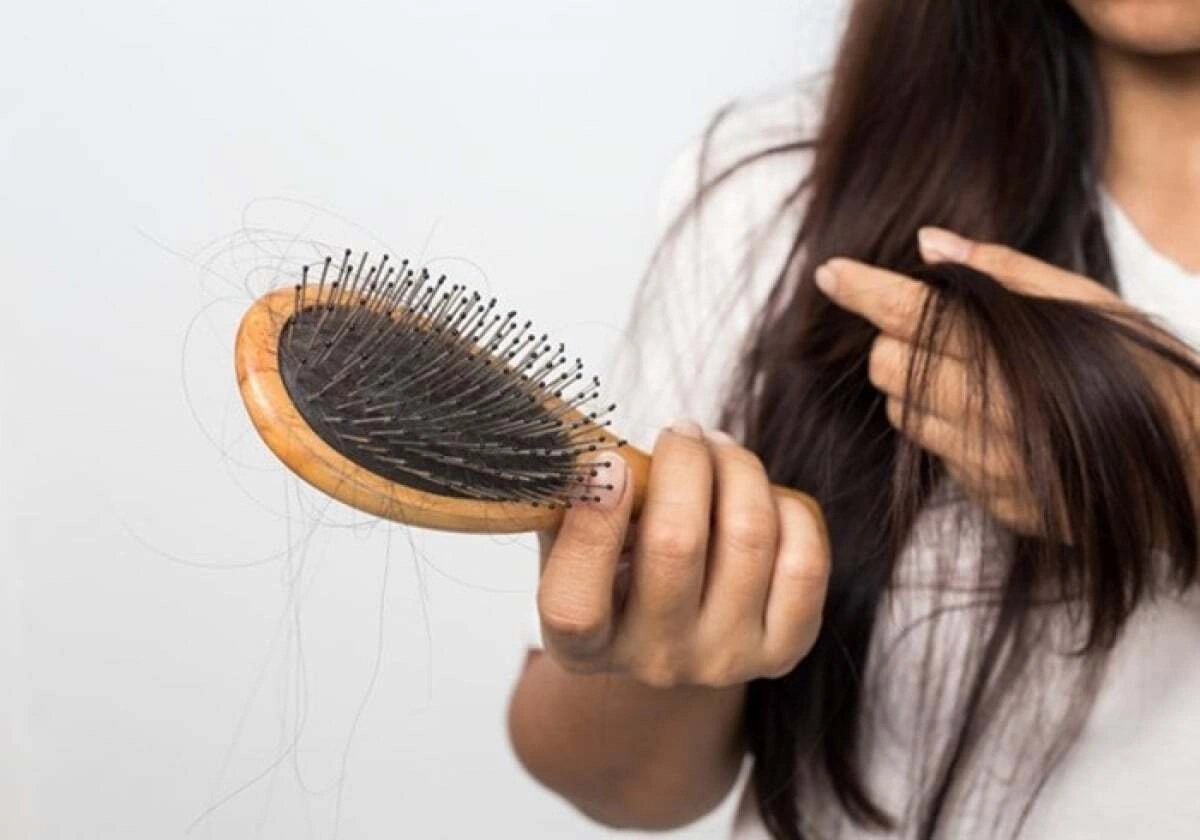 |
Hair loss is a physiological sign of the body. Photo: AI |
Hair loss treatment depends entirely on its underlying cause. Genetic hair loss often requires ongoing treatment with minoxidil and may involve other medications under a doctor's supervision. Hair loss due to iron deficiency, thyroid disease, or nutritional deficiencies requires treating the specific cause. Alopecia areata or scarring alopecia may necessitate anti-inflammatory drugs, immune modulators, or specialized treatments.
When experiencing hair loss, you should consult a dermatologist who can identify the type of hair loss, examine the scalp, and assess hair follicles. An endocrinologist will become involved if the patient shows signs suggestive of thyroid disease, polycystic ovary syndrome, androgen excess, pituitary disease, Cushing's syndrome, or hair loss during weight loss.
"Depending on the individual case, doctors may order a complete blood count, ferritin to assess for iron deficiency, a thyroid check, or androgen tests if there are irregular periods, excessive body hair, and acne", the doctor stated.
Note that many "beautiful hair, beautiful nails" supplements containing high-dose biotin can interfere with certain thyroid tests. Individuals using biotin should inform their doctor before blood collection.
Do not self-administer numerous biotin, zinc, selenium, vitamin A, or vitamin E supplements without evidence of deficiency. Taking too much will not accelerate hair growth, and in fact, some micronutrients, when taken in overdose, can even worsen hair loss.
Thuy An