Fatty liver disease has become a common ailment in modern society. During a recent interview on the "Wishing You Health" program, doctor Chien Cheng-hung, a gastroenterology and hepatobiliary specialist at Keelung Chang Gung Memorial Hospital in Taiwan (China), recounted treating a patient in their fifties, weighing over 80 kg, who suffered from moderate fatty liver disease and chronic hepatitis. The patient's fasting blood sugar levels also exceeded normal, ranging from 110 to 120 mg/dL, placing them in the pre-diabetic range.
Following the examination, doctor Chien noted that the patient consumed almost no vegetables and habitually ate takeout food daily. Consequently, he advised the patient to cook more at home and incorporate plenty of sweet potato leaves into their diet. Three months later, test results showed not only positive changes in fatty liver and reduced blood sugar, but also a significant drop in the patient's hepatitis index, from 150 U/L to approximately 50 to 60 U/L.
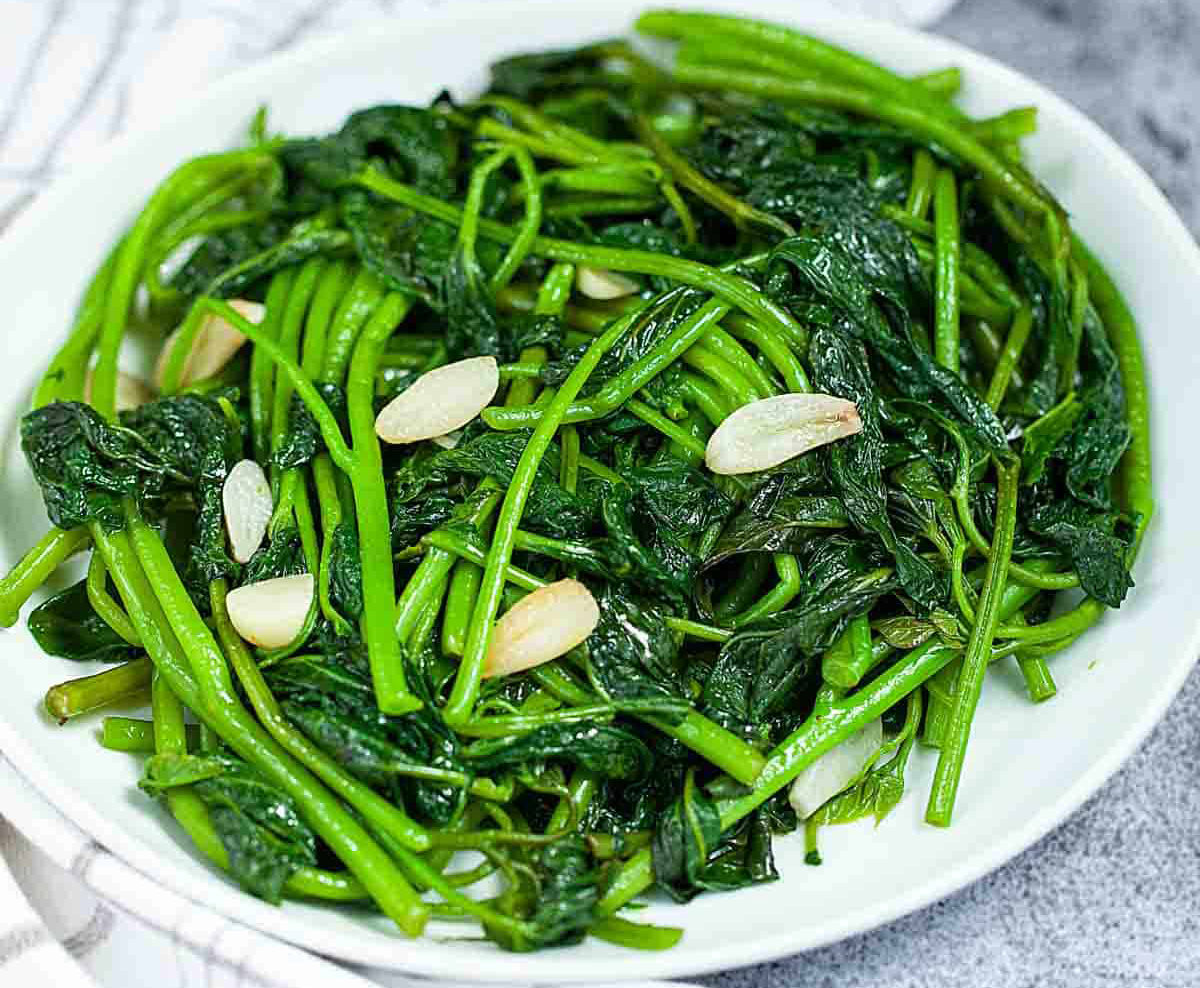 |
Illustrative photo: Ohmyfoodrecipes
Explaining the scientific mechanism, the specialist stated that once sweet potato leaves enter the intestines, they stimulate the body to release "glucuronidin (GLP-1)", a component often found in weight-loss injections. This simultaneously sends satiety signals to the brain, thereby reducing appetite. Additionally, sweet potato leaves are rich in anti-inflammatory polyphenols, with concentrations nearly 30 times higher than green tea, which helps protect liver cells and regulate lipid metabolism.
For optimal nutrient absorption, the doctor recommends thoroughly cooking sweet potato leaves before consumption. According to research from the Agricultural Research Institute, steaming is the best method for preserving nutritional value, helping the leaves release 4,5 times more polyphenols. Consumers can use an electric steamer or place the leaves in a pot of boiling water, cover it, and steam for about two to three minutes.
Moreover, stir-frying is also encouraged because polyphenols are not easily water-soluble, effectively limiting nutrient loss. Conversely, conventional boiling causes some nutrients to dissolve into the water, significantly diminishing the nutritional value of this vegetable.
Binh Minh (Source: TVBS)