Japanese policymakers had anticipated the country would reach its "demographic bottom" by 2041. However, current trends indicate Japan is approaching this milestone in 2025, 16 years earlier than the government's worst-case scenario.
Preliminary data from the first 10 months suggests the total number of children born in 2025 will likely fall below 670,000. This marks a record low since data collection began in 1899. Masakazu Yamauchi, a demography expert at Waseda University, noted that births in 2025 are projected to decrease by 3% compared to 686,000 in 2024. If this occurs, it will be the 10th consecutive year Japan records a historic low in births.
Previously, in 2023, Japan's National Institute of Population and Social Security Research forecast 749,000 births for 2025. Even its most pessimistic scenario predicted at least 681,000 births for this year. The current reality, however, has breached all demographic safety thresholds.
In a country where out-of-wedlock births remain taboo, birth rates correlate with marriage numbers. Yet, the marital bonds are weakening. The annual number of marriages has dropped below 500,000, representing one-half of the peak recorded in 1972.
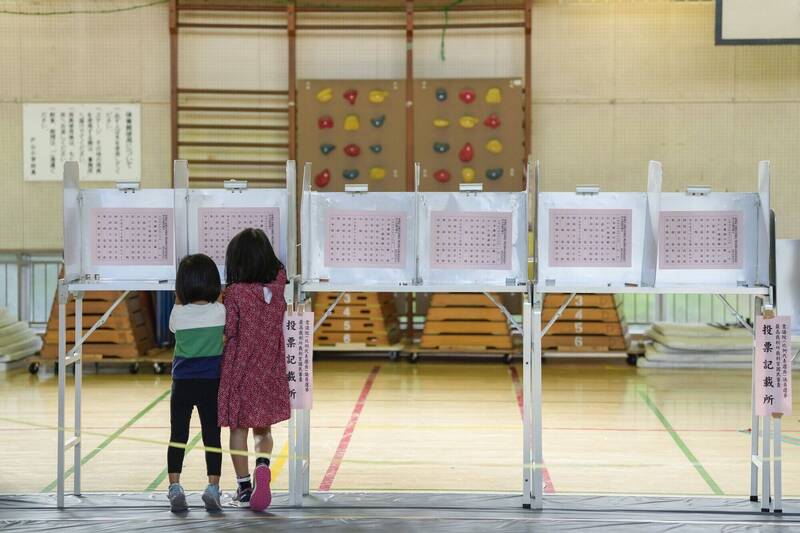 |
Children are becoming increasingly scarce in Japan. Illustration: Bloomberg |
This decline in births, coupled with rising mortality rates in a super-aged society, is creating a demographic "black hole". In 2024 alone, Japan's population decreased by over 900,000 people. The problem is exacerbated as this data only accounts for the native resident community, highlighting an alarming decline in the country's indigenous population.
Prime Minister Sanae Takaichi described this as the nation's "greatest challenge" when establishing the Population Strategy Command in late November. The country has invested USD 23 billion into a three-year plan aimed at reversing the birth rate decline, though its effectiveness remains a significant question mark.
Many economists and academics are urging the government to confront this reality and adjust its entire fiscal plan. However, according to Masatoshi Kikuchi, chief strategist at Mizuho Securities, acknowledging this reality is a risky political gamble. Admitting flawed forecasts would confirm the complete failure of previous pro-birth policies. Consequently, the prospect of higher taxes and reduced pensions for citizens is unavoidable.
Pressure is mounting on 2026, the Year of the Fire Horse (Hinouma) in the Japanese calendar. Historically, the belief that girls born in this year are destined for misfortune caused the birth rate in 1966 to plummet by 25%.
Amid these gloomy predictions, a glimmer of hope emerges from the younger generation. Takashi Inoue, a demography expert at Aoyama Gakuin University, suggests that young people living in the age of AI and technology no longer adhere to such traditional beliefs. For them, the "Fire Horse" is merely a memory of the older generation, insufficient to sway personal decisions regarding marriage or family.