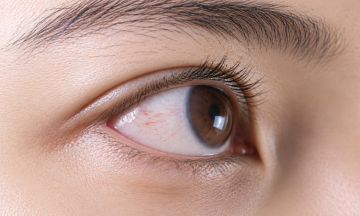
Health examination data compiled by the Ho Chi Minh City Department of Health reveals that more than 60% of students in TP HCM suffer from refractive errors. This marks an increase from approximately 54% in the 2023-2024 period and 30% before 2020. According to Dr. Hoang Quyet Tien from the Medical Information Center at Tam Anh General Hospital, TP HCM, myopia is associated with changes in the axial length of the eyeball. When the eyeball elongates, images do not focus correctly on the retina but instead fall in front of it, causing children to experience blurry distant vision. In children, the eyeball continues to develop, meaning the degree of myopia can increase throughout their school years.
Extended periods of near vision can contribute to an increased risk of myopia. Changing daily routines and study habits mean children's eyes are engaged in more close-up work. Children study in class, read books, complete assignments on computers, and then continue using phones. If they sit too close, hunch over books, or stare at screens for long durations, their eyes must constantly adjust, which can elevate the risk of myopia.
However, electronic devices are not the only cause. Children who use phones infrequently but study for many hours, read regularly, and work on computers can still accumulate a high total amount of near vision time. Posture such as hunching over books, reading at an excessively close distance, or maintaining near vision activities for long periods all increase the duration their eyes must work at close range.
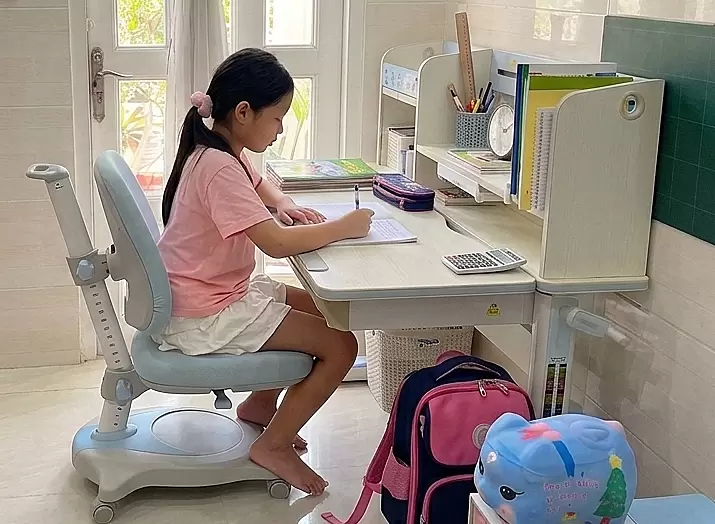 |
Children's study areas should be well-lit to help them maintain proper viewing distance and posture. *Thai Thanh*
Limited outdoor activity, influenced by habits, school schedules, tutoring, and indoor pursuits, is another factor. Children who spend more time outdoors have a lower risk of myopia, according to Dr. Tien. Outdoor light stimulates the retina to release dopamine, which can inhibit the elongation of the eyeball. This substance may play a role in regulating eyeball development and limiting its elongation, a factor linked to the onset and progression of myopia in children. This is one of the mechanisms being studied to explain the connection between outdoor activity and myopia risk.
Insufficient lighting conditions during study also contribute to an increased risk of myopia in children and adolescents. Incorrect sitting posture, hunching over books, or maintaining an excessively close viewing distance forces the eyes to work continuously at near range.
These factors often combine in daily life. Children who study for many hours, use electronic devices, engage in limited outdoor activities, or maintain near vision habits in inappropriate lighting conditions may face an elevated risk of myopia onset and progression.
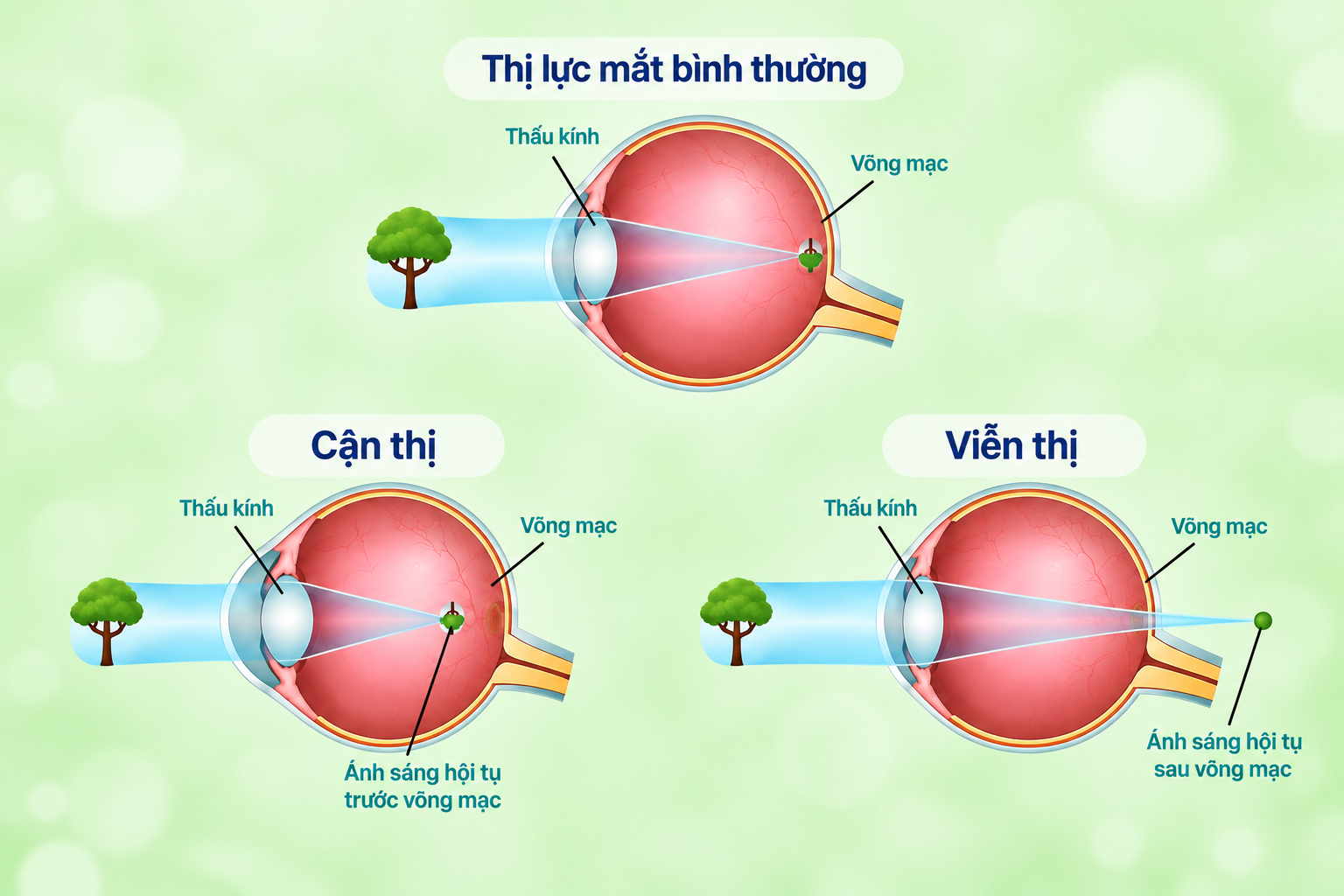 |
Simulation of a normal eye and an eye with refractive error. *Eco Pharmaceutical*
Severe myopia increases the risk of damage to the posterior structures of the eyeball, including the retina, and can lead to retinal detachment. Therefore, the goal is not only to help children see clearly but also to limit the rate of progression. Parents should encourage children to reduce continuous near vision time, maintain an appropriate distance, increase outdoor activities, ensure adequate lighting while studying, and schedule regular eye exams to monitor their myopia.
Dr. Tien states that in addition to adjusting habits, nutrition also plays a role in providing essential nutrients for the eyes. Certain plant compounds with antioxidant properties are being researched for their potential to help protect eyes from oxidative stress. Broccophane, extracted from broccoli, is being studied for its ability to boost the body's synthesis of endogenous thioredoxin. This is one of the body's antioxidant systems, involved in protecting cells from the effects of free radicals.
Dinh Dieu
| Readers can submit ophthalmology questions here for doctors to answer. |