Ovarian cancer is one of the common cancers affecting women, ranking after breast and cervical cancer. This disease encompasses several types, including epithelial ovarian cancer, germ cell tumors, stromal tumors, and mesenchymal tumors.
Master, Doctor Huynh Ba Tan, a Grade I Specialist in the Department of Surgical Oncology at the Oncology Center, Tam Anh General Hospital, TP HCM, stated that appropriate treatment methods are chosen based on the ovarian cancer stage, the patient's overall health, and their preferences.
Surgery is often the primary treatment option for ovarian cancer. Beyond removing the affected ovary, surgeons may also remove the uterus, the contralateral ovary, the omentum, or any other organs where the cancer has spread.
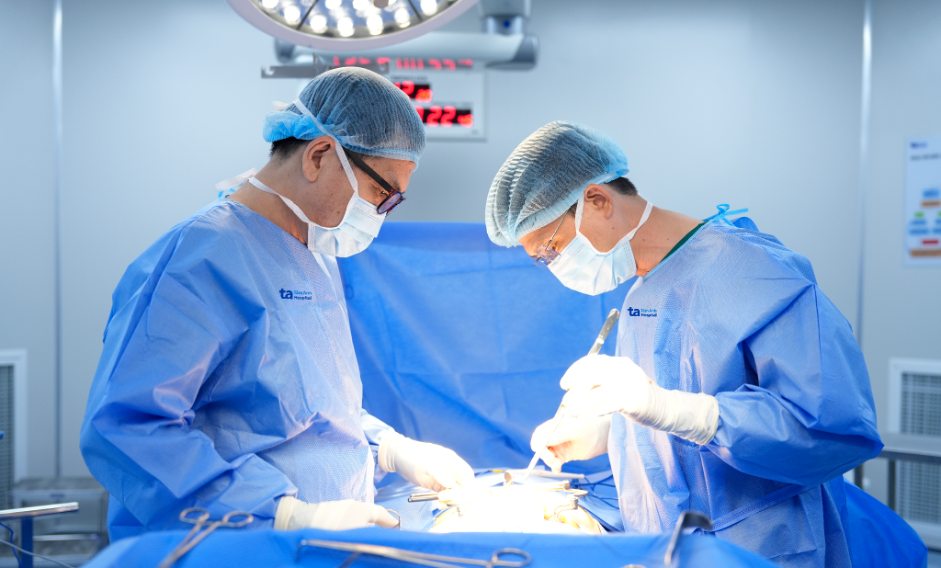 |
Doctor Tan and his team performing ovarian cancer surgery on a patient. Illustration: Tam Anh General Hospital |
During the surgical procedure, doctors also examine the abdominal cavity, diaphragm, and peritoneum for any existing lesions. Should any abnormalities be detected, a biopsy is performed to determine their nature, guiding subsequent treatments.
Chemotherapy is frequently administered after surgery to eliminate any residual cancer cells. Since chemotherapy drugs target both cancerous and rapidly dividing healthy cells, patients may experience side effects such as nausea, vomiting, fatigue, appetite loss, headaches, tingling sensations in the hands and feet, and skin darkening.
Radiation therapy employs high-energy rays to destroy cancer cells. Like chemotherapy, ovarian cancer radiation therapy can impact both cancerous and healthy cells. Consequently, patients might experience side effects including fatigue, loss of appetite, nausea, vomiting, diarrhea, and urinary discomfort.
Modern high-tech linear accelerator radiation machines, combined with individualized treatment protocols, precisely target cancer cells. This approach minimizes damage to surrounding healthy tissue and reduces side effects.
Targeted therapy utilizes drugs designed to attack and block specific genes or proteins present in cancer cells or those involved in tumor growth and development.
To determine the most suitable targeted drug, doctors conduct immunohistochemistry or tumor molecular biology tests to diagnose the specific type of ovarian tumor. While generally causing fewer side effects than chemotherapy, patients may still experience fatigue, diarrhea, high blood pressure, or dermatitis. Most of these adverse effects typically subside once treatment is stopped.
Immunotherapy represents a newer treatment approach, designed to activate the body's immune system to combat cancer cells. Currently, this method is primarily indicated for a select group of ovarian cancer patients who possess specific biomarkers.
Doctor Tan emphasized that modern technology, combined with multiple treatment methods and new-generation drugs, significantly improves the prognosis for ovarian cancer patients, particularly when detected in early stages. He advises women to undergo regular check-ups for early disease detection, which enables more effective treatment.
Khai Minh
| Readers can submit questions about cancer here for doctors to answer. |