Dr. Le Van Thanh, a specialist in the Center for Diagnostic Imaging and Interventional Radiology, identified an 8x10 mm subsolid nodule in Mr. Hoang's right lower lung lobe. Classified as Lung-RADS 4X, this lesion indicated a high risk of malignancy and required prompt treatment. Other ground-glass and solid nodules in both lungs were categorized as Lung-RADS 2, posing a low risk of malignancy and needing further monitoring. Mr. Hoang had smoked for over 40 years and reported no unusual symptoms.
 |
A subsolid nodule in Mr. Hoang's right lower lung lobe shown on a computed tomography scan. *Photo: Tam Anh General Hospital* |
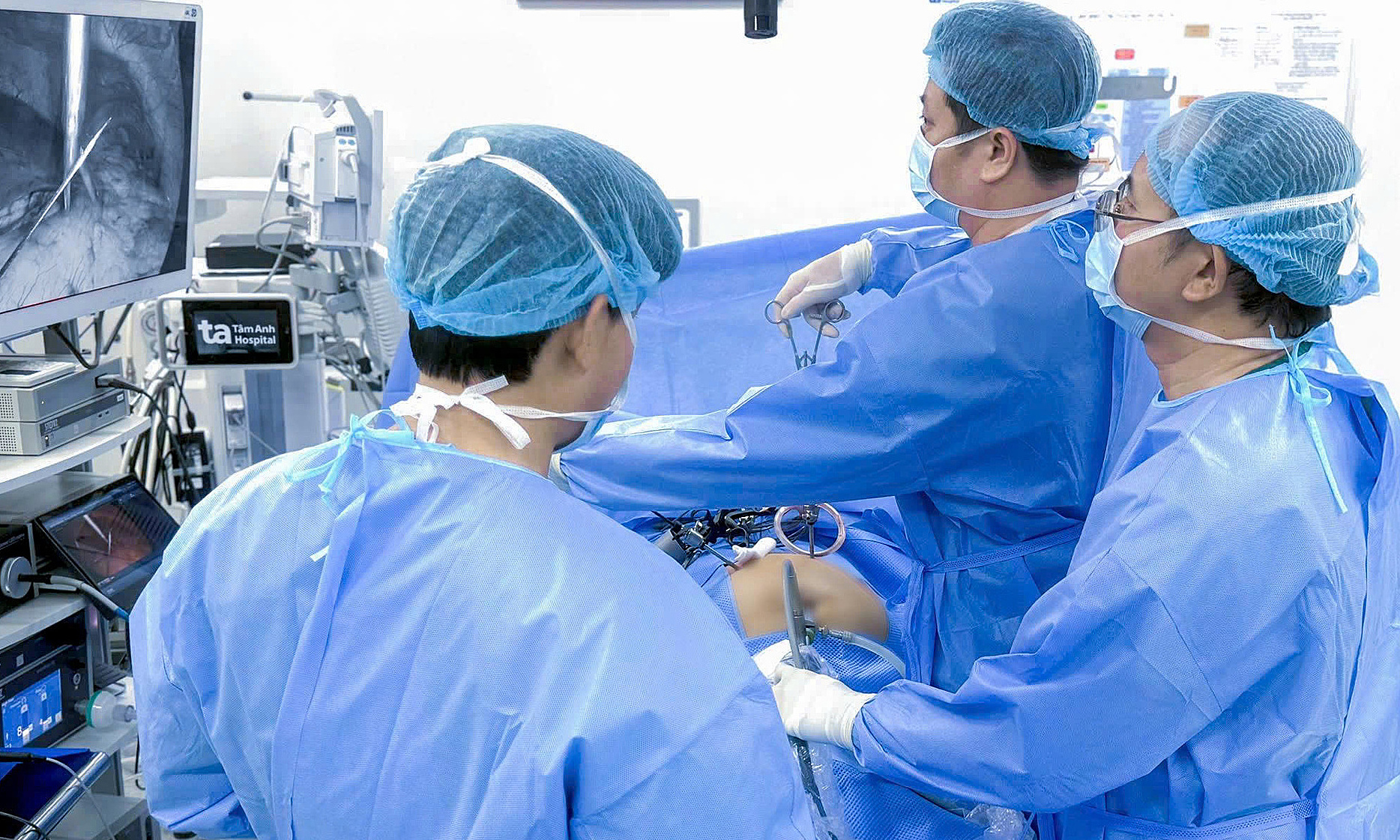
Before surgery, a bronchoscopy team evaluated Mr. Hoang's airways to ensure no abnormalities and to determine the appropriate surgical approach. Subsequently, the thoracoscopic surgery team performed a wedge resection, removing a small part of the right lower lung lobe containing the lesion for biopsy. Doctor Vu Huu Khiem, Head of the Oncology Department at Tam Anh General Hospital Hanoi, stated that this minimally invasive procedure preserves healthy lung tissue if the lesion is not malignant.
After accessing the affected lung lobe, surgeons removed a small section for immediate intraoperative frozen section analysis, which confirmed malignancy. The team then proceeded with a total right lower lobectomy and regional lymph node dissection.
Subsequent histopathological analysis revealed Mr. Hoang had grade 2 invasive non-mucinous adenocarcinoma (pT1bN0), an early-stage non-small cell lung cancer that had not yet metastasized to the lymph nodes.
 |
Mr. Hoang underwent a low-dose CT scan using a Somatom Force VB30 machine for postoperative follow-up. *Photo: Tam Anh General Hospital* |
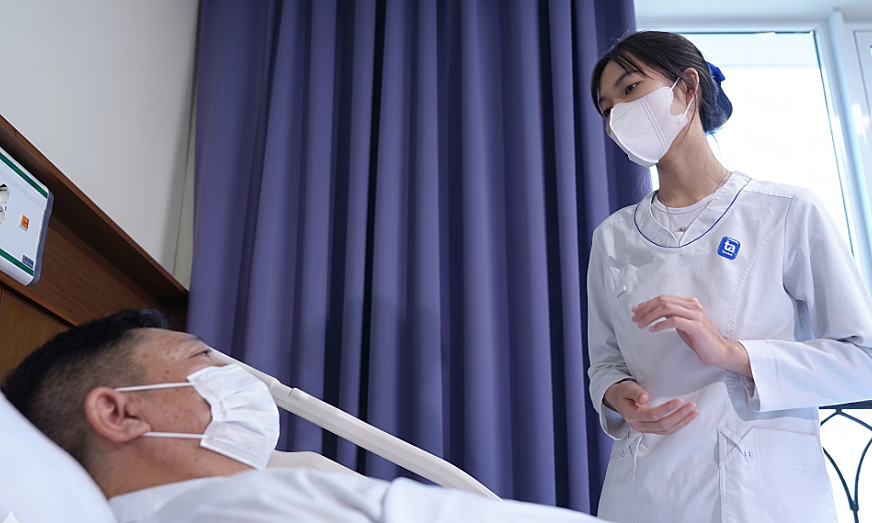
Post-operatively, Mr. Hoang's health stabilized, eliminating the need for chemotherapy or radiation therapy. A computed tomography scan 5 months later showed no signs of recurrence, though the remaining lung nodules require continued monitoring. He needs regular follow-up appointments and chest CT scans.
Doctor Khiem advises everyone to undergo regular health check-ups. High-risk individuals, including those over 50 who are current or former smokers, long-term smokers, or those with a history of lung cancer, should undergo annual screening with low-dose CT scans. Low-dose CT is an effective lung cancer screening method that helps identify abnormalities even before symptoms appear.
Hieu Nguyen
| Readers can submit questions about respiratory diseases here for doctors to answer |