A CT scan of Mr. Hieu's lungs at Tam Anh General Hospital, Ho Chi Minh City (TP HCM) revealed that the tumor had grown from 1,5 to 2,3 cm. It was located in the lung parenchyma, wedged between the pulmonary vein and the aorta at the lung hilum (segment S6). Associate Professor, Doctor Vu Huu Vinh, Director of the Thoracic and Vascular Surgery Center, stated that this location makes it extremely difficult to access using conventional bronchoscopy or thoracoscopy. A needle biopsy would carry a high risk of severe bleeding due to proximity to major blood vessels.
Following a consultation, the medical team decided to use the Da Vinci Xi robot system to access the lesion. The robot's flexible arms, capable of 540-degree rotation, navigated into the difficult-to-reach areas, enabling doctors to perform a two-in-one surgery: taking a biopsy sample and removing the tumor.
Associate Professor Vinh controlled the robot arms, simultaneously managing bleeding and maneuvering to reach the tumor, while the anesthesia team performed lung isolation using a double-lumen endotracheal tube. They adjusted the ventilator to minimize positive end-expiratory pressure (PEEP) and used negative pressure suction to clear residual air from the bronchi. The surgery faced challenges as the patient responded poorly to anesthesia, and the lung did not fully collapse, obscuring the surgeon's view and increasing the risk of bleeding.
After approximately two hours, the team dissected the tumor to obtain a frozen biopsy sample at sub-zero temperatures (from -20 to -50 degrees Celsius). Results confirmed it as a pulmonary carcinoid tumor – a type of neuroendocrine cell cancer. According to Associate Professor Vinh, carcinoid tumors typically appear in the gastrointestinal tract or bronchi; cases located deep within the lung parenchyma, like Mr. Hieu's, account for about 1-2% of lung cancer cases.
Upon receiving the biopsy results, the doctor used the robot to remove the entire lung lobe containing the tumor. Thanks to this minimally invasive technique, the patient recovered quickly and was healthy enough to continue with adjuvant chemotherapy and radiation therapy post-surgery.
 |
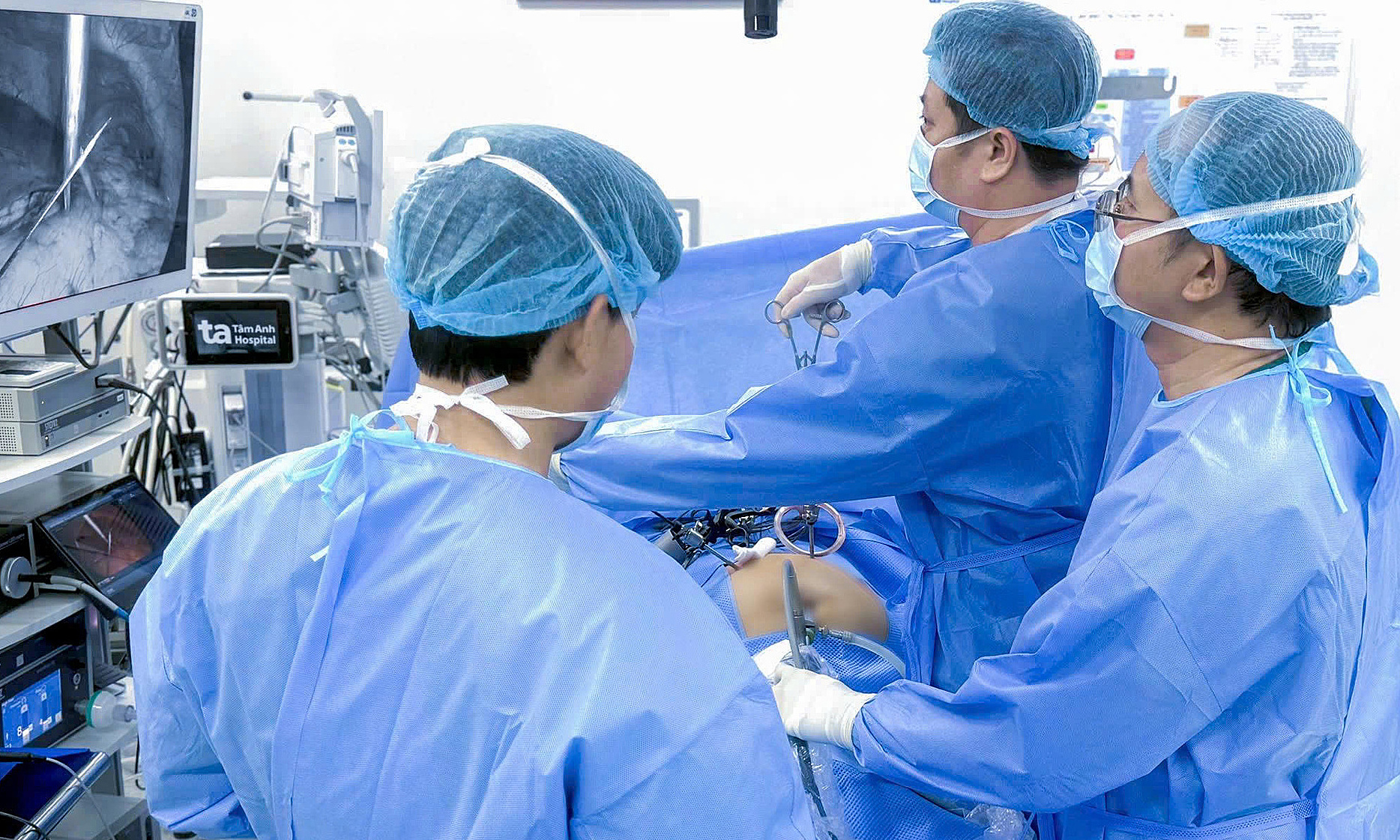
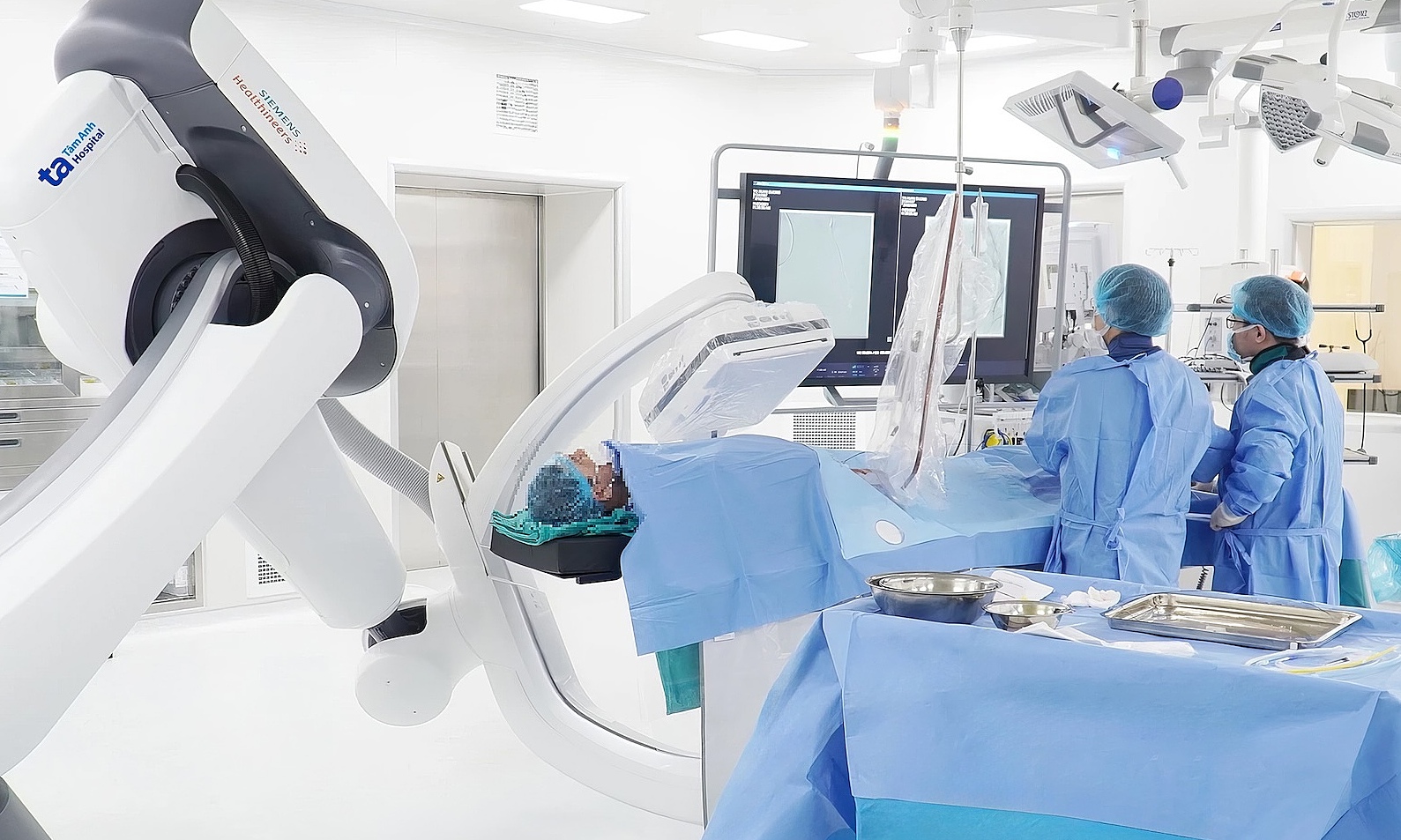
Associate Professor Vinh (far left) controls the Da Vinci Xi robot to remove Mr. Hieu's tumor. Photo: Tam Anh General Hospital
According to Associate Professor Vinh, chronic inflammation is a primary factor driving cellular structural changes, leading to the malignant transformation of benign tumors. "This could be why Mr. Hieu's initial tumor turned malignant," Associate Professor Vinh explained.
Globocan 2022 data shows Vietnam records over 24,400 new cases and nearly 22,600 deaths from lung cancer each year. Doctors recommend regular health check-ups to detect lung abnormalities early, allowing for timely treatment and preventing severe complications. To prevent lung cancer, avoiding smoking is crucial as it is a leading risk factor. Protecting the respiratory system when exposed to polluted environments and chemicals is also important.
Bao Anh
*Patient's name has been changed
| Readers can submit questions about cancer here for doctors to answer |