Eng English
China 中国人

Eng English
China 中国人
  • News
  • World
  • Business
  • Entertainment
  • Sports
  • Law
  • Education
  • Health
  • Lifestyle
  • Travel
  • Science
  • Digital
  • Automobiles
  • Trở lại Thể thao
  • Health
Friday, 7/8/2026 | 08:03 GMT+7

Metastatic cancer due to gene mutation

An 84-year-old patient, Ms. Hang, with end-stage metastatic bile duct cancer in the liver, was found to have three gene mutations and saw an 80% reduction in tumor size after receiving targeted therapy.

Ms. Hang was diagnosed with bile duct cancer in 2021 and underwent surgery to remove the tumor. The disease recurred three years later, necessitating various treatment approaches.

This March, she arrived at Tam Anh General Hospital in TP HCM with continuous high fever, a dry cough, exhaustion, and body aches, requiring oxygen support. Examinations revealed multifocal liver lesions, including a 17x15 cm tumor, alongside widespread damage in both lungs.

Following a multidisciplinary consultation, doctors determined that Ms. Hang was resistant to all standard chemotherapy regimens. Doctor Do Hoang Kha from the Department of Internal Oncology, Oncology Center, opted to identify gene mutations using ctDNA liquid biopsy technology. This method involves drawing blood to detect circulating tumor DNA fragments, avoiding the risks associated with needle biopsies into the liver tumor.
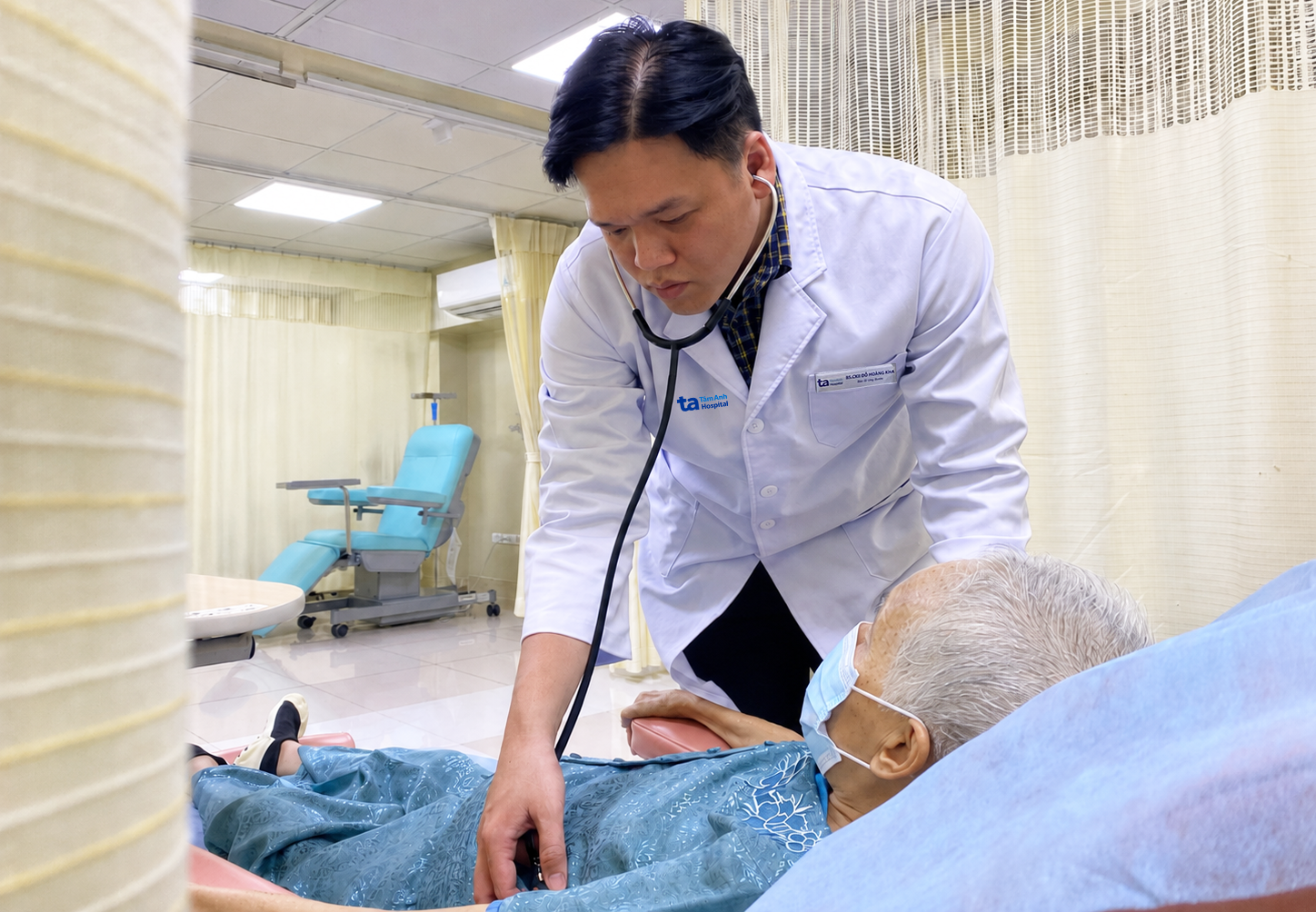
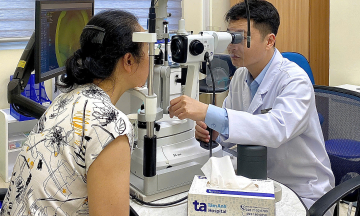
Doctor Kha examines Ms. Hang. *Photo: Tam Anh General Hospital*

Gene sequencing results identified three concurrent mutations in Ms. Hang: R273H on the TP53 gene, R1450 on the APC gene, and G12C on the KRAS gene. The KRAS gene typically controls and prevents excessive cell growth. However, when the KRAS gene mutates at the G12C segment, it sends continuous division signals to cells, leading to abnormal proliferation and cancer formation.

Doctor Kha stated that targeted drugs are now available to specifically block the KRAS G12C mutation, a significant advancement as no specific treatment existed previously. Ms. Hang was prescribed daily targeted therapy. This medication works by specifically binding to the KRAS G12C protein, thereby blocking the signals that drive cancer cell division and growth.

After one month, Ms. Hang experienced reduced cancer symptoms but developed side effects, including elevated liver enzymes and pneumonia. The medical team administered anti-inflammatory drugs and supportive intravenous fluids for 15 days, stabilizing her health indicators. She continued her daily targeted cancer treatment.

After 4 months of consistent treatment, she was able to breathe independently, her abdominal distension improved, her appetite increased, and she could perform basic daily activities.

The CT scan results from her most recent follow-up showed reduced lung lesions and an 80% decrease in liver tumor size, now measuring 3,5 cm.

Doctor Kha explained that cancer-causing gene mutations can arise from environmental factors like chemicals, UV radiation, and bacteria, or from random, uncorrected errors during cell DNA replication. Early-stage gene mutation-driven cancers are often treated with surgery and chemotherapy. In late stages, targeted drugs can be an effective treatment option.

Doctors advise that patients with late-stage cancer resistant to standard chemotherapy should not abandon hope prematurely. Instead, gene mutation testing can provide opportunities for personalized treatment, potentially extending and improving their quality of life.

Khai Minh

*The patient's name has been changed.

By VnExpress: https://vnexpress.net/ung-thu-di-can-do-dot-bien-gene-5106057.html
Tags: tumor removal surgery gene mutation cancer

News in the same category

Female engineer loses 11 kg, reverses severe fatty liver after 12 weeks of proper eating

Female engineer loses 11 kg, reverses severe fatty liver after 12 weeks of proper eating

Once facing the risk of cirrhosis complications due to stress-eating habits at night, the 35-year-old female engineer fully recovered liver damage by scientifically changing her meal order.

Three types of Japanese brown algae rich in nutrients

Three types of Japanese brown algae rich in nutrients

Mozuku, Mekabu, and Gagome Kombu provide fiber, vitamins, minerals, and are a good natural source of fucoidan, beneficial for the body.

Mistaken for heart attack, diagnosed with mental disorder

Mistaken for heart attack, diagnosed with mental disorder

Hoa, 26 years old, experienced chest pain, rapid heartbeat, and dizziness, believing she was having a heart attack or stroke, but doctors diagnosed a mental disorder.

Six annual health checks for people over 40 to avoid chronic diseases

Six annual health checks for people over 40 to avoid chronic diseases

At age 40, paying attention to blood pressure, blood sugar, blood lipids, regular screenings, and consistent exercise combined with proper nutrition is crucial for managing health before old age.

What do long-lived people typically do each evening?

What do long-lived people typically do each evening?

Getting enough sleep, eating early dinners, relaxing, and spending time with family are common evening habits of long-lived individuals in Blue Zones.

Understanding sperm: what you need to know

Understanding sperm: what you need to know

On average, the human body can produce about 1,000 sperm with each heartbeat, equating to tens of millions daily.

5 ingredients to add to lemon water for health

5 ingredients to add to lemon water for health

Adding chia seeds, ginger, honey, and mint not only enhances the flavor of lemon water but also boosts its fiber and antioxidant content, benefiting health.

Overnight transfer saves stroke patient unable to afford surgery

Overnight transfer saves stroke patient unable to afford surgery

A 44-year-old woman suffering a brain hemorrhage was saved after her family made an urgent overnight transfer from Ho Chi Minh City to Can Tho for surgery, as they could not secure enough funds for the upfront hospital fees.

Vietnam aims to reduce breast cancer mortality by 2.5% annually

Vietnam aims to reduce breast cancer mortality by 2.5% annually

Vietnam targets an average 2.5% annual reduction in breast cancer mortality between 2026 and 2035, driven by a national program implementing timely screening, diagnosis, and treatment strategies.

What to do after being diagnosed with high blood pressure?

What to do after being diagnosed with high blood pressure?

Patients should adhere to treatment, monitor blood pressure at home, reduce salt intake, exercise regularly, quit smoking, and limit alcohol to prevent complications.

Eng English
China 中国人
  • News
  • World
  • Business
  • Entertainment
  • Sports
  • Law
  • Education
  • Health
  • Lifestyle
  • Travel
  • Science
  • Digital
  • Automobiles
FPT Tower, 10 Pham Van Bach Street, Dich Vong Ward,
Cau Giay District, Hanoi, Vietnam
Email: contacts@vnportal.net
Tel: 028 7300 9999 - Ext 8556
Advertise with us: 090 293 9644
Register
© Copyright 2026 vnnow.net. All rights reserved.
Terms of use Privacy policy Cookies