During the workshop on "Orientations for Developing Supplementary Health Insurance Policy" on 18/12, Vu Nu Anh, Deputy Director of the Health Insurance Department, stated that the agency is designing new insurance packages to provide people with additional options beyond the mandatory scheme. This supplementary health insurance is intended to operate alongside social health insurance, not replace it, and is specifically for individuals already enrolled in the mandatory program.
The initial draft proposes four benefit groups: packages supporting co-payments for mandatory health insurance; packages covering out-of-scope or on-demand services; packages for critical illnesses with high costs; and packages based on private agreements between the buyer and provider.
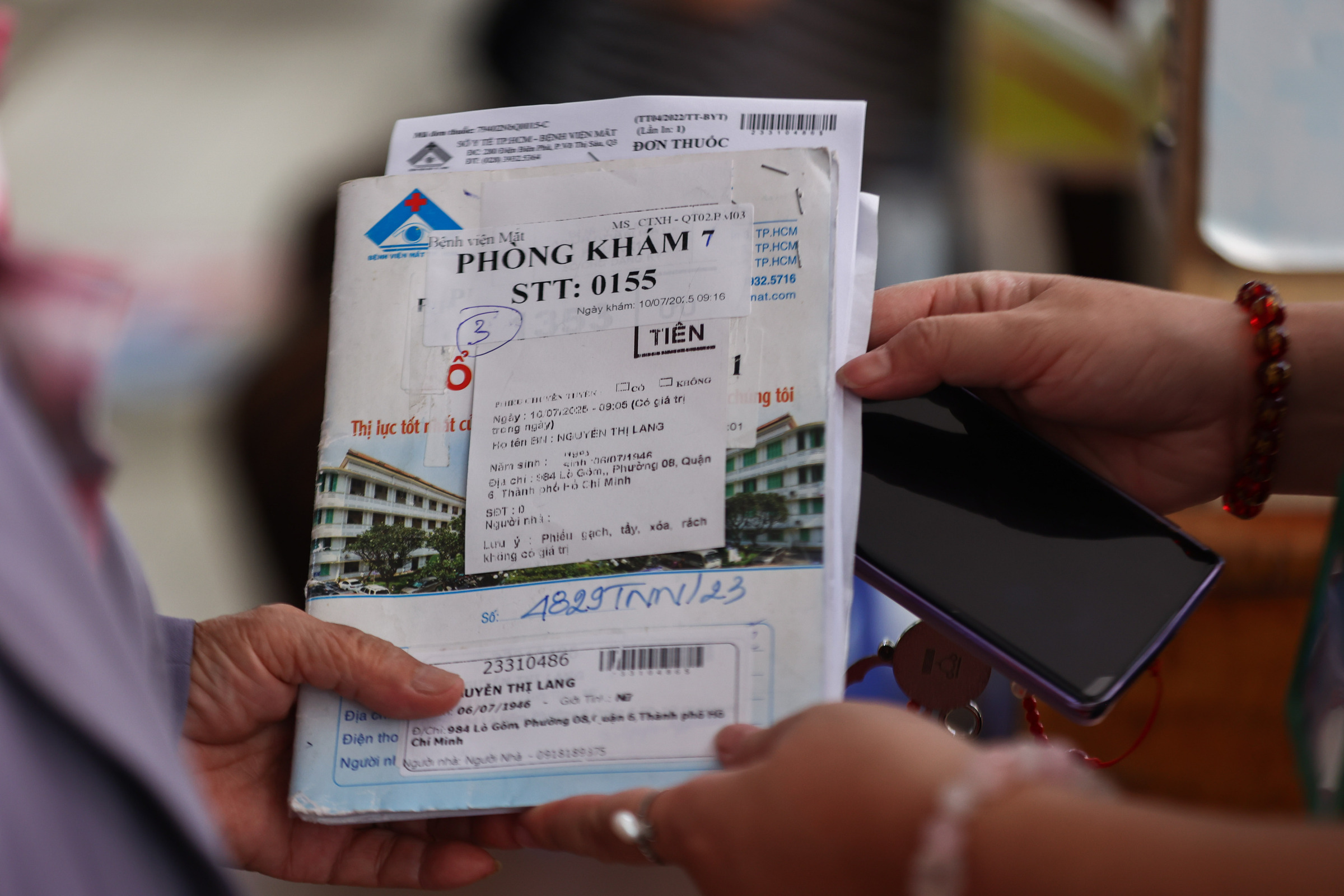 |
People receiving medical examination at Ho Chi Minh City Eye Hospital, 7/2025. Photo: Quynh Tran |
Explaining the proposal, Ms. Nu Anh noted that despite nationwide health insurance coverage exceeding 94%, the basic benefit package does not fully meet diverse needs. This is particularly true for high-tech procedures, preventive care, or chronic disease management. Vietnam's current health insurance contribution rate, at just 4,5% of the basic salary, is the lowest in the region and cannot keep pace with rising medical costs. Developing supplementary packages would increase coverage and ease financial pressure on patients.
Permanent Deputy Minister Vu Manh Ha also highlighted that out-of-pocket medical expenses currently account for over 40% of total healthcare costs, surpassing the World Health Organization's recommendations. The risk of impoverishment due to illness continues to threaten vulnerable groups and individuals with long-term diseases.
According to Ministry of Health leaders, current health insurance benefits are comprehensive relative to contributions but do not fully satisfy the needs of middle and high-income groups. The new insurance scheme is expected to create additional financial tools, helping to make the healthcare social security system more sustainable and equitable.
Referencing international experience, Dr. Nguyen Khanh Phuong of the Institute for Health Strategy and Policy (Ministry of Health) noted that many countries, including Germany, the Netherlands, Switzerland, and Japan, have adopted this model. Supplementary insurance in these nations is often privately provided, covering services beyond the basic package, such as dental care, ophthalmology, or private treatment rooms. In the Philippines, patients must exhaust their social health insurance benefits before receiving payments from supplementary health insurance. In France, supplementary health insurance covers up to 96% of the population, with state support for low-income individuals, significantly reducing the medical cost burden.
Drawing from this experience, Dr. Phuong asserted that Vietnam needs to promptly establish a clear legal framework for the linkage between social and commercial health insurance. This framework should accurately define the "supplementary" role, preventing benefit overlaps and inequalities in accessing healthcare services.
Le Nga