Sai Gon Eye Hospital Ngo Gia Tu launched the new Phakic CustomEyes technology, integrating a US-made eye ultrasound system with an artificial intelligence (AI) platform. This enables in-depth eye structure analysis, optimizing accuracy in selecting intraocular lens (ICL) size and placement. These factors are crucial for treatment effectiveness and long-term safety, according to the hospital.
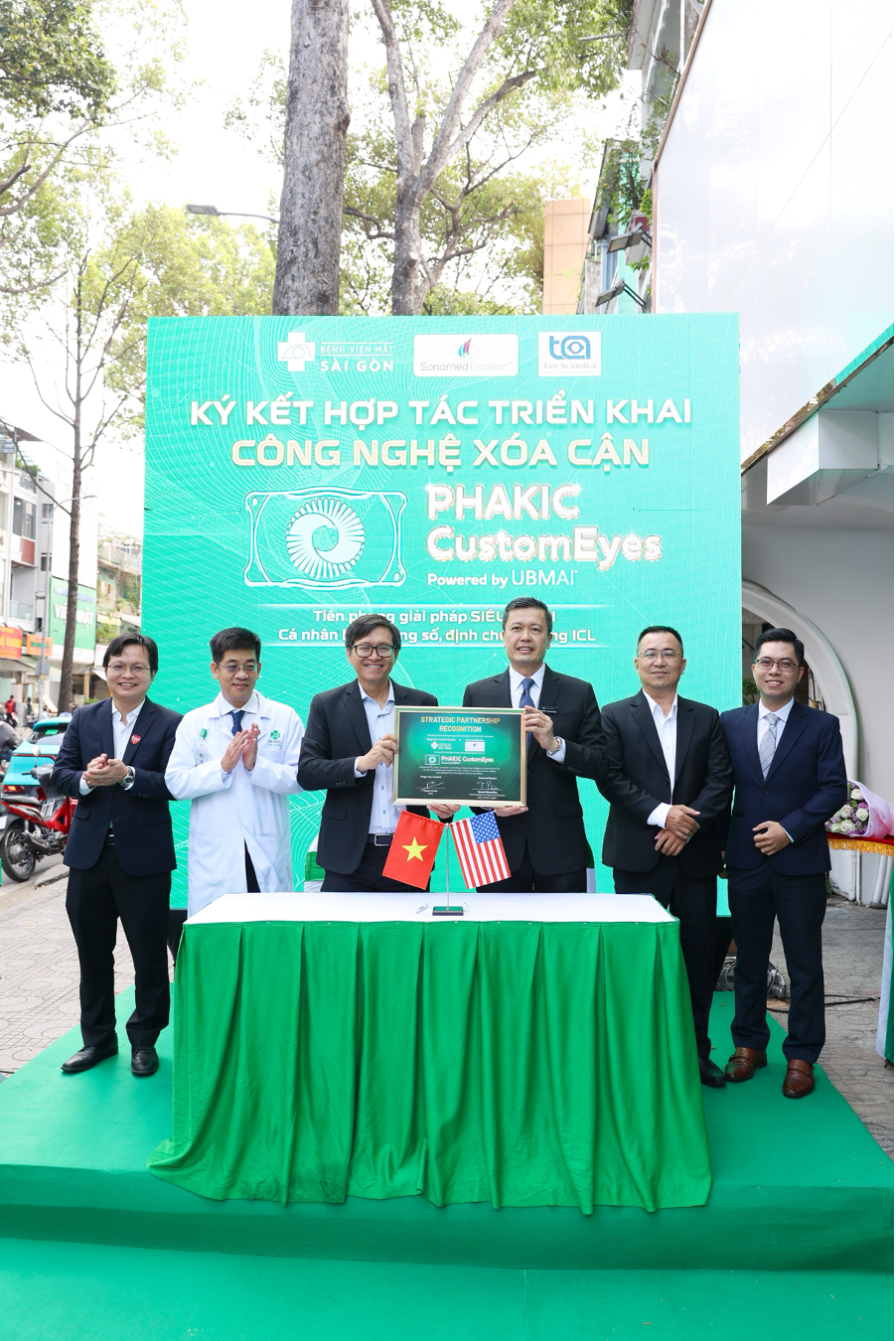 |
Representatives from Sai Gon Eye Hospital system and US technology group Sonomed Escalon at the cooperation signing ceremony for the launch of Phakic CustomEyes myopia correction technology. *Photo: Sai Gon Eye Hospital*.
Sai Gon Eye Hospital states that global ophthalmologists widely regard Phakic intraocular lens implantation surgery as an optimal solution. It targets severe myopia, hyperopia, or astigmatism, and is suitable for patients with thin corneas or those not candidates for laser correction. The success and safety of this procedure hinge on precise diagnosis, determining the correct size and placement of the intraocular lens.
The Phakic CustomEyes system's key innovation is its integration of Sonomed Escalon's (US) UBM AI eye ultrasound system. Likened to an "ultrasound oracle", this system produces detailed images of structures behind the iris, capturing individual biometric differences. The ICL Guru AI platform then analyzes this data to recommend the optimal intraocular lens placement and personalized lens size for each patient.
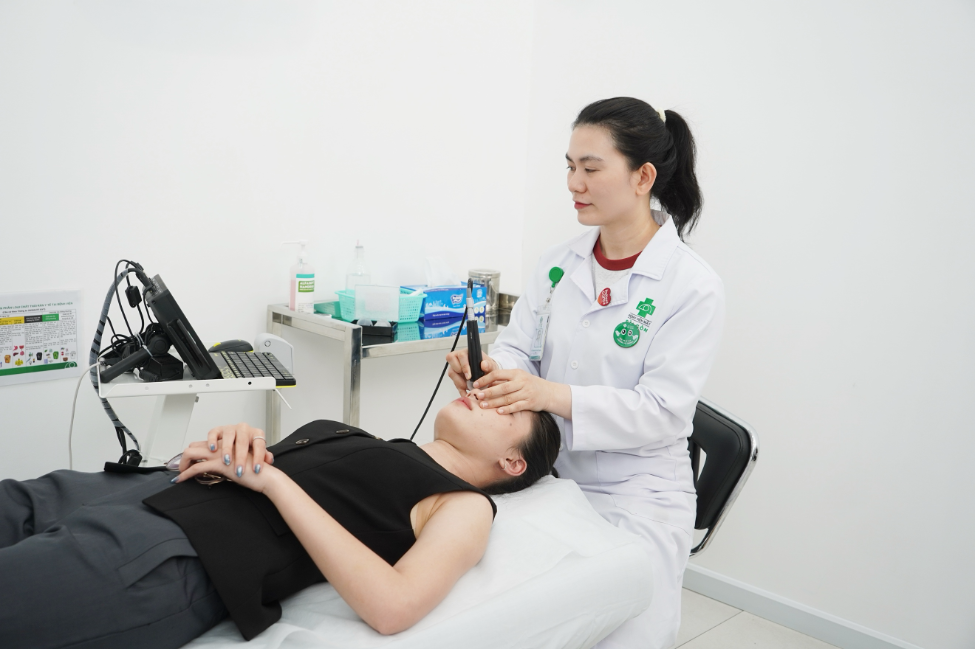 |
A doctor at Sai Gon Eye Hospital Ngo Gia Tu uses the UBM AI eye ultrasound system to display detailed structures behind the iris. *Photo: Sai Gon Eye Hospital*.
Master, Doctor Nguyen Phu Tung, Executive Director of Sai Gon Eye Hospital Ngo Gia Tu, explained that this technology enables precise visualization of the lens implantation structure. This reduces risks associated with suboptimal positioning, such as cataracts or glaucoma. Doctor Tung, a Phakic surgery expert with over 1,000 cases of experience, added: "The AI platform analyzes 25 different biometric parameters for each individual. It draws on a large number of successful surgeries worldwide to suggest optimal lens sizes for each patient."
Phakic CustomEyes provides doctors with technological support, ensuring adherence to surgical standards, enhancing safety, and optimizing visual quality based on individual eye characteristics. For patients with high astigmatism, a Sai Gon Eye Hospital representative noted that the system integrates the Zeiss Callisto Eye digital surgical guidance system. This system replaces traditional medical ink pens by directly marking the astigmatic axis on the eye prior to surgery.
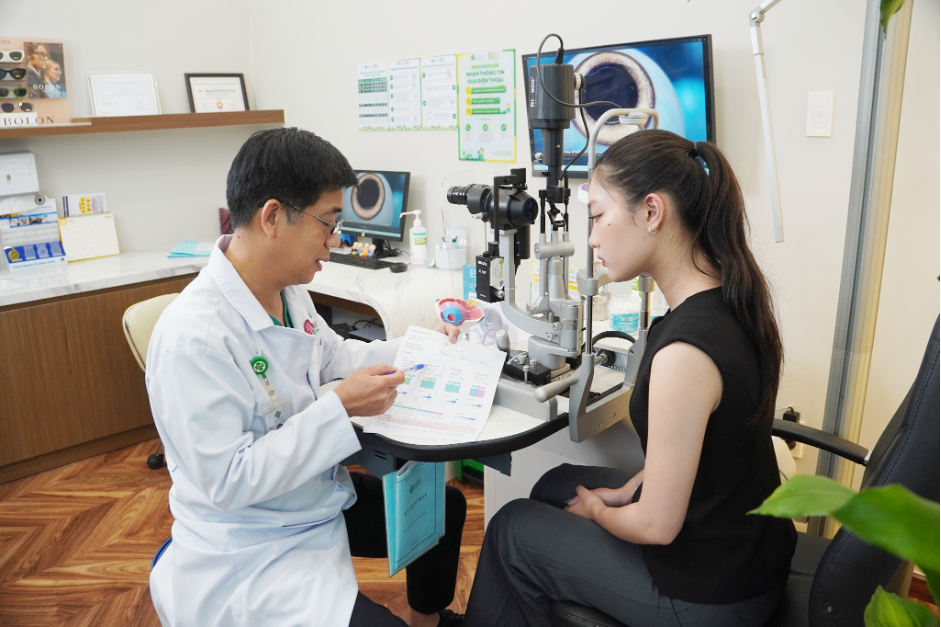 |
Master, Doctor Nguyen Phu Tung consults on the optimal placement and personalized ICL intraocular lens size for a patient. *Photo: Sai Gon Eye Hospital*.
A Sai Gon Eye Hospital representative explained: "Acting as a GPS map during surgery, Zeiss Callisto Eye automatically tracks and adjusts the coordinate system for the eye's slightest movements. This guides the surgeon to precisely rotate the intraocular lens into the astigmatic axis." The technology utilizes Phakic Evo ICL lenses, designed to optimize aqueous humor flow. These lenses offer a treatment range of up to 18 diopters for myopia, 6 diopters for astigmatism, and 6 diopters for hyperopia. Approved by the US Food and Drug Administration (FDA), they ensure quality and safety standards.
During the technology launch, Associate Professor, Doctor Nguyen Huu Chuc, Vice President of the Vietnam Ophthalmological Society and President of the TP HCM Ophthalmological Society, highlighted previous challenges. He noted that indirect measurement methods carried a risk of complications, such as an ICL lens placed too close to the natural lens, potentially increasing cataract risk, or an oversized ICL lens causing elevated intraocular pressure.
"The application of ultrasound technology combined with AI in Phakic CustomEyes provides doctors with more comprehensive access to the eye's actual anatomical parameters," he explained. "This enables precise decisions regarding lens size and position. When each surgery is personalized with specific data, patients have the opportunity to achieve superior visual quality, particularly in complex lighting conditions."
The implementation of this new technology aligns with Sai Gon Eye Hospital system's strategic direction to maintain its leading position and embrace the trend of personalized treatment in modern medicine.
Quang Anh
Sai Gon Eye Hospital has developed over 22 years, establishing a nationwide network of 29 hospitals and clinics. It consistently updates and implements leading global vision correction technologies.
Access the website here.
Hotline: 1900 555 553.