Mr. Trong, 80, was admitted to Tam Anh General Hospital Ho Chi Minh City (TP HCM) on monday for emergency treatment, two days after experiencing dizziness, progressive left-sided weakness, speech difficulties, and confusion. He has a history of hypertension and diabetes, though he maintained a healthy lifestyle with daily exercise and regular medication.
Doctors diagnosed Mr. Trong with an ischemic stroke, a condition where blood supply to the brain is suddenly blocked or reduced. This deprives brain cells of oxygen and nutrients, leading to damage and cell death. His right internal carotid artery was severely narrowed by more than 90%, the primary cause of his stroke. Without prompt intervention, the risk of lasting complications such as hemiplegia, cognitive impairment, and speech disorders was substantial.
Doctor Nguyen Anh Dung, Head of Thoracic and Vascular Surgery at the Thoracic and Vascular Surgery Center, Tam Anh General Hospital TP HCM, noted that stroke (cerebrovascular accident) is a prevalent global cause of death. Carotid artery narrowing is a common contributor, accounting for about 15% of cases, yet it is frequently overlooked, leading to delayed treatment.
Prior to surgery, Mr. Trong underwent intensive treatment with anticoagulant and antiplatelet medications. After 7 days, his condition improved, and his dizziness and blurred vision resolved.
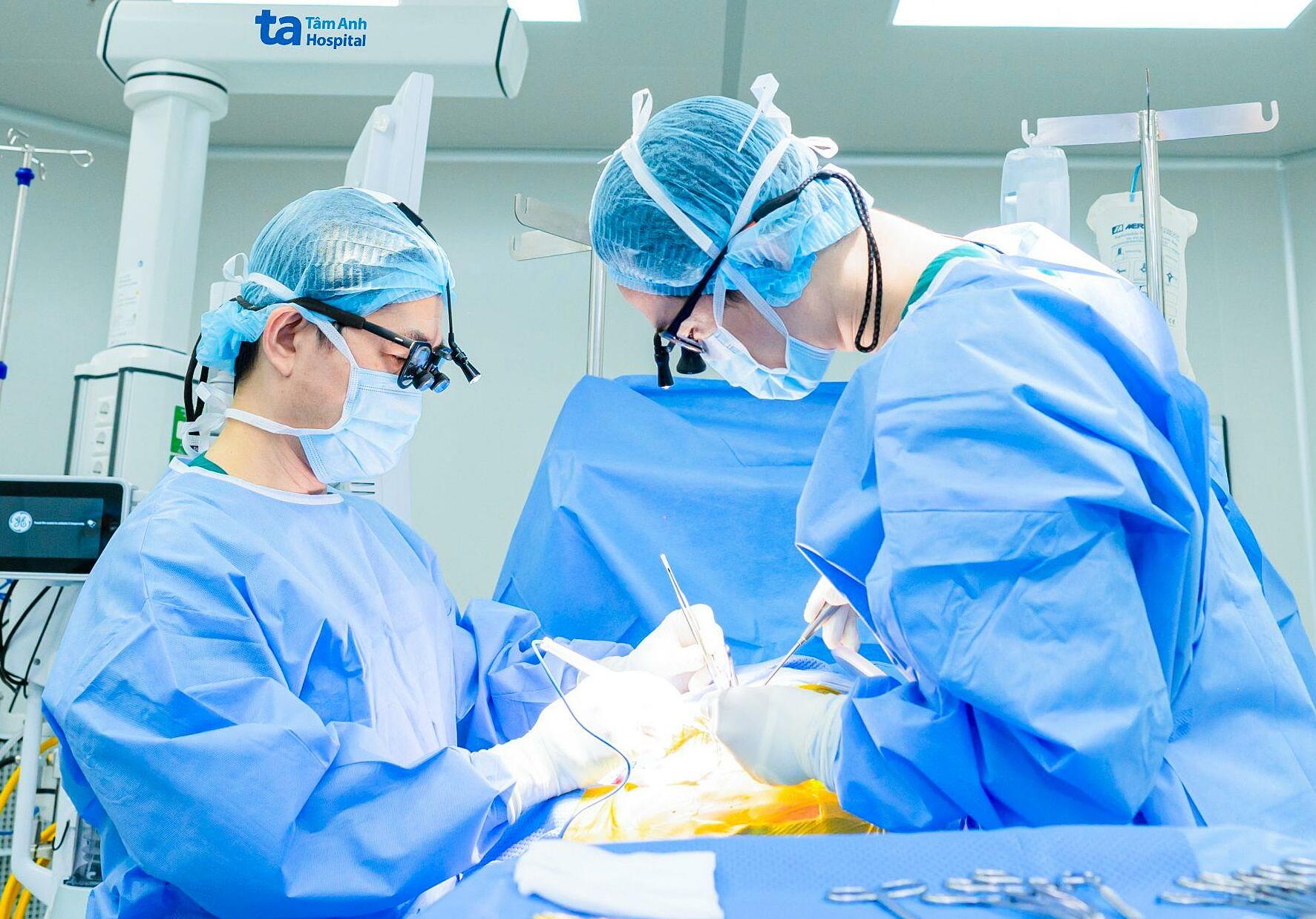 |
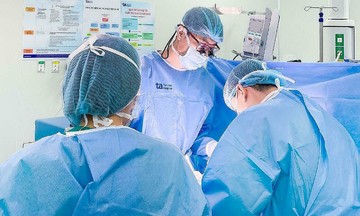
Doctor Dung (left) and his team performed a carotid endarterectomy on the patient. *Photo: Ha Vu* |
Doctor Le Chi Hieu from the Thoracic and Vascular Surgery Center explained that two primary methods exist for treating carotid artery narrowing: surgery and stenting. For Mr. Trong, doctors opted for surgical intervention.
The surgical team made an incision to expose the segment of the carotid artery obstructed by atherosclerotic plaque. Doctors then temporarily clamped the carotid artery, halting blood flow to facilitate the procedure. Throughout the operation, the patient's brain received blood from the contralateral artery branch. To ensure a continuous and adequate blood supply to the brain, doctors closely monitored hemodynamic parameters, maintaining them at 130-140 mmHg. They also observed reperfusion status using a brain tissue oxygen monitor, allowing for appropriate adjustments.
After nearly two hours, doctors successfully removed the entire atherosclerotic plaque, restoring a clear lumen to the carotid artery. Mr. Trong was discharged after three days, experiencing no complications.
According to Doctor Dung, the most common cause of carotid artery narrowing is the accumulation of atherosclerotic plaque on artery walls. Other risk factors include dyslipidemia, hypertension, diabetes, smoking, a family history of carotid or coronary artery disease, obesity, and physical inactivity.
Carotid artery narrowing often presents with no symptoms or vague ones, easily mistaken for common ailments. Therefore, individuals at risk should undergo screening for early detection. If suspected stroke symptoms appear—such as slurred speech, double or blurred vision, vision loss in one or both eyes, loss of balance, dizziness, one-sided weakness or paralysis, or facial drooping—patients should seek immediate medical attention.
Thu Ha
*Patient's name has been changed
| Readers can submit cardiovascular questions here for doctors to answer |