On 9/9, a representative from the Hospital for Tropical Diseases in TP HCM announced that the teenager was admitted with a diagnosis of dengue fever. Within days, her condition worsened, leading to shock, severe acute respiratory distress syndrome (ards), and multi-organ failure. Doctors intubated her and placed her on a ventilator, but her respiratory status did not improve, requiring the use of ecmo – an extracorporeal life support system often referred to as an "artificial lung."
The patient underwent treatment for over one month, requiring multiple ecmo membrane changes, blood and blood product transfusions, and various medications to control infection. Even after health insurance contributions, her family still faced a bill of nearly one billion dong for the treatment.
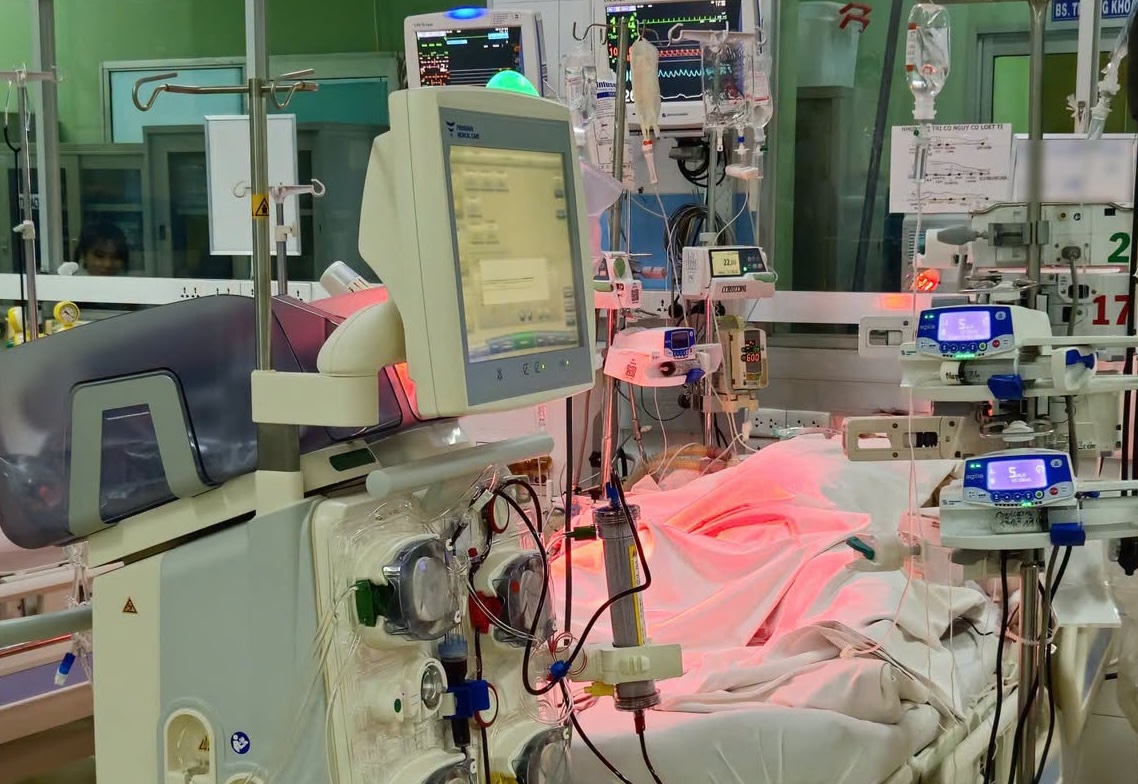 |
A 16-year-old female patient undergoing treatment at the Hospital for Tropical Diseases in TP HCM. *Photo: Hospital provided*
For severe dengue cases, treatment costs can reach hundreds of millions, even billions of dong, as patients often require intensive care, dialysis, or ecmo. One 21-year-old patient at the Hospital for Tropical Diseases recently completed 45 days of treatment after her dengue worsened, undergoing multiple dialysis sessions and blood transfusions to survive.
This patient, however, lacked health insurance, making the prolonged treatment costs a significant burden on her family. The hospital had to contact various organizations and philanthropists for assistance.
According to doctors at the Hospital for Tropical Diseases, a crucial point in both cases is that the illness began with common symptoms but quickly escalated to a severe stage, typically between day 3 and day 7 after the fever's onset. Worryingly, this is often when patients might feel their fever subsiding or disappearing, leading them to believe they have recovered.
The burden of treatment is particularly concerning as dengue fever enters its peak season. According to the Pasteur Institute in TP HCM, the Southern region recorded over 56,000 cases in the first seven months of the year, a 34% increase compared to the same period, with 10 fatalities. Mosquito surveillance indicators also exceeded the five-year average.
Last week, TP HCM reported 1,256 dengue fever cases. The Hospital for Tropical Diseases has seen a rapid increase in dengue inpatients, exceeding 120 cases daily, with some days reaching 150. Health officials anticipate peak admissions between August and November, urging residents to be especially vigilant for fever symptoms, particularly during the period when the illness is prone to severe progression.
Doctors advise close monitoring for those with dengue fever, especially during the critical days. Severe abdominal pain, frequent vomiting, bleeding, lethargy, cold extremities, difficulty breathing, or reduced urination are warning signs requiring immediate hospital attention. Beyond early monitoring and treatment, proactive prevention is essential, including eliminating mosquitoes and larvae, removing standing water containers, sleeping under mosquito nets, and getting vaccinated.
Le Phuong