Mr. Phu, 26, sought medical attention after two months of persistent nasal congestion and foul-smelling discharge. He had undergone orthodontic treatment one year prior and had no history of sinusitis. At Tam Anh General Hospital, Ho Chi Minh City, a nasal endoscopy revealed swollen nasal mucosa and purulent discharge in his left middle meatus. Suspecting a foreign body, Dr. Pham Thai Duy, from the hospital's ear, nose, and throat center, ordered a CT scan.
The CT scan confirmed a foreign metallic object within Mr. Phu's left maxillary sinus. It also showed the sinus cavity filled with inflammatory lesions, sclerotic sinus walls, and a blocked sinus ostium. Additionally, the roots of his 15th, 16th, and 17th teeth protruded close to the maxillary sinus, with slightly thickened sinus mucosa. Based on these findings, Dr. Duy diagnosed purulent maxillary sinusitis caused by a foreign body and recommended endoscopic sinus surgery to remove it and prevent further infection.
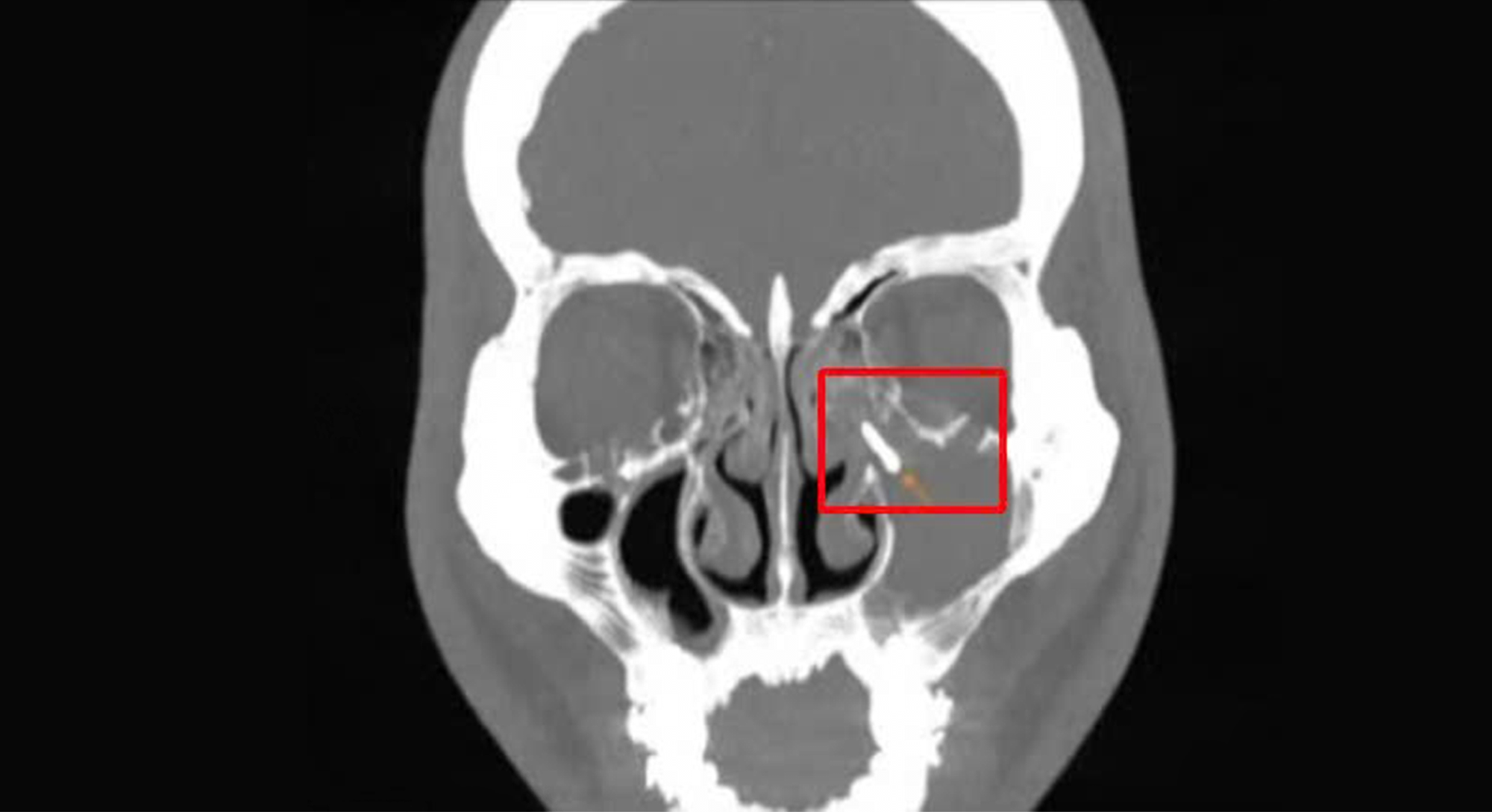 |
CT scan revealing the foreign body in Mr. Phu's left maxillary sinus. *Photo: Tam Anh General Hospital*
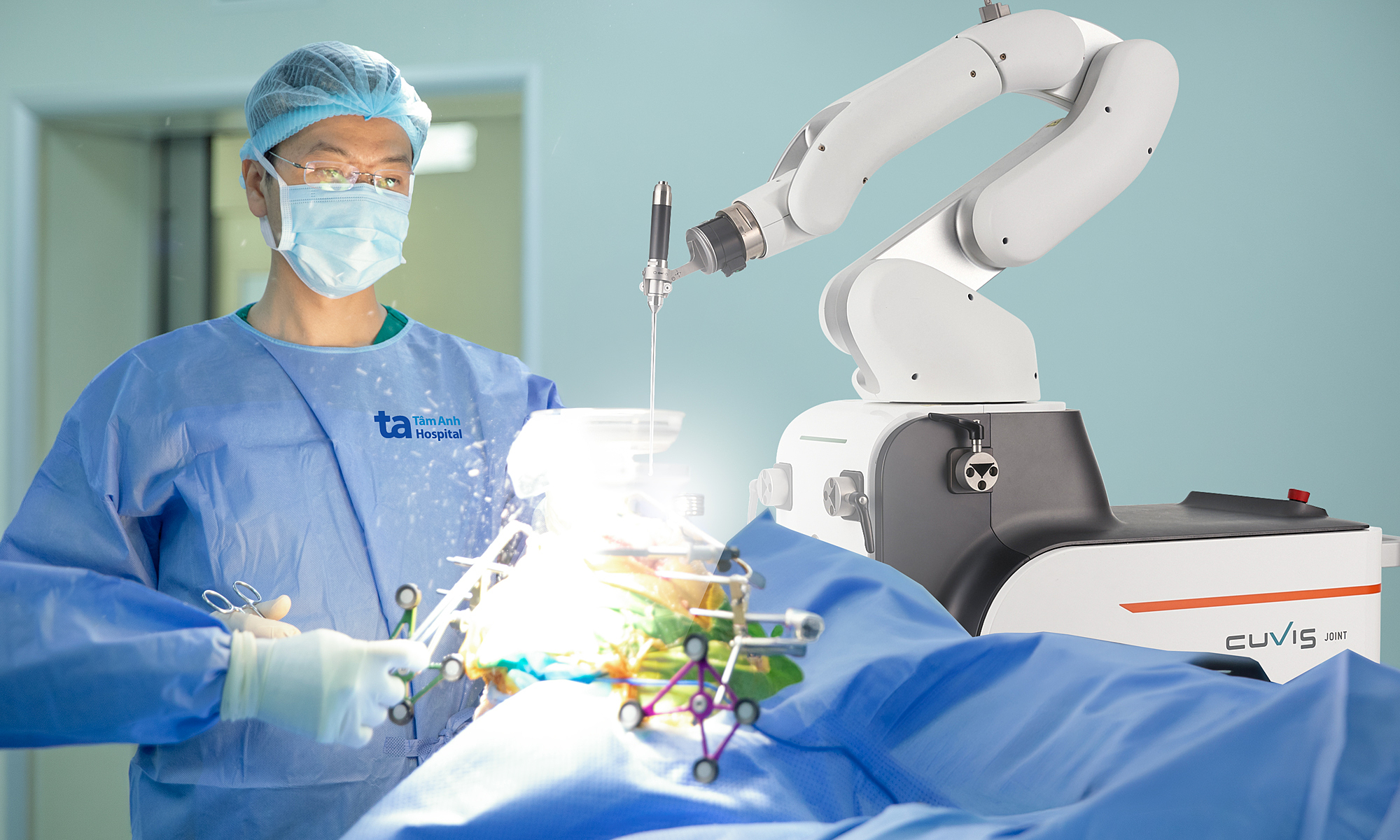
During the surgery, using an endoscope with a cold light source that provided a 20-fold magnified image, doctors carefully enlarged the sinus ostium. They accessed the left maxillary sinus, which contained a significant amount of pus and inflamed tissue.
After thoroughly suctioning the pus and removing the inflamed tissue, doctors located the 2 cm orthodontic screw within the maxillary sinus. Microsurgical instruments were used to extract the screw completely through the nasal passage, ensuring no damage to the surrounding mucosa and no bleeding. The surgical team re-examined the sinus to confirm no remaining foreign bodies and cleaned the cavity to prevent recurrence.
"An orthodontic screw migrating into the sinus cavity is a rare complication in orthodontics," said Dr. Duy.
Mr. Phu's condition improved significantly after the surgery, with reduced nasal congestion and discharge. He recovered well and was discharged two days later. A follow-up visit confirmed the surgical wound had healed properly, and his symptoms of nasal congestion and foul-smelling discharge had resolved.
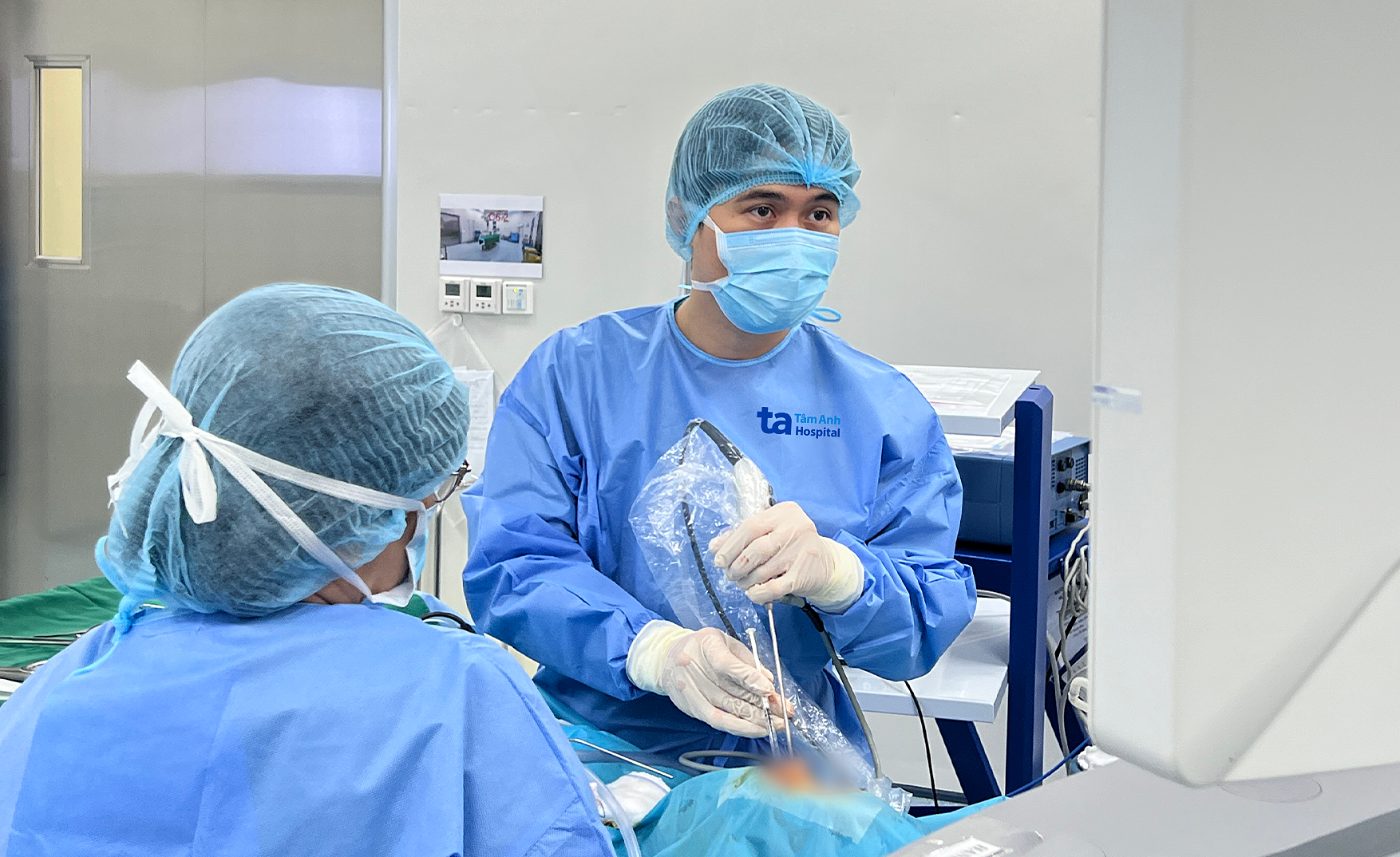 |
Dr. Duy performing endoscopic sinus surgery to remove the foreign body for Mr. Phu. *Photo: Tam Anh General Hospital*
Orthodontic screws are small metal implants inserted into the jawbone to provide fixed anchor points. They help control force and facilitate effective tooth movement during orthodontic treatment. Dr. Duy explained that the maxillary sinus floor, often thin, lies close to or protrudes between the roots of the upper molar teeth. If a screw is placed too deeply, incorrectly, or into weak bone, it can penetrate this thin sinus floor. When this occurs, the screw may not remain stable in the bone but instead dislodge and fall into the hollow maxillary sinus. Factors like gravity, sinus pressure, and the ciliary system within the sinus lining can cause the foreign body to move deeper, leading to prolonged infection.
Dr. Duy emphasized that maxillary sinusitis caused by a foreign body often progresses subtly but can lead to chronic infection. Patients experiencing persistent unilateral foul-smelling nasal discharge, nasal congestion, or dull cheek pain should seek early evaluation and treatment from an ear, nose, and throat specialist. Early intervention can prevent serious complications.
Uyen Trinh
*The patient's name has been changed.
| Readers can submit questions about ear, nose, and throat conditions here for doctors to answer. |