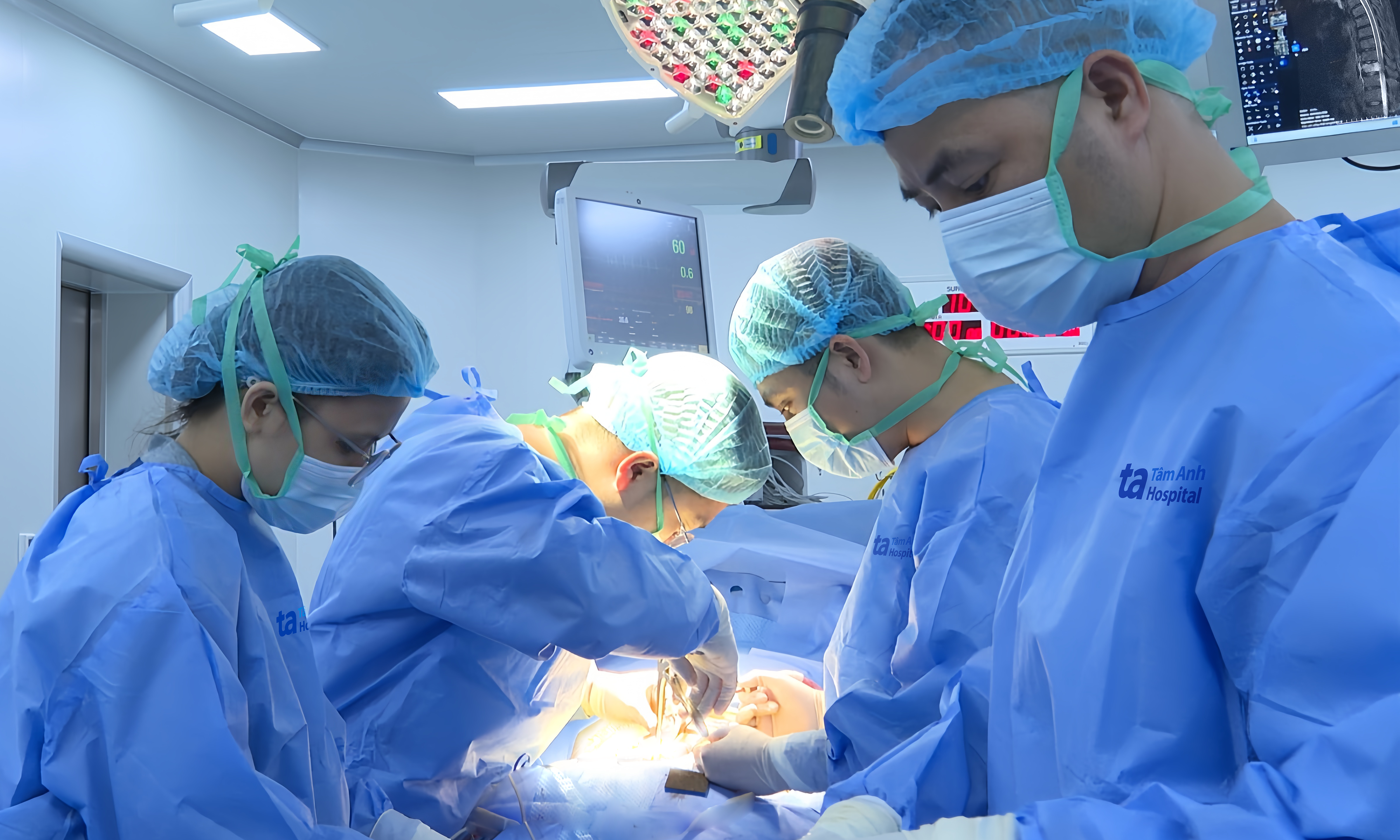
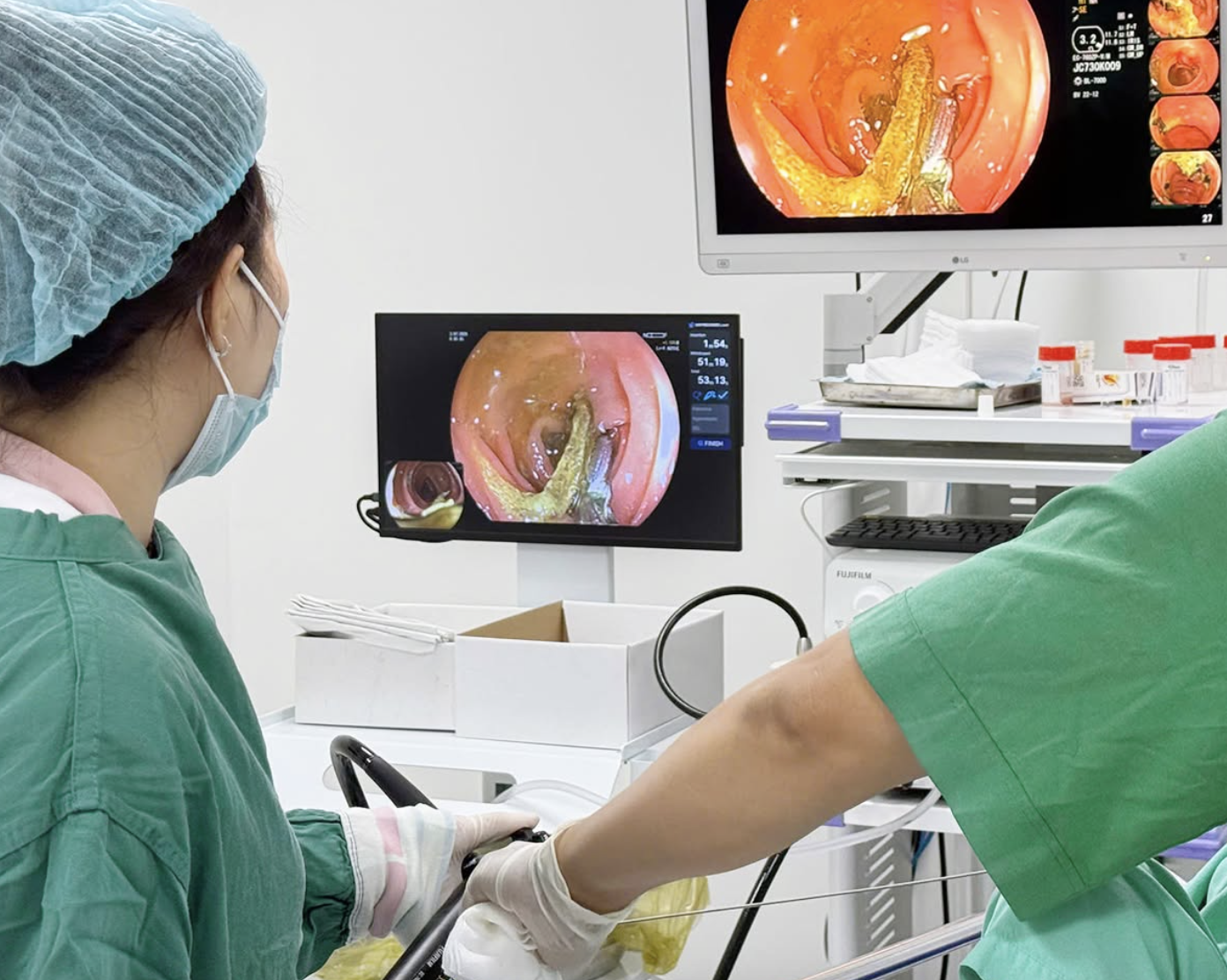
A CT scan at Tam Anh General Hospital in Ho Chi Minh City revealed that the patient had a 7 cm anterior mediastinal tumor, located adjacent to her thymus gland. The mass extended into the neck region, compressing the brachiocephalic vein, a major blood vessel that carries blood from the head, neck, and both arms to the heart.
Associate Professor, Doctor Vu Huu Vinh, Director of the Thoracic and Vascular Surgery Center, explained that mediastinal tumors are often benign. However, a large tumor can compress the heart, lungs, and major blood vessels. If it ruptures, it can cause fluid accumulation, leading to inflammation and infection, necessitating surgical removal.
Ms. Ngoc's tumor was situated both below and above, tightly encasing the left brachiocephalic vein and tending to grow upwards into the neck. This made traditional endoscopic surgery challenging due to the high risk of vascular rupture. Open surgery would require splitting part of the sternum to access the tumor, leading to more pain and a prolonged recovery for the patient.
Following a consultation, the medical team decided to use the Da Vinci Xi robotic system to safely remove Ms. Ngoc's tumor.
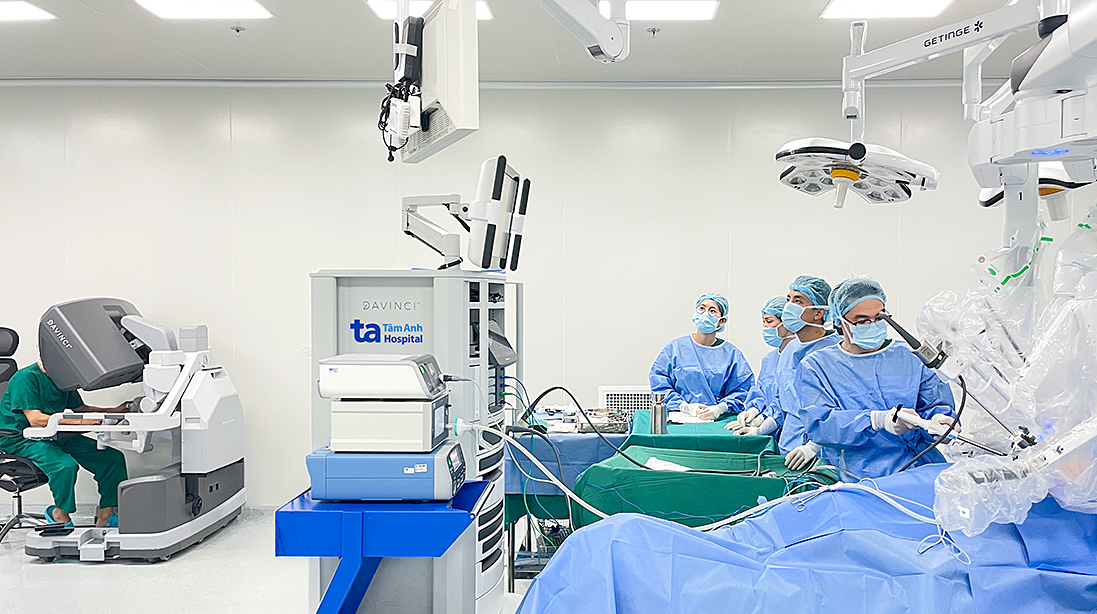 |
Associate Professor Vinh (left) operates the new generation robot to surgically remove a mediastinal tumor in a complex location for the patient. *Photo: Tam Anh General Hospital.* |
Associate Professor Vinh explained that the team accessed the tumor from the chest cavity upwards, avoiding the need for a downward intervention from the neck, which is typical in conventional endoscopy. Robotic technology provides magnified 3D images and features robotic arms that rotate 540 degrees. This allowed surgeons to maneuver flexibly within the confined chest cavity, removing the tumor without damaging surrounding organs.
After the surgery, Ms. Ngoc no longer felt chest heaviness, her difficulty breathing resolved, and she was discharged after three days.
Associate Professor Vinh advised individuals experiencing symptoms such as chest pain, difficulty breathing, or persistent coughing to seek medical examination for timely diagnosis and treatment. For tumors located near the heart, lungs, or major blood vessels, early surgery helps reduce the risk of complications and maximally preserves vital structures, ensuring both aesthetic outcomes and quality of life for patients post-surgery.
Bao Anh
*Patient's name has been changed
| Readers can submit questions about cancer here for doctors to answer |