Initially, Tuyet thought RSV was just like a common cold. However, after seeing her friend's 8-month-old baby rapidly deteriorate with convulsions, cyanosis, and difficulty breathing, requiring prolonged treatment, she began to research the virus thoroughly.
"At first, the baby only had a fever and poor appetite, but the illness progressed very quickly, causing convulsions, cyanosis, and difficulty breathing," Tuyet said.
Tuyet realized that individuals who smoke and have frequent social interactions, such as her husband, could easily contract RSV and transmit it to the baby. Consequently, she sought proactive ways to protect her child.
Upon learning that Vietnam had a monoclonal antibody to prevent RSV, she took her daughter to the VNVC Vaccination System. After a thorough examination, the baby received the injection at Nutrihome Clinic.
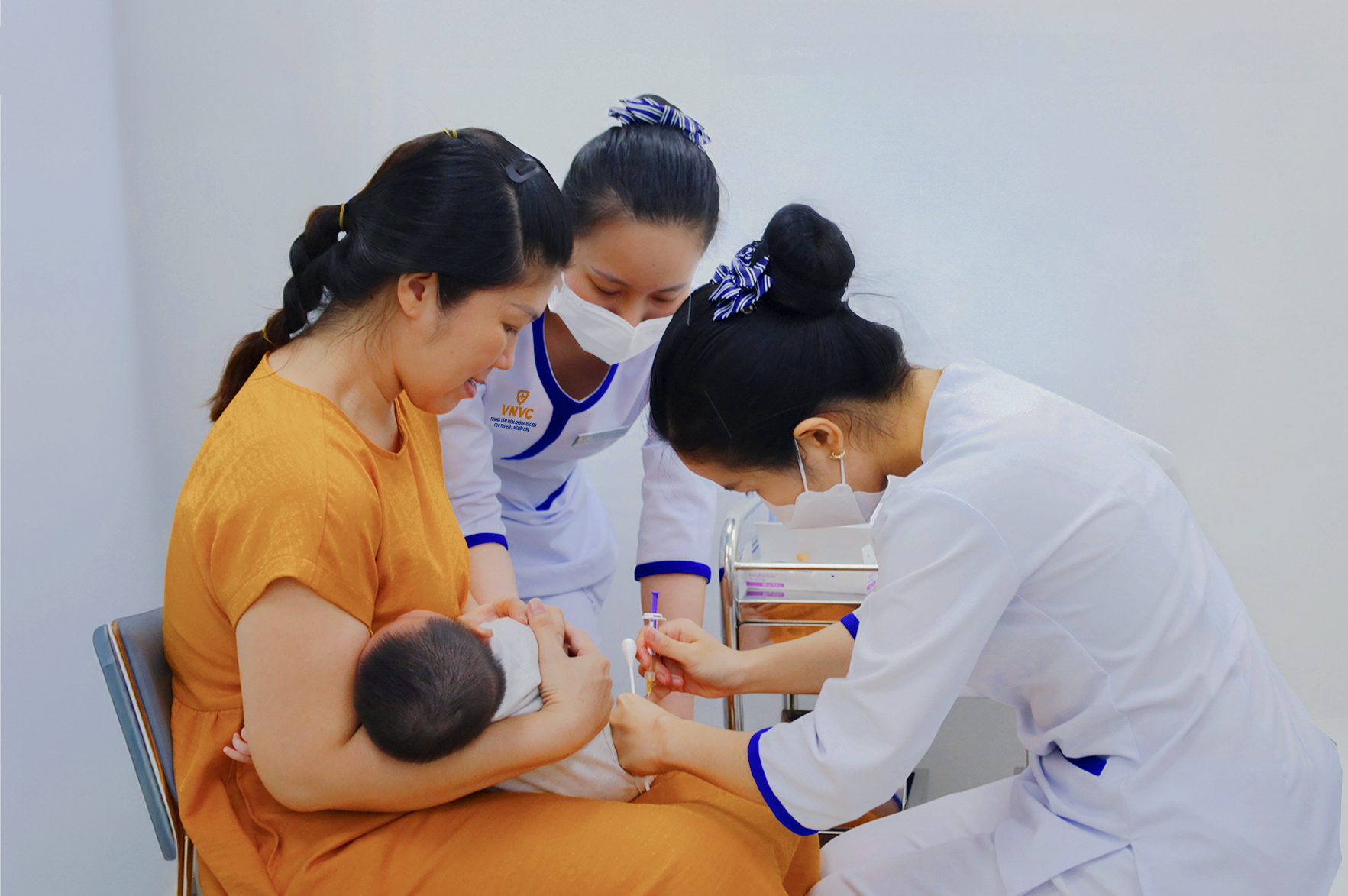 |
Hien takes her two-month-old daughter for an RSV monoclonal antibody injection at Nutrihome Clinic. *Photo: Truc Dao.* |
On the same day, Hien's family, 39, residing in Khanh Hoi Ward, TP HCM, also brought their two-month-old baby, Cappy, for an RSV monoclonal antibody injection. Hien shared that she had read reports of many babies being hospitalized and requiring ventilators due to RSV infection. This illness can affect any baby, including full-term, healthy infants like hers. The younger the child, the higher the risk of hospitalization and respiratory failure stemming from pneumonia and bronchiolitis.
"Baby Cappy is the youngest in our home, so the entire family showers her with love and wants to provide the best care," Hien stated.
Doctor Pham Dinh Dong, Medical Manager at the VNVC Vaccination System, explained that RSV is a common respiratory virus. The virus can persist on hard surfaces for over 6 hours and on clothes and hands for up to one hour. It is the leading cause of pneumonia and bronchiolitis, often leading to hospitalization for children under one year old.
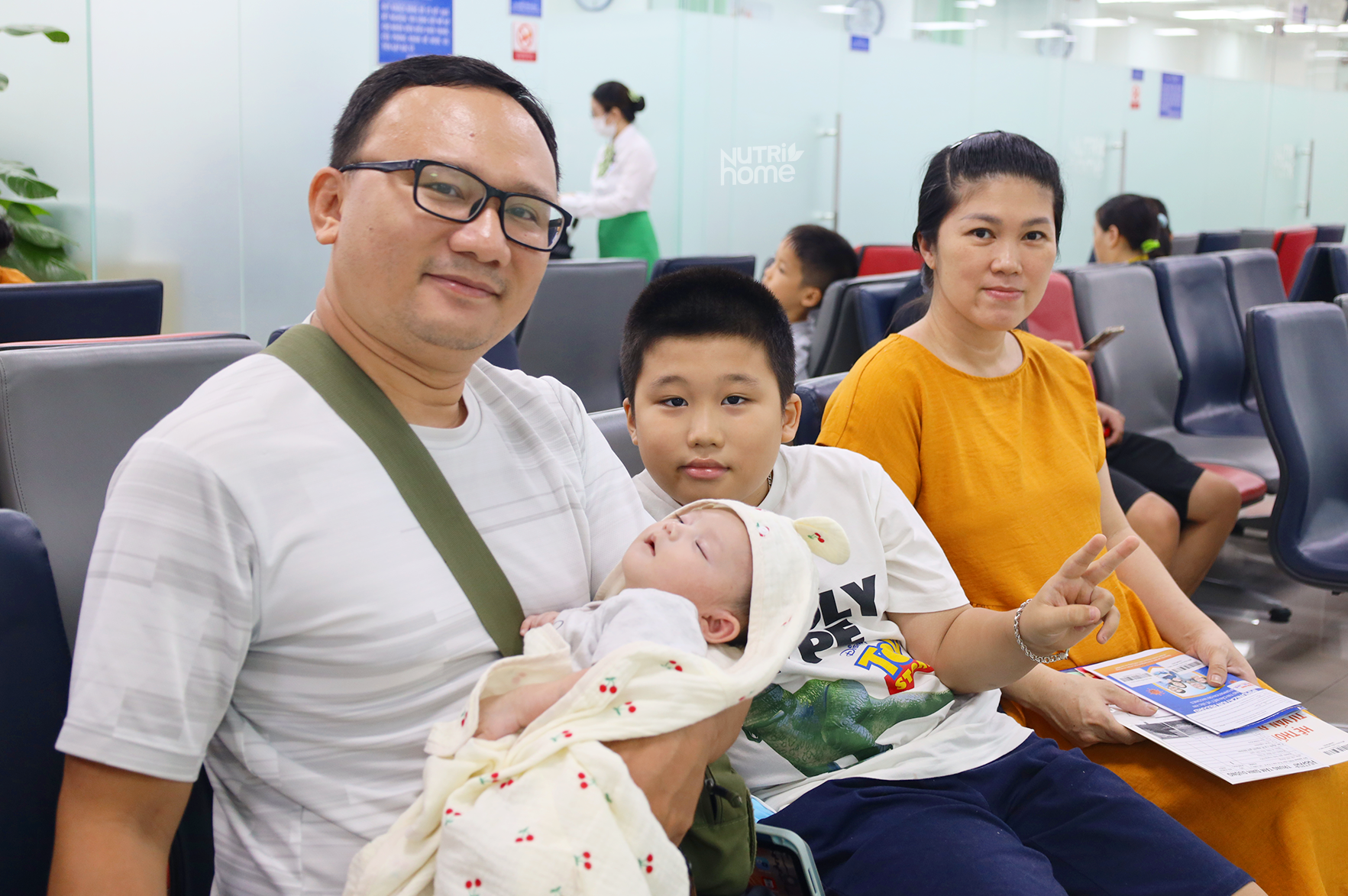 |
Hien's family takes their youngest daughter for a monoclonal antibody injection. *Photo: Truc Dao.* |
Infants and young children are particularly vulnerable to severe RSV complications due to their immature immune systems and narrow airways. A child can be reinfected multiple times with RSV within a year. While premature babies and those with underlying medical conditions face a higher risk of complications from this virus, numerous studies indicate that over 70% of children hospitalized due to RSV are full-term and were previously healthy.
Children can contract the disease from adults returning from work or older children bringing pathogens home from school. Tobacco smoke significantly increases both the risk of RSV infection and the severity of the illness.
The Nirsevimab monoclonal antibody for RSV prevention was launched and rolled out for vaccination in October 2025. According to Doctor Dong, monoclonal antibodies offer direct protection, unlike vaccines which require the body to generate its own antibodies. This provides timely protection for infants during their early life. Children from one day old to 12 months old require only one dose. Children aged 12-24 months with a high risk of RSV infection need two doses administered on the same day. Research indicates that one antibody dose can provide sustained protection throughout the RSV season, lasting 5-6 months, and can reduce the risk of hospitalization due to RSV-related pneumonia and bronchiolitis by over 82%.
Additionally, Vietnam also offers an RSV vaccine, administered as a single dose to pregnant mothers between 24-36 weeks of gestation. This helps transmit passive antibodies, protecting the baby during the first 6 months of life. The vaccine is also given as a single dose to individuals 60 years and older for active disease prevention.
Parents should complement vaccination with proper nutrition, breastfeeding, avoiding tobacco smoke, and maintaining personal hygiene and a clean living environment.
Hoang Duong