On 1/8, a representative from Phu Tho General Hospital announced that the patient was initially diagnosed with diffuse cellulitis in the right parotid region due to a salivary gland abscess. The abscess had severely progressed, risking widespread dissemination and numerous complications.
The patient underwent surgery to drain the abscess, and pus samples were sent to the Microbiology Department for culture. Results confirmed the patient was infected with Burkholderia pseudomallei – the agent causing Whitmore's disease (Melioidosis) – a dangerous infectious disease. The disease can lead to septicemia complications and damage to multiple organs.
The patient is being treated with antibiotics, is now fever-free, and the abscess area has reduced swelling.
It remains unclear when or how the man contracted Whitmore's bacteria.
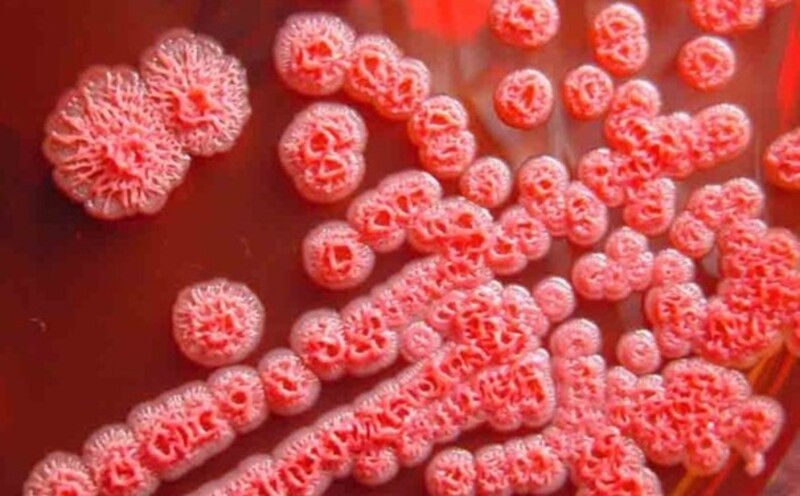 |
Whitmore's disease is caused by the bacterium Burkholderia pseudomallei. *Illustration: Hospital provided* |
Burkholderia pseudomallei is the causative agent of Whitmore's disease, often referred to as "flesh-eating bacteria," predominantly found in tropical climate countries. Recent statistics from Thailand and Singapore show that the mortality rate for patients with septicemia caused by this agent ranges from 40% to 50%. If a patient develops severe pneumonia, the risk of death can be as high as 75%.
Whitmore's disease is also known as the "great mimicker" because it lacks specific clinical pathological syndromes. Clinical symptoms often resemble other illnesses such as pulmonary tuberculosis, influenza, or fever, leading to many cases being misdiagnosed rather than detected early.
This bacterium typically thrives in soil, especially moist soil and contaminated water. When there is an open wound, the bacteria can easily enter the body, causing infection. The disease can progress severely, damaging multiple organs, and even be fatal.
Currently, there is no vaccine available for Whitmore's disease. Doctors recommend that individuals working outdoors should wear full protective gear, such as gloves and boots, to avoid direct contact with soil and dirty water. Maintain personal hygiene by frequently washing hands with soap and clean water, especially before and after preparing food, after using the restroom, and after working in fields. Consume thoroughly cooked food and boiled water; avoid eating sick or dead livestock and poultry.
Doctors advise against complacency regarding persistent symptoms such as swelling, heat, redness, and pain, especially if the swollen area enlarges, or if fever or pus discharge occurs. Do not self-medicate for extended periods, as this can mask symptoms and allow the disease to worsen; instead, seek medical examination at a hospital.
Thuy Quynh