Ms. Hoa, 54, had no unusual symptoms and did not smoke, but due to a family history of lung cancer, she underwent a low-dose lung computed tomography (CT) scan for screening at Tam Anh Cau Giay General Clinic. The results revealed multiple lesions in both lung lobes. One nodule in her right lung was classified as Lung-Rads 4X, indicating a high risk of malignancy. Two nodules in her left lung were categorized as Lung-Rads 3, suggesting a low risk.
 |
A high-risk nodule in Ms. Hoa’s right lung on a low-dose computed tomography scan. *Photo: Tam Anh General Hospital*
Doctor Vu Huu Khiem, Head of the Oncology Department at Tam Anh General Hospital Hanoi, and his team confirmed the patient was negative for tuberculosis and fungi. A screening test using a Spot-Mas Lung liquid biopsy yielded a positive result, suggesting potential lung cancer. However, as this test can produce false positives and is not considered a definitive diagnostic conclusion for cancer, the doctors decided to continue monitoring Ms. Hoa.
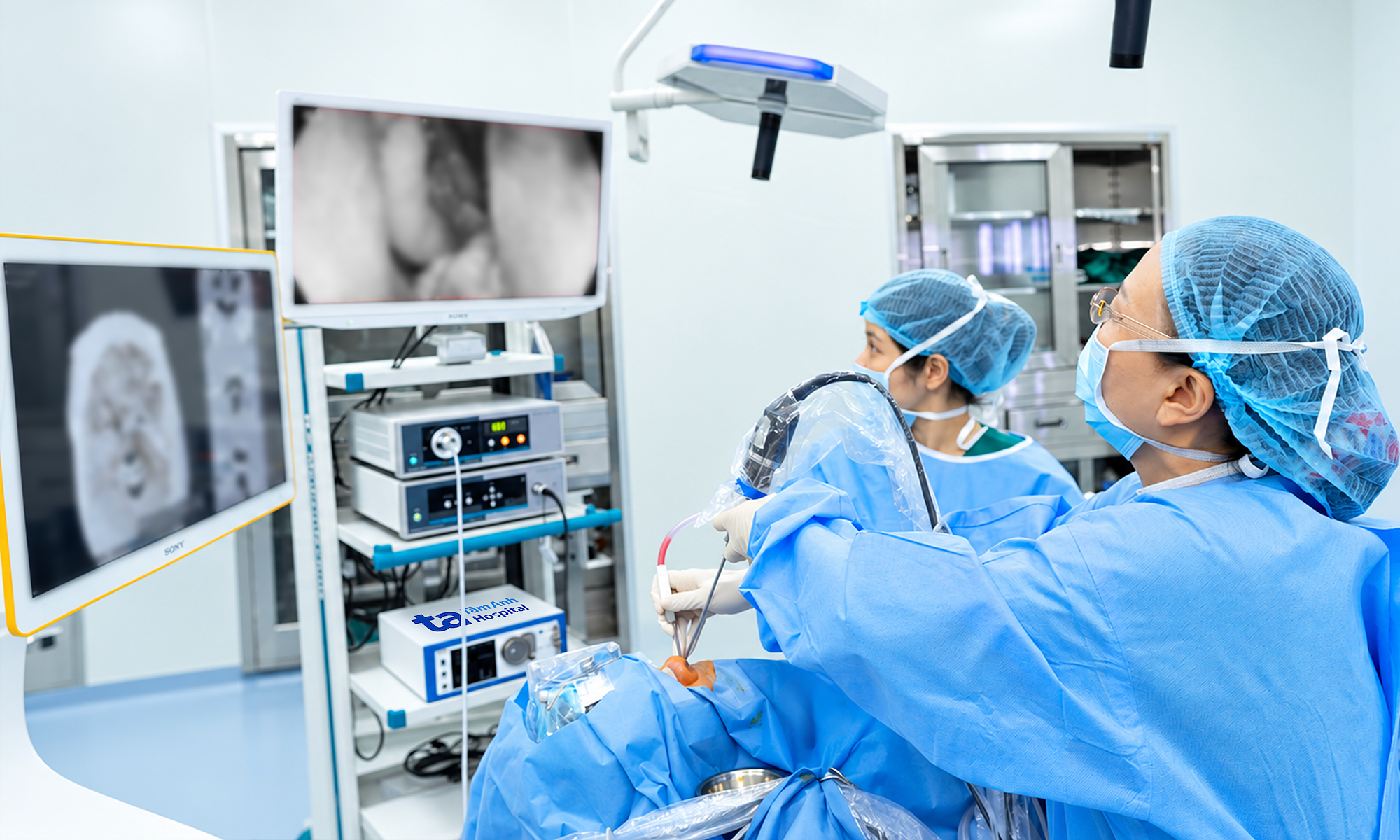
During a follow-up three months later, Ms. Hoa’s right lung nodules had increased in size, with no lesions observed in other organs. The doctors deliberated and recommended thoracoscopic surgery to remove a portion of the right lung lobe and segment containing the lesions.
Intraoperative frozen section biopsy, along with postoperative histopathology and molecular biology, confirmed all three lung nodules were primary non-mucinous adenocarcinoma with distinct structures and gene types. The tumors were confined to the lung parenchyma, with no vascular or nerve invasion observed. The patient underwent radical surgery and did not require adjuvant chemotherapy or radiotherapy.
 |
Doctor Khiem advises Ms. Hoa on monitoring her lung lesions. *Photo: Tam Anh General Hospital*
At a three-month follow-up, Ms. Hoa’s health was stable, and a CT scan showed no new lesions. She was advised to continue monitoring the low-risk nodules in her left lung.
Early-stage lung cancer often progresses silently, with hardly any symptoms. When symptoms do appear, the disease is often already in a more advanced stage, making treatment difficult, increasing the risk of complications, and reducing treatment effectiveness.
Doctor Khiem recommends regular health check-ups for everyone. High-risk individuals, including those over 50 who are current or former long-term smokers, or who have a direct family history of lung cancer (such as parents or children), should undergo lung cancer screening as advised by a doctor.
Hieu Nguyen
*Patient's name has been changed*
| Readers can ask questions about cancer here for doctors to answer. |