Dengue fever is an infectious disease caused by the Dengue virus, transmitted by Aedes mosquitoes. Master of Science, Doctor Le Thi Hong Hue, from the Pediatrics Unit at Tam Anh District 7 General Clinic, notes that the disease is often difficult to identify in its early stages because symptoms can easily be mistaken for influenza, Covid-19, or other viral infections. Early recognition of dengue fever in children is crucial for timely intervention.
When the disease progresses severely and shock occurs, children exhibit unusual fatigue after their fever subsides. Other critical signs include cold, clammy skin, a rapid, weak pulse, and lethargy or difficulty waking. These symptoms indicate a medical emergency.
According to Doctor Hue, days three to seven from the onset of fever mark the dangerous phase of dengue fever. Many parents mistakenly believe their child is recovering when the fever decreases, but this is precisely when plasma leakage, shock, and severe complications are most likely to occur.
Doctor Hue advises parents to seek medical attention for children with persistent high fever or fever that is difficult to reduce, allowing for risk assessment and disease monitoring. Immediate hospitalization is necessary if a child experiences severe abdominal pain, continuous vomiting, lethargy, agitation, cold extremities, nosebleeds, gum bleeding, skin hemorrhages, or oliguria. These are warning signs of severe disease progression.
Cold extremities, mottled skin, profuse sweating, oliguria, dyspnea, or tachypnea can indicate that a child's circulatory system is compromised, necessitating immediate hospital transport.
Children may experience nausea, vomiting, and develop small red spots under the skin or unusual bruises. Unlike rashes in other viral illnesses, dengue petechiae do not disappear when pressed. Some children also exhibit nosebleeds or gum bleeding, which can affect platelet count and blood clotting function.
Children often show significant fatigue, reduced activity, increased fussiness, or sleep more than usual. They might also experience loss of appetite or refuse to feed. Older children commonly report headaches, retro-orbital pain, muscle and joint pain, and general body aches.
In the early stage of dengue fever, children typically develop a sudden high fever, ranging from 39 to 40 degrees Celsius, which persists for one to three days and responds poorly to antipyretics. Many children may have a fever without respiratory symptoms such as coughing, runny nose, or sore throat. These non-specific symptoms mean that early-stage dengue fever can be easily mistaken for influenza, Covid-19, viral pharyngitis, or other viral fevers based solely on clinical presentation.
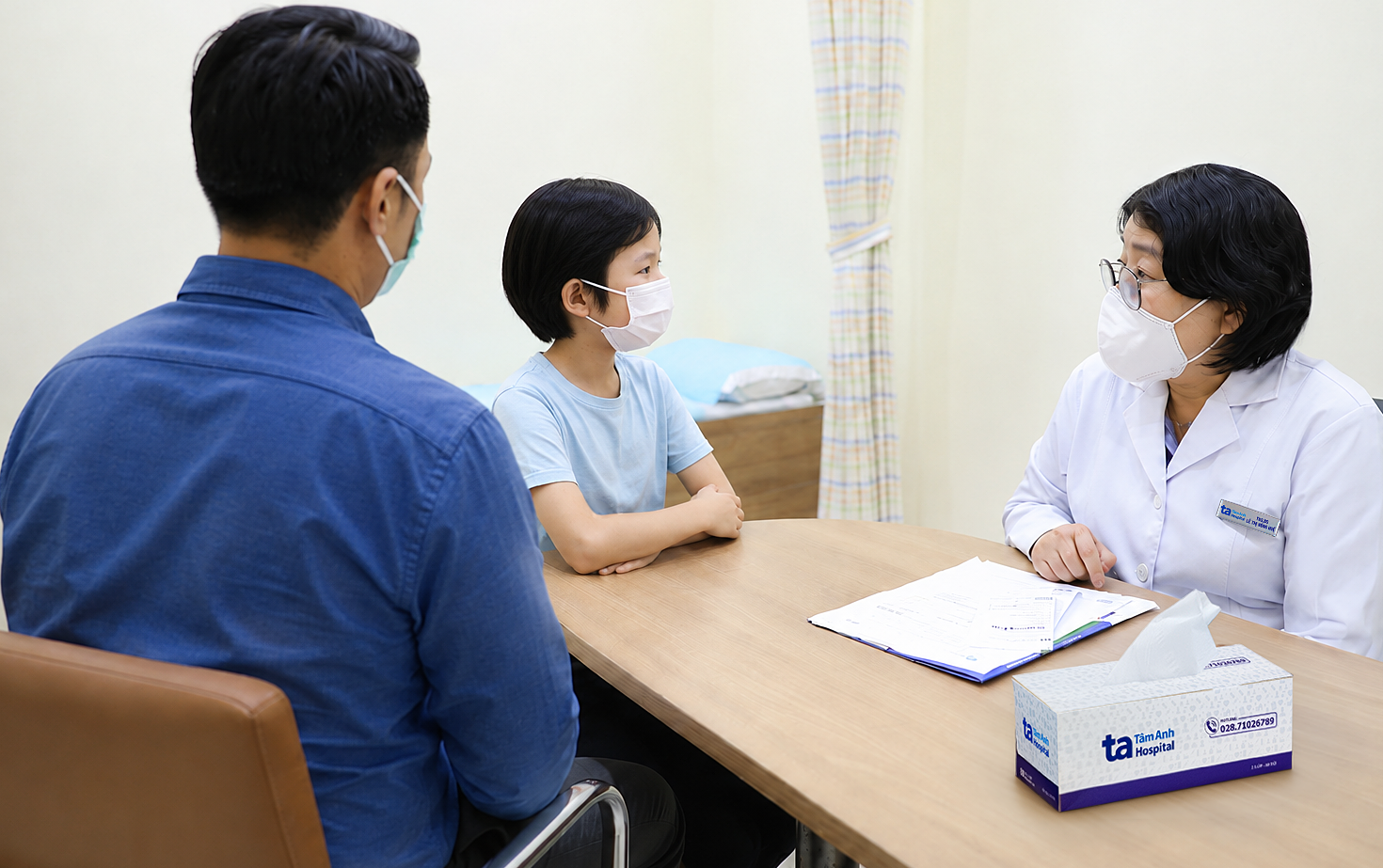 |
Doctor Hue consults a pediatric patient at Tam Anh District 7 General Clinic. Photo: Trung Vu |
Doctor Hue consults a pediatric patient at Tam Anh District 7 General Clinic. Photo: Trung Vu
According to the Ministry of Health, Vietnam recorded over 50,000 dengue fever cases nationwide in the first five months of 2026, marking a 2.5-fold increase compared to the same period last year.
To prevent the disease, families should actively eliminate mosquitoes and their larvae, removing stagnant water containers around the home. Children should sleep under mosquito nets, even during the day, and use age-appropriate mosquito repellent measures. A dengue vaccine can help reduce the risk of contracting the disease and its severe progression in eligible individuals.
Minh Tam
| Readers can submit questions about childhood illnesses here for a doctor's response. |