Despite this, many current regenerative therapies are invasive, requiring injections or specialized interventions. This makes them unsuitable for patients seeking simple, long-term treatment. Experts suggest this gap necessitates non-invasive solutions that still achieve biological efficacy similar to advanced therapies.
For over a decade, Contrad Swiss, a biotechnology company based in Lugano, Switzerland, has researched recombinant polypeptides and Sigmolecs technology. This approach combines polypeptides, hyaluronic acid, and transdermal delivery to provide non-invasive, targeted treatment. It can reduce inflammation, alleviate pain, and support tissue regeneration via topical application.
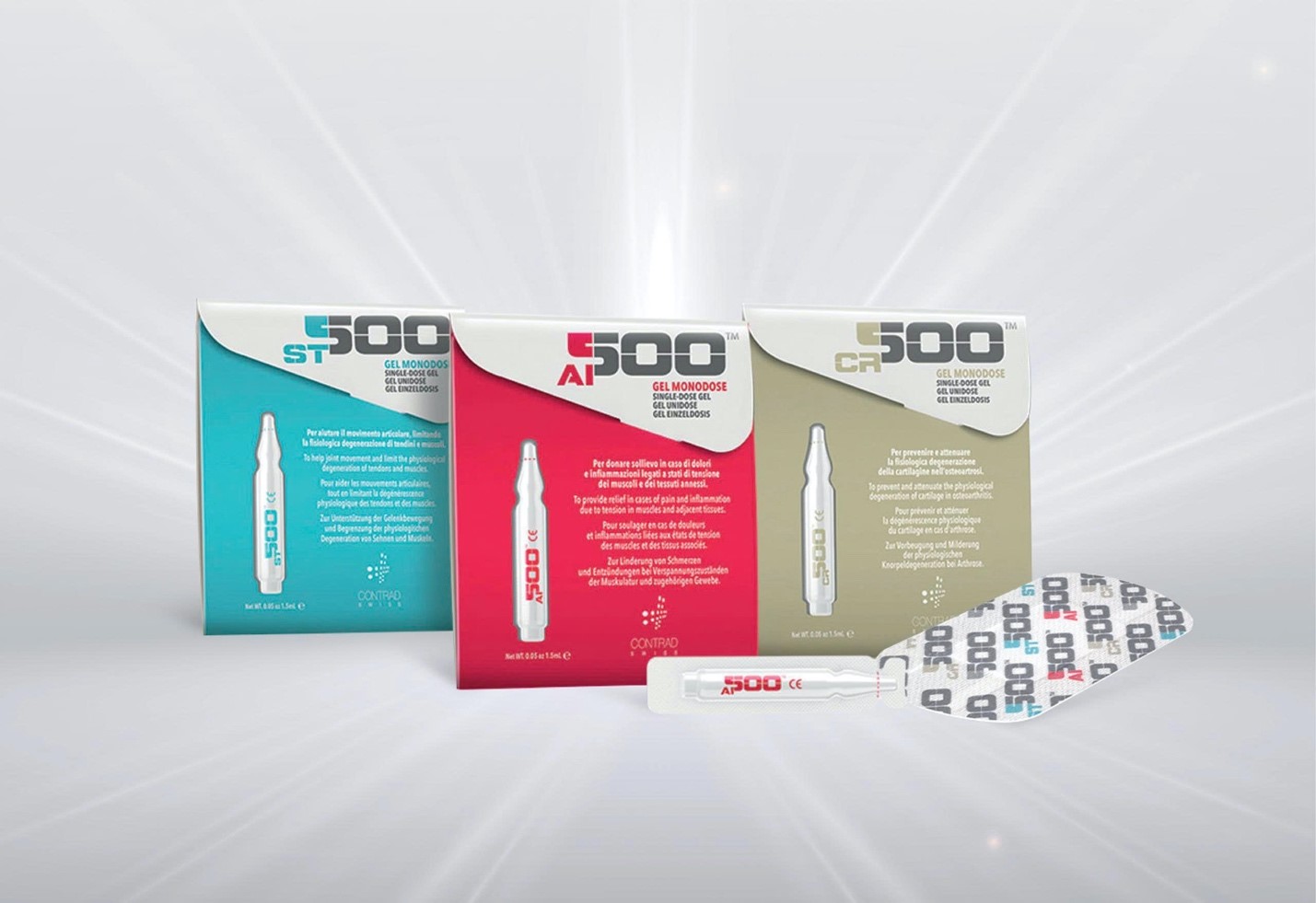 |
Topical gel product supporting musculoskeletal treatment. Photo: Contrad Swiss. |
Among the Contrad Swiss products soon to be introduced in Vietnam, the 500Line, specifically AI500, embodies this approach. It provides a solution to reduce pain and manage deep inflammation, based on a mechanism mimicking interleukin-10 (il-10), an anti-inflammatory cytokine.
AI500 provides rapid pain relief, supporting reduced inflammation in tendons, muscles, ligaments, and joints, and improving motor function. The product contains SH-Polypeptide-6, a recombinant polypeptide with a structure and activity similar to interleukin-10 (il-10), which helps control inflammation.
The product can be used alone or combined with CR500 and ST500 in treatment protocols. It proves effective during giai doan 1 of post-surgical recovery when patients need pain relief but must limit oral medication.
In Vietnam, Omniarch Healthcare Vietnam Joint Stock Company distributes Contrad Swiss products. A representative from Omniarch Healthcare Vietnam stated, "The upcoming introduction of the 500Line in Vietnam opens new options for patients, marking a step forward for regenerative medicine applications in clinical practice".
Musculoskeletal pain, joint degeneration, and tendon and ligament inflammation are conditions that significantly affect quality of life, yet are often underestimated. According to 2022 statistics from the World Health Organization (WHO), approximately 1,71 billion people worldwide suffer from musculoskeletal disorders.
Due to population growth and aging, the number of people living with musculoskeletal conditions and related functional limitations is rapidly increasing. Musculoskeletal diseases significantly limit mobility and dexterity, leading to early retirement, reduced well-being, and decreased participation in social activities.
Knee osteoarthritis (OA) alone affects approximately 500 million people globally. For soft tissue diseases such as tendon injuries, biceps tendinitis, Achilles tendinitis, or epicondylitis, chronic pain accounts for up to 25% of reasons patients seek medical attention.
Most patients begin with dull aches, self-treating with pain relievers or temporary rest. Over time, prolonged inflammation weakens the body's self-repair mechanisms, leading to chronic tissue damage. Additionally, common treatments like anti-inflammatory drugs or invasive therapies, while somewhat effective, cannot be used long-term and do not address the root cause: the body's diminished tissue regeneration capacity.
The Dan