The diaphragm is a crucial organ separating the chest and abdominal cavities, supporting respiration. Diaphragmatic eventration occurs when the phrenic nerve stops stimulating the muscle, causing it to lose tone and elasticity.
Doctor Nguyen Anh Dung, Head of Thoracic and Vascular Surgery at Tam Anh General Hospital in Ho Chi Minh City, stated that Minh's right hemidiaphragm was abnormally elevated. This caused abdominal organs like the liver and kidney to protrude, compressing and collapsing the lower one-third of his right lung and obscuring the right costophrenic angle. Doctors diagnosed Minh with right-sided diaphragmatic eventration, a condition that could lead to respiratory failure. This rare condition is often difficult to detect due to vague symptoms, leading to misdiagnoses such as pneumonia or lower lobe cysts.
Diaphragmatic eventration is primarily treated with open or traditional laparoscopic surgery. According to Doctor Dung, these conventional methods carry risks of intra- and post-operative complications such as bleeding, infection, hemothorax, pneumothorax, and prolonged respiratory failure requiring mechanical ventilation. To minimize these risks, the medical team opted for robotic surgery.
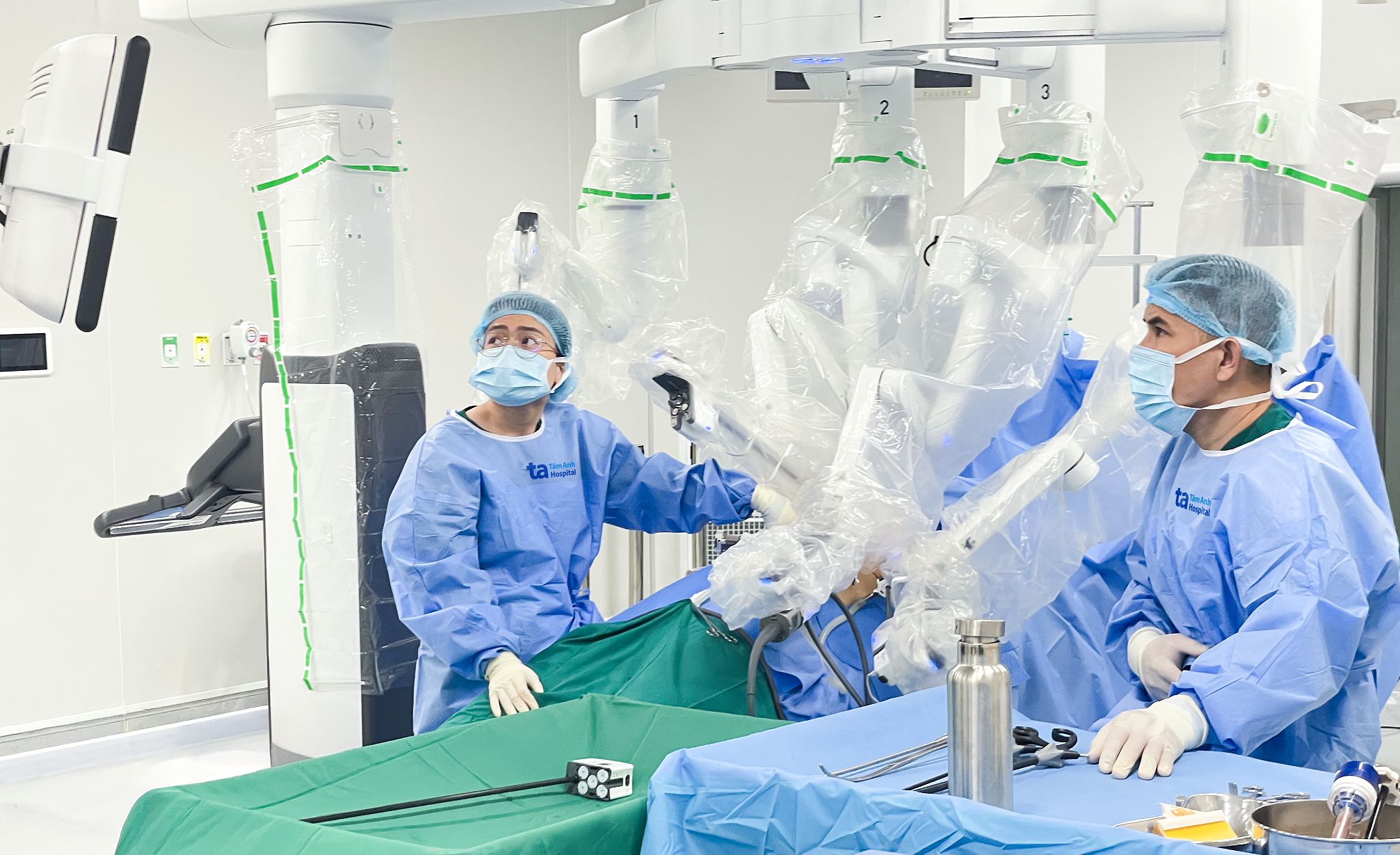 |
Surgeons perform diaphragm plication with the assistance of the Da Vinci Xi robot. *Photo: Tam Anh General Hospital* |
The surgical team made small incisions in Minh's chest, inserting four robotic arms to free the base of the lung from the diaphragm. Equipped with a 3D camera that magnifies 15 times and capable of 540-degree rotation, the robotic arms allowed surgeons to operate with precision in the confined surgical space. The doctors then used the robotic arms to plicate and reshape the diaphragm. This technique resulted in reduced pain and minimal blood loss for the patient. The eventrated area of the diaphragm was repaired, closely restoring its physiological function.
Two days after the surgery, Minh felt well, breathed normally, conversed, and resumed daily activities, leading to his discharge from the hospital. According to Doctor Dung, post-operative recovery typically takes three to 5 days, a 50% reduction compared to open surgery, which requires 7 to 10 days.
Beyond congenital factors, various causes can lead to diaphragmatic eventration, including cerebrovascular accidents, prior heart surgery, and muscle disorders such as muscular dystrophy, inflammatory myopathy, or metabolic myopathy. Patients experiencing unusual symptoms like shortness of breath, chest tightness, pain in the xiphoid process or left hypochondrium, belching, or nausea, especially after a full meal, should seek medical attention promptly for diagnosis and timely treatment.
Thu Ha
*Patient's name has been changed
| Readers can submit questions about respiratory diseases here for doctors to answer. |