On the morning of 10/4, Tang Chi Thuong, Director of the Ho Chi Minh City Department of Health, announced initial test results from Nhan Dan Gia Dinh Hospital. Seven out of 10 stool samples collected tested positive for Salmonella. Specialized units, including the Oxford University Clinical Research Unit (OUCRU), are collaborating on collecting additional samples and typing the bacteria to precisely identify the causative agent and source of infection.
As of the morning of the same day, health authorities recorded 148 suspected food poisoning cases related to Binh Quoi Tay Primary School. Among these, 102 cases are being monitored and treated as outpatients, while 46 cases require inpatient treatment. The general condition of the patients is stable, with no severe cases reported.
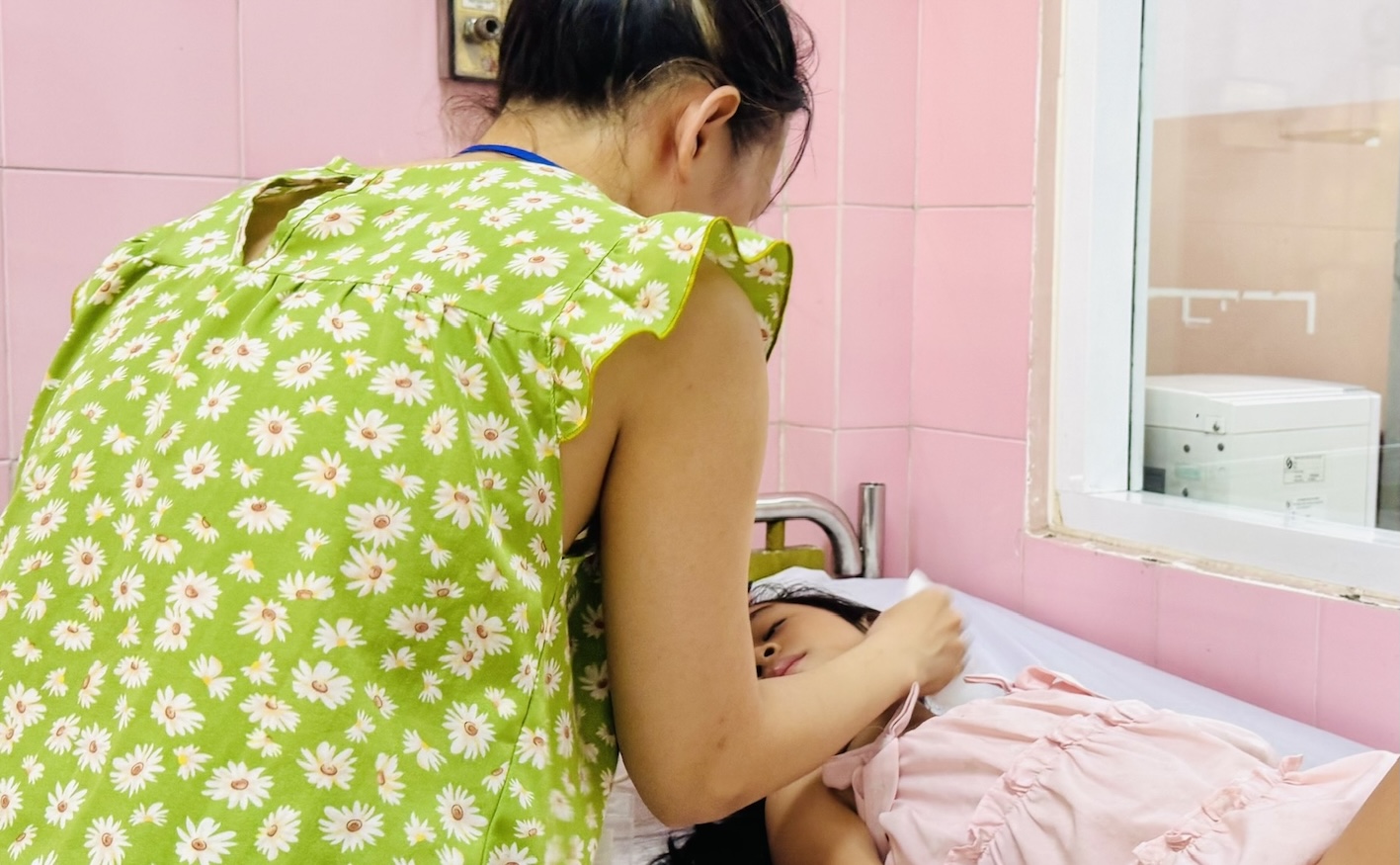 |
A child suspected of food poisoning receives treatment at Nhan Dan Gia Dinh Hospital. Photo: Minh Toan
The Ho Chi Minh City Department of Health instructed hospitals to monitor, treat, and collect samples to identify the pathogen. The Ho Chi Minh City Center for Disease Control is coordinating epidemiological investigations and testing to clarify the cause. It is currently unclear what food items or locations caused the children's unusual symptoms.
Earlier, the school administration reported that many students from grades one to three showed signs of fatigue and fever early on 8/4. The school has suspended its semi-boarding meal service, and food samples from 7-8/4 have been sent for testing, with results pending.
Salmonella is a leading cause of diarrhea globally and is responsible for many large-scale food poisoning outbreaks. The bacteria enter the body through contaminated food and drink, causing abdominal pain, vomiting, and diarrhea; severe cases can lead to dehydration, sepsis, and be life-threatening.
Symptoms typically appear about one day after consumption, but can be delayed by up to 4-5 days. Doctors advise that if food poisoning symptoms like vomiting, diarrhea, abdominal pain, or fever occur, stop consuming the suspected food and rehydrate with oresol solution or cooled boiled water. Do not self-medicate with anti-diarrhea drugs or antibiotics, as this could worsen the condition. If experiencing frequent vomiting, persistent diarrhea, high fever, or signs of dehydration (dry lips, reduced urination, extreme fatigue), seek medical attention for treatment.
Le Phuong