The baby boy was born not breathing, cyanotic, with weak reflexes and muscle tone. Dr. Pham Le My Hanh, head of the Neonatal Department at Tam Anh General Hospital's Neonatal Center, assessed him as having severe respiratory distress due to immature lungs, leading to widespread lung collapse. There was a risk of circulatory arrest if emergency care was not provided promptly.
Obstetric and neonatal doctors applied the "golden hour protocol" to minimize complications like hypothermia and oxygen deprivation-induced brain injury. The baby was resuscitated on his mother's abdomen, then intubated, given maximum respiratory support, and warmed with a specialized thermal bag. Once vital signs improved, the team transferred him to the Neonatal Intensive Care Unit (NICU) for continued care in an incubator.
Dr. Nguyen Thi Kim Hoc from the Neonatal Center stated that the baby's mother had a Group B streptococcus infection during pregnancy. This bacterium often causes no symptoms in the mother but can lead to severe infections in newborns, worsening respiratory distress in premature infants. The baby received appropriate antibiotic treatment for 10 days to control the bacteria early and prevent complications like sepsis and meningitis.
Concurrently, doctors administered surfactant to supplement the surface-active substance that a 30-week-old infant's lungs cannot yet produce sufficiently, preventing lung collapse and improving gas exchange. The baby responded well to the treatment, was extubated after one day, and transitioned to non-invasive ventilation.
The baby received intravenous feeding combined with minimal breast milk via a gastric tube. According to Dr. Hoc, this method ensures sufficient energy, micronutrients, and essential nutrients for development, while also stimulating intestinal maturation and reducing the rate of necrotizing enterocolitis. Fourteen days after birth, the baby's digestive system adapted well, so doctors discontinued intravenous fluids and initiated full breast milk feeding.
The mother performed skin-to-skin contact (kangaroo care) early, following the "family-centered care" model for premature infants. The mother held her baby twice daily under the guidance of medical staff, which helped stabilize the baby's heart rate and breathing, stimulated his senses, and reduced stress levels. After seven weeks of intensive care, the baby was breathing independently, feeding well, had gained weight to 3 kg, received full vaccinations, and was discharged.
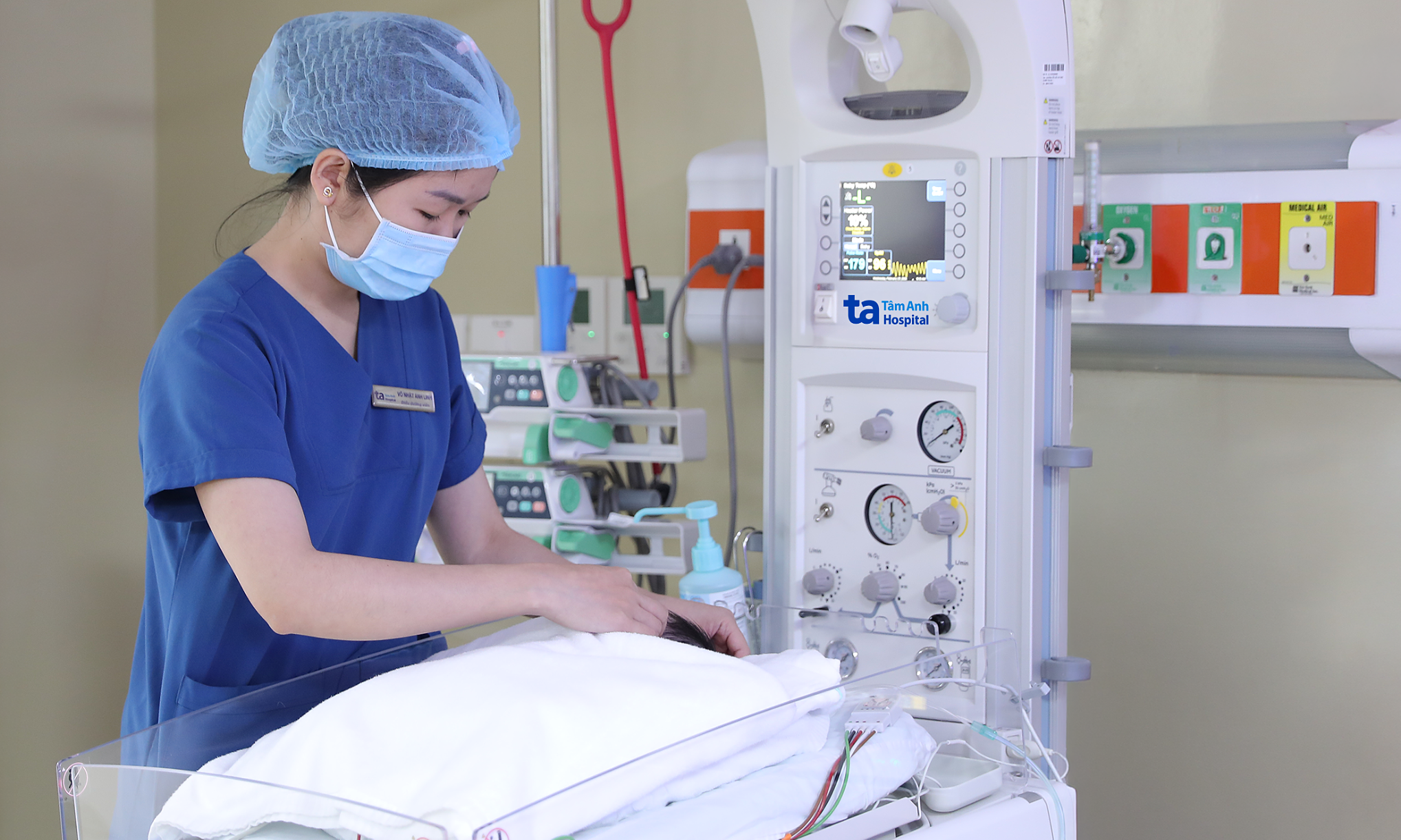 |
Nurses provide 24/7 care for the baby in the Neonatal Intensive Care Unit (NICU). Photo: Tam Anh General Hospital |
Nurses provide 24/7 care for the baby in the Neonatal Intensive Care Unit (NICU). Photo: Tam Anh General Hospital
According to Dr. Hanh, very premature infants (from 28 weeks to under 32 weeks) require aggressive medical support immediately after birth to maintain respiration, nutrition, and ensure developmental milestones. As organs like the brain, heart, lungs, digestive system, and immune system are not yet fully developed, the first 60 minutes after birth are considered the "golden hour," critically determining the child's survival and risk of long-term complications.
At Tam Anh General Hospital, the "golden hour protocol" is a series of specialized medical interventions performed within the first 60 minutes of life, directly in the delivery room, to save and reduce complication risks for premature and extremely premature infants (from 24 weeks gestation). The protocol includes techniques such as delayed cord clamping, prevention of hypothermia, intravenous glucose maintenance after birth, prevention of sepsis, and respiratory support in the delivery room continuing until transfer to the Neonatal Intensive Care Unit (NICU).
Dr. Hanh recommends that pregnant women at risk of preterm birth undergo regular check-ups at hospitals with close collaboration between obstetrics and neonatology departments. This model helps monitor and manage pregnancy complications for the mother promptly, ensuring optimal conditions for the arrival of a premature baby.
Ngoc Chau
| Readers can submit questions about children's health here for doctors to answer. |