Stretch marks are a common post-pregnancy condition, forming when the skin rapidly stretches during and after pregnancy. These marks can appear on the abdomen, thighs, hips, chest, or other body areas. Initially, they are often red or pink, gradually fading to a silvery-white.
Breastfeeding mothers can indeed undergo stretch mark treatment after childbirth. A doctor will assess the condition of the stretch marks (whether they are still red or have turned white), as well as the patient's underlying health, individual constitution, and overall health, to select appropriate methods and adjust the intensity of intervention. This approach aims to minimize impact on both the mother and breast milk supply.
For red stretch marks, doctors may consider light-based therapies such as intense pulsed light (IPL) or long-pulsed Nd:YAG laser. The light energy targets blood vessels and skin tissues associated with the stretch mark area, helping to reduce redness and support skin recovery. A key advantage of these methods is that they do not require local anesthesia during the procedure. This allows breastfeeding mothers to receive treatment without concerns about affecting their milk supply. However, the effectiveness and number of treatment sessions depend on each individual's skin condition. New, red stretch marks generally respond more favorably than older, white ones.
 |
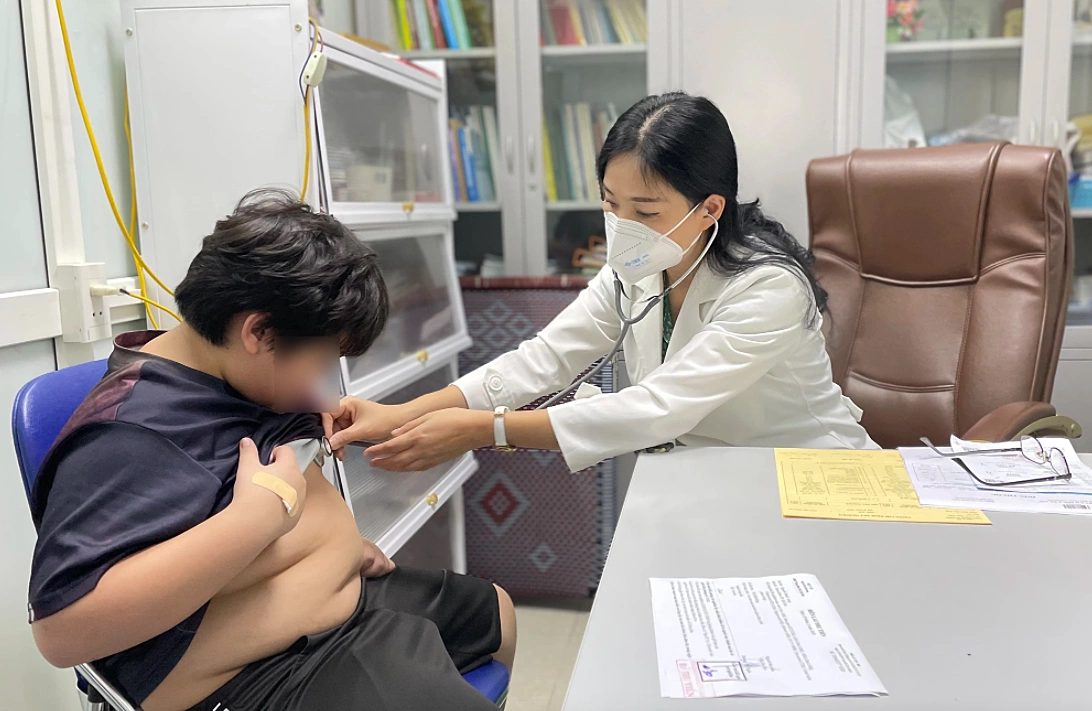
Doctor An consults a patient. Illustration: Tam Anh General Clinic District 7 |
When stretch marks have turned white, the skin structure in the affected area is often more noticeably altered. At this stage, methods that penetrate deeper into the skin may be considered to stimulate regeneration and improve the surface of the stretch mark area. Some techniques might require local anesthesia. For breastfeeding women, the doctor will carefully consider the appropriate amount of anesthetic, using it on a small area and for a short duration to minimize the total amount administered. The energy level during treatment also needs adjustment based on skin characteristics. The doctor will evaluate the stretch mark condition, skin tone, and potential response before determining the level of intervention, preventing excessive impact that could cause irritation or skin damage.
Since each type of stretch mark has different characteristics, treatment approaches vary. Patients should clearly inform their doctor about their breastfeeding status, delivery date, and any products or medications they are currently using. Based on this information, the doctor will choose suitable methods and decide whether anesthesia is necessary. It is important to note that stretch marks often do not disappear completely after a single intervention. The goal of treatment is to make the marks less noticeable, improve their color and skin texture, and help the affected area blend more harmoniously with the surrounding skin. Adhering to the treatment regimen and following proper skincare instructions will also facilitate the recovery process and enhance treatment effectiveness.
Master, Doctor, Level 1 Specialist Pham Truong An
Dermatology - Aesthetic Dermatology Unit
Tam Anh General Clinic District 7
| Readers can send questions about dermatology and aesthetic dermatology here for doctors to answer. |