In a dispatch sent to localities on 10/2, the Food Safety Authority (FSA) under the Ministry of Health stated that seemingly minor acts, such as displaying food without proper tables, cabinets, or shelves; failing to cover food to prevent dust and insect contamination; or not wearing gloves when directly handling cooked food, all pose risks to food hygiene and safety. These actions could result in fines ranging from 500,000 dong to one million dong.
More serious violations, including using unsafe processing equipment, using substandard water, or having individuals directly involved in food preparation who are suffering from infectious diseases, could incur fines of up to 3 million dong.
Using food additives improperly, especially those illegally repackaged or decanted, will result in severe penalties and mandatory destruction of all non-compliant food products. In the event of a food safety incident, businesses are responsible for providing complete information on ingredient origins to facilitate traceability and investigation into the cause.
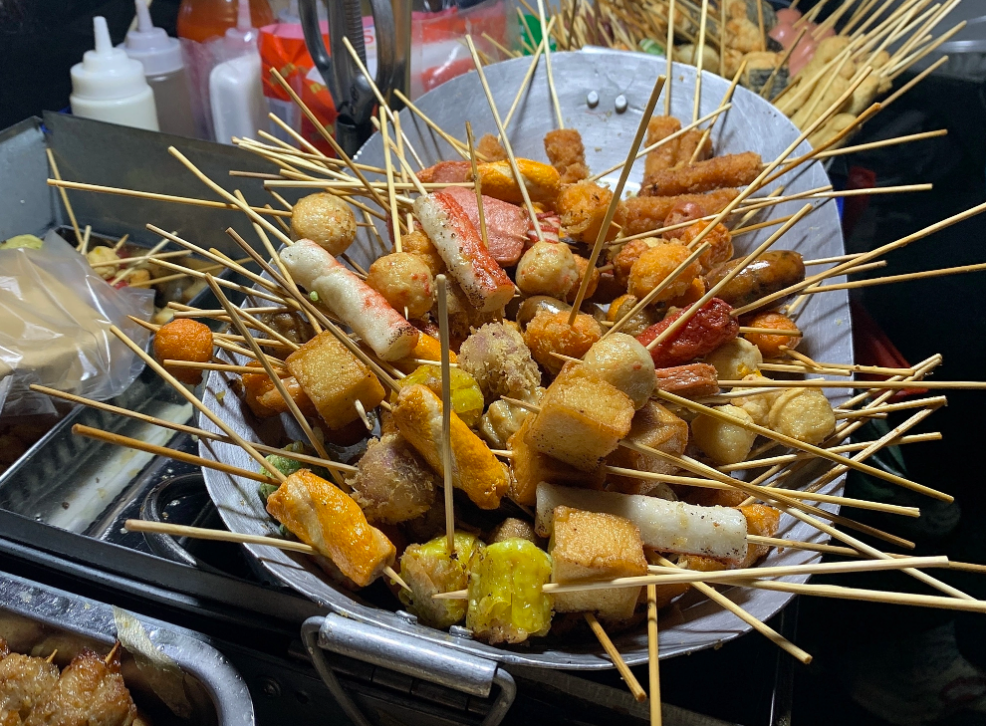 |
Assorted fried balls displayed in a pan after deep-frying, sold to customers on Nui Truc Street, Ba Dinh District. Photo: Thanh Nga
Under current regulations, street food businesses are not required to obtain a food safety eligibility certificate. However, they must fully meet requirements concerning personnel, equipment, ingredients, and processing conditions. Food handlers must receive food safety training and not suffer from any infectious diseases as stipulated.
The Ministry of Health observes a widespread issue of food safety violations among small-scale establishments and street vendors. Many selling points lack minimal hygiene conditions, clean water, and proper waste collection. Food preparers often do not use protective gear, frequently purchase cheap ingredients of unclear origin, and fail to ensure safety. Post-processed products like pate, crab paste, cold cuts, and leftover food are improperly stored, left stagnant, or expired, posing a high risk of food poisoning.
Therefore, the Ministry of Health urged provincial and municipal People's Committees to strengthen post-inspection oversight and organize inter-agency inspections, especially during Tet and festival seasons. Violators will face strict penalties and public disclosure through media outlets to provide timely warnings and protect consumer health.
Le Nga