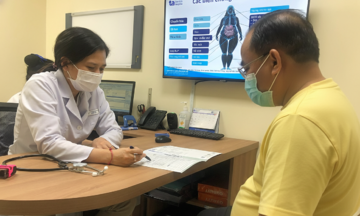
Dr. Dang Thi Ngoc Bich, head of dermatology and cosmetic dermatology at Tam Anh General Hospital, TP HCM, diagnosed Ms. Huong with postpartum mixed melasma. This common pigmentary disorder in women combines epidermal and dermal melasma, often appearing on the forehead and cheeks. It presents as light brown, dark brown, or gray hyperpigmented patches with irregular borders, often alongside freckles.
Hormonal shifts during and after pregnancy, particularly in estrogen and progesterone, stimulate melanin overproduction, causing melasma to appear and progress rapidly. Prolonged sleep deprivation, stress from caring for a newborn, and even low-intensity sun exposure worsened Ms. Huong's melasma. Even with diligent skincare, her condition did not improve. Doctor Bich noted that topical medications and cosmetics alone are often insufficient for such cases, requiring a combination of appropriate technologies and a long-term control regimen.
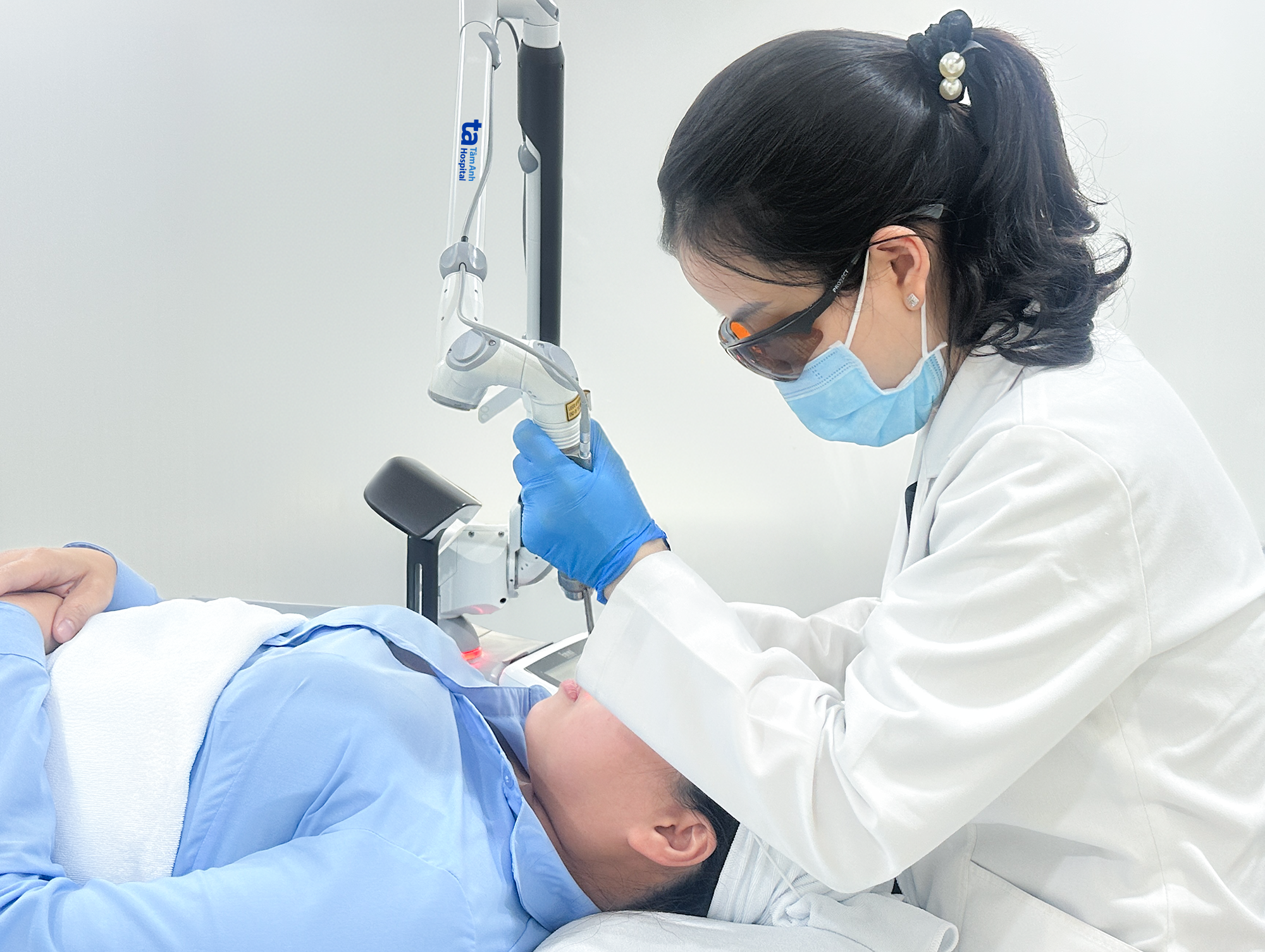 |
Doctors use pico pro laser to treat Ms. Huong's melasma. Photo: Tam Anh General Hospital |
Doctors prescribed oral medications, topical products, and sunscreen for Ms. Huong. This was combined with two to three Pico Pro laser sessions, once a month, alongside essence electrophoresis to brighten her skin. The laser energy was adjusted to a safe level, targeting the darker epidermal melasma, with close monitoring of her skin's reaction after each treatment.
Pico Pro laser uses ultra-short picosecond pulses, creating a photomechanical effect that shatters melanin pigments into tiny fragments. The body gradually eliminates these fragments, making it more effective than conventional pico lasers. This technology minimizes heat generation, limits damage to surrounding tissues, suits sensitive postpartum skin, and reduces the risk of post-inflammatory hyperpigmentation.
After approximately 4 months of consistent treatment and guided skincare, Ms. Huong's melasma significantly improved. The dark patches and freckles faded, and her skin became brighter and more even. She must maintain the treatment regimen and proper skincare to prevent recurrence.
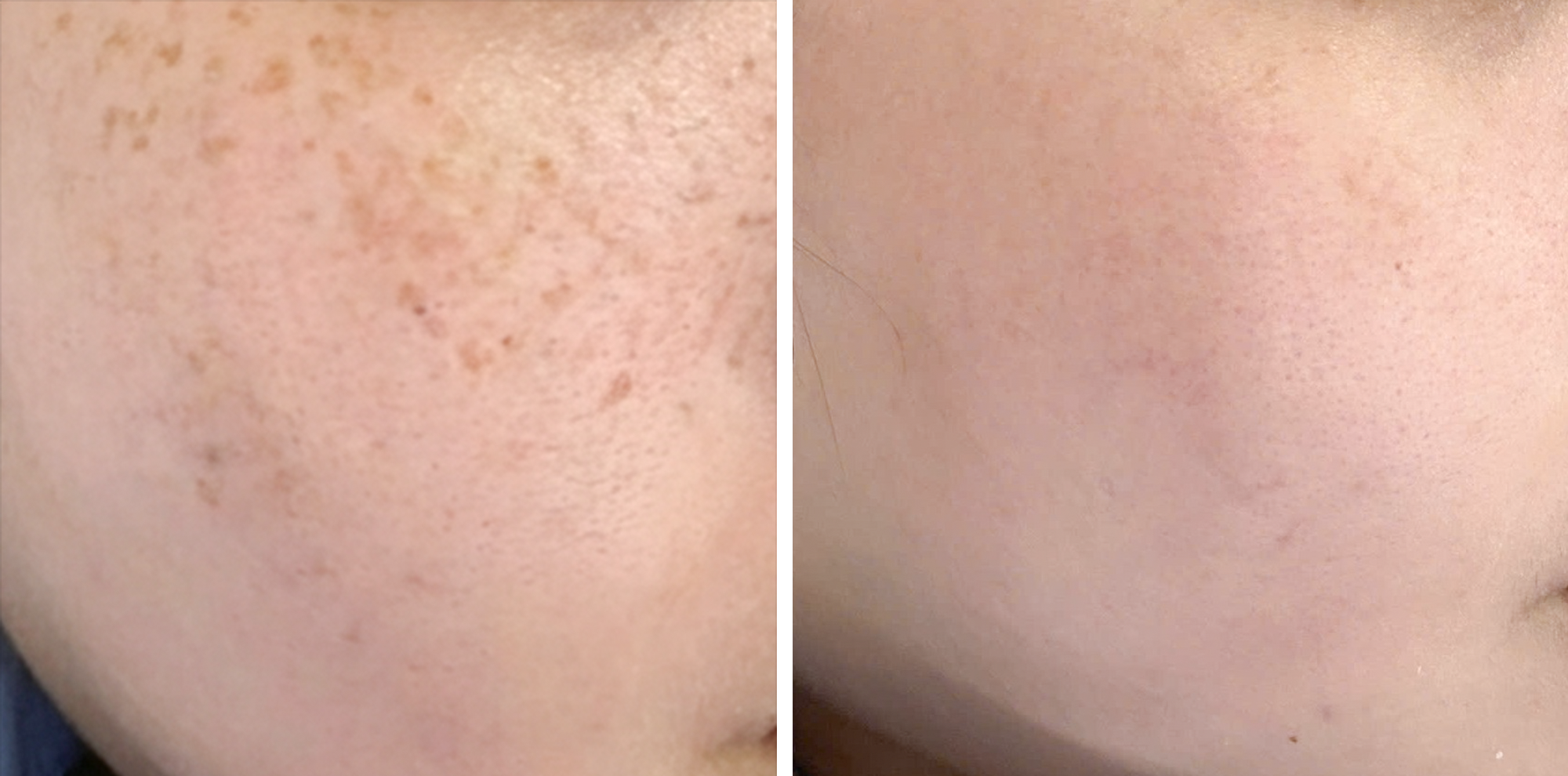 |
Ms. Huong's melasma patches and freckles significantly reduced after treatment. Photo: Tam Anh General Hospital |
Doctors advise postpartum women against self-treating melasma with unauthorized creams, chemical peels, or over-the-counter medications. Such practices can weaken the skin, increase complication risks, and make future treatment more difficult. When dark melasma appears, patients should seek early examination at a hospital with dermatology and cosmetic dermatology specialists for proper diagnosis and a personalized treatment regimen.
Following laser treatment, strict sun avoidance is crucial. Use broad-spectrum sunscreen, cover up thoroughly when outdoors, and limit makeup during the first few days. Keep the skin hydrated; do not self-peel, exfoliate, or use strong whitening products without guidance.
Increase your intake of green vegetables and fruits rich in vitamins C and E, drink adequate water, and limit spicy foods, alcohol, coffee, and sugary foods, as these can prolong hyperpigmentation. A balanced lifestyle with sufficient sleep helps stabilize hormones, supporting long-term melasma control.
By Minh Huong
*Name changed for privacy.