Eng English
China 中国人

Eng English
China 中国人
  • News
  • World
  • Business
  • Entertainment
  • Sports
  • Law
  • Education
  • Health
  • Lifestyle
  • Travel
  • Science
  • Digital
  • Automobiles
  • Trở lại Thể thao
  • Health
Saturday, 26/9/2026 | 11:03 GMT+7

Should stroke patients be placed on their side during first aid?

When someone shows signs of stroke, how should first aid be administered while waiting for emergency services? Should they be placed on their side, on their back, or kept in the same position? (Hoang Nam, 42, Dong Nai)

Answer:

When a person shows suspected signs of stroke, if they have reduced consciousness and a risk of vomiting, they should be placed on their side. This position helps prevent vomit from entering the airway. Immediately after, call for emergency medical assistance to transport the patient to a facility equipped to treat stroke.

Stroke patients may experience sudden weakness or paralysis on one side of the body, facial drooping, and difficulty speaking. In cases of extensive brain damage, patients may have impaired consciousness and a reduced ability to protect their airway. If a patient vomits while lying on their back, there is a significant risk of vomit entering the respiratory tract, leading to choking and breathing difficulties.

Individuals without medical expertise should not attempt to prick fingertips or perform "cao gio" (coining) as these methods have no therapeutic effect on stroke. A stroke occurs when blood vessels supplying the brain become blocked or rupture, causing damage to brain cells. Therefore, administering first aid at home using these techniques cannot restore blood flow or address internal brain hemorrhage.
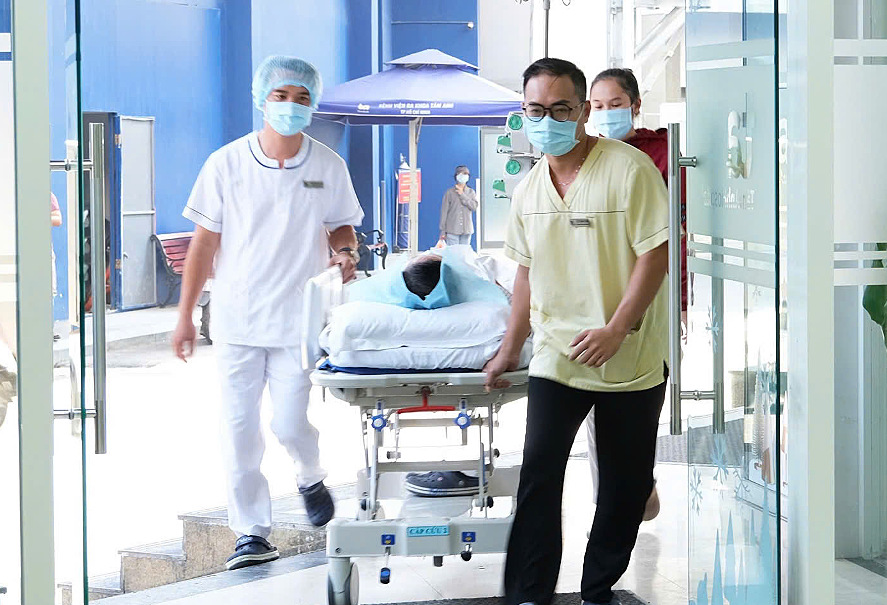
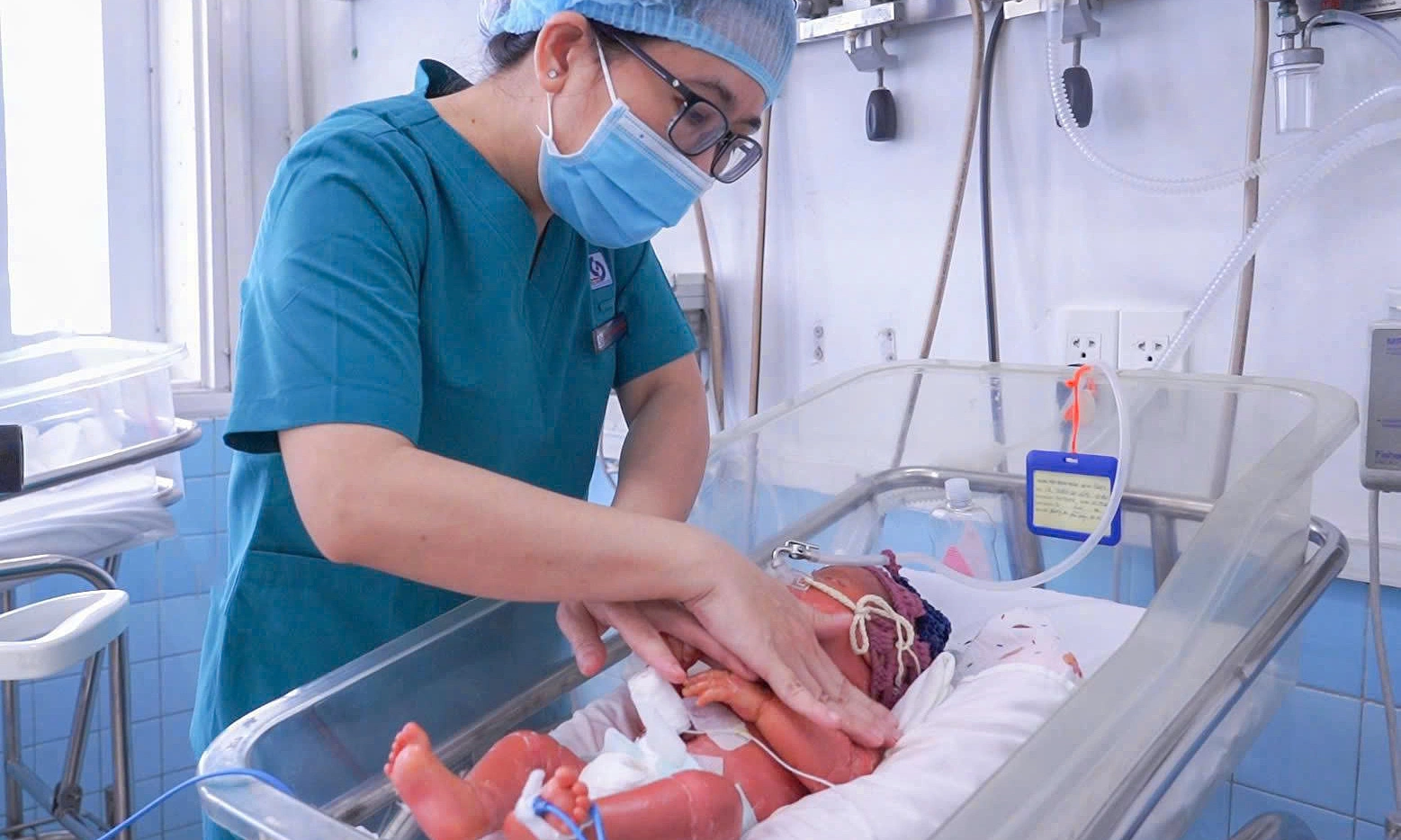
Stroke patients receive early emergency care to limit the risk of death and complications. *Illustration: Tam Anh General Hospital*.

Upon receiving information about a suspected stroke patient, hospitals typically activate a "Code Stroke" emergency protocol. This protocol prioritizes immediate CT or MRI scans and rapid consultation among specialists. This streamlined process helps doctors quickly determine if the patient has an ischemic stroke or a hemorrhagic stroke, as well as the location and extent of the damage. This assessment guides the selection of appropriate treatment methods. Depending on the patient's condition, they may receive thrombolytic medication, thrombectomy intervention, or surgical removal of a hematoma.

If you encounter someone suddenly exhibiting facial drooping, limb weakness, speech difficulty, loss of balance, or double vision – all suspected signs of stroke – your priority should be to call for emergency medical help. Do not wait for symptoms to disappear on their own or apply traditional remedies, as these actions delay treatment and risk losing the opportunity to preserve the patient's neurological function.

Doctor Nguyen Thi Minh Duc

Head of Neurology Department

Center for Neuroscience

Tam Anh General Hospital, Ho Chi Minh City

Readers can submit questions about neurological diseases here for doctors to answer.
By VnExpress: https://vnexpress.net/co-nen-cho-nguoi-dot-quy-nam-nghieng-khi-so-cuu-5124970.html
Tags: neurology first aid stroke

News in the same category

What happens to your heart when you lack sleep?

What happens to your heart when you lack sleep?

Adults who do not get enough sleep, typically less than 7 hours each night, face an increased risk of cardiovascular problems such as hypertension, coronary artery disease, stroke, and myocardial infarction.

Vietnamese accustomed to 'eating salty, drinking sweet' face heavy disease burden

Vietnamese accustomed to 'eating salty, drinking sweet' face heavy disease burden

High salt intake, sugary drinks, and insufficient vegetables and fruits among Vietnamese contribute to an elevated risk of cardiovascular disease, diabetes, obesity, and other non-communicable diseases.

Common mistakes when supplementing probiotics for children

Common mistakes when supplementing probiotics for children

Mixing probiotics with hot water or milk, or taking them simultaneously with antibiotics, are common mistakes parents make when giving probiotics to children.

VCF film: the 'invisible' contraceptive solution

VCF film: the 'invisible' contraceptive solution

VCF film is a localized, self-dissolving, hormone-free contraceptive used on demand, providing women with an additional option for family planning.

Baby boy born with 'fish scale' disease

Baby boy born with 'fish scale' disease

A baby boy was born weighing 3,1 kg with respiratory distress, taut, cracked, shiny skin, ectropion, and feeding difficulties, diagnosed with lamellar ichthyosis.

Do you need to avoid tofu if you have thyroid disease?

Do you need to avoid tofu if you have thyroid disease?

I was diagnosed with thyroiditis, and my mother advised me to avoid tofu and other soy products. Is this correct? (Thai Ha, 36 years old)

Is hoarseness a sign of cancer?

Is hoarseness a sign of cancer?

I have been hoarse for nearly one month, medication has not helped, and I have lost weight. Could this be a sign of cancer, and what examination should I get? (Trang Vo, 56, Dong Nai)

Benefits of regular health check-ups after middle age

Benefits of regular health check-ups after middle age

Regular check-ups offer a proactive approach to assessing respiratory function, screening for early-stage cancer, and managing chronic conditions before complications develop.

University of Medicine and Pharmacy, Ho Chi Minh City, offers specialized vaccine training for doctors

University of Medicine and Pharmacy, Ho Chi Minh City, offers specialized vaccine training for doctors

The School of Medicine at the University of Medicine and Pharmacy, Ho Chi Minh City, integrates vaccine knowledge into postgraduate education to enhance preventive healthcare capabilities amidst a rapidly aging population.

Bone marrow disorder causes severe hypoxia

Bone marrow disorder causes severe hypoxia

Hoan, a 31-year-old woman, experienced sudden speech difficulties, labored breathing, cold limbs, pale skin, and a weak pulse, leading doctors to diagnose severe hypoxia caused by myelodysplastic syndrome.

Eng English
China 中国人
  • News
  • World
  • Business
  • Entertainment
  • Sports
  • Law
  • Education
  • Health
  • Lifestyle
  • Travel
  • Science
  • Digital
  • Automobiles
FPT Tower, 10 Pham Van Bach Street, Dich Vong Ward,
Cau Giay District, Hanoi, Vietnam
Email: contacts@vnportal.net
Tel: 028 7300 9999 - Ext 8556
Advertise with us: 090 293 9644
Register
© Copyright 2026 vnnow.net. All rights reserved.
Terms of use Privacy policy Cookies