The peripheral nervous system is a network of nerves and ganglia located outside the brain and spinal cord. It transmits information from the central nervous system to the rest of the body, while also relaying sensory information from the skin, tendons, joints, and other organs back to the brain.
Dr. Diem Thi Huyen, from the Neurology - Stroke Department at Tam Anh Cau Giay General Clinic, stated that the peripheral nervous system can be damaged by trauma, infection, toxin exposure, metabolic disorders, and autoimmune diseases. Additionally, some individuals develop idiopathic peripheral neuropathy due to genetic factors.
Each nerve in the peripheral system has a specific function. Dr. Huyen explained that the symptoms of the condition depend on which group of peripheral nerves is affected.
Sensory neuropathy can cause numbness, tingling, or a prickling sensation, like pins and needles, in the feet and hands, gradually spreading up the calves and forearms. Many individuals experience reduced ability to feel pain, heat, or cold, potentially leading to unnoticed burns or injuries.
Some people experience heightened sensitivity, feeling burning pain or electric-shock-like sensations even with light touch or clothes brushing against the skin. When deep sensory nerves are damaged, individuals lose awareness of their foot and hand positions, causing imbalance, an unsteady gait, or frequent falls.
Motor neuropathy directly impacts muscle control.
Initially, individuals might experience muscle twitching, cramps, or unusual muscle fatigue. Later, muscle weakness develops in one or more muscle groups, making tasks like gripping objects, climbing stairs, or standing up from a seated position difficult.
Untreated, prolonged damage can lead to muscle atrophy. A classic sign is foot drop syndrome, where individuals cannot lift the front part of their foot and toes, requiring them to lift their leg high when walking to avoid tripping.
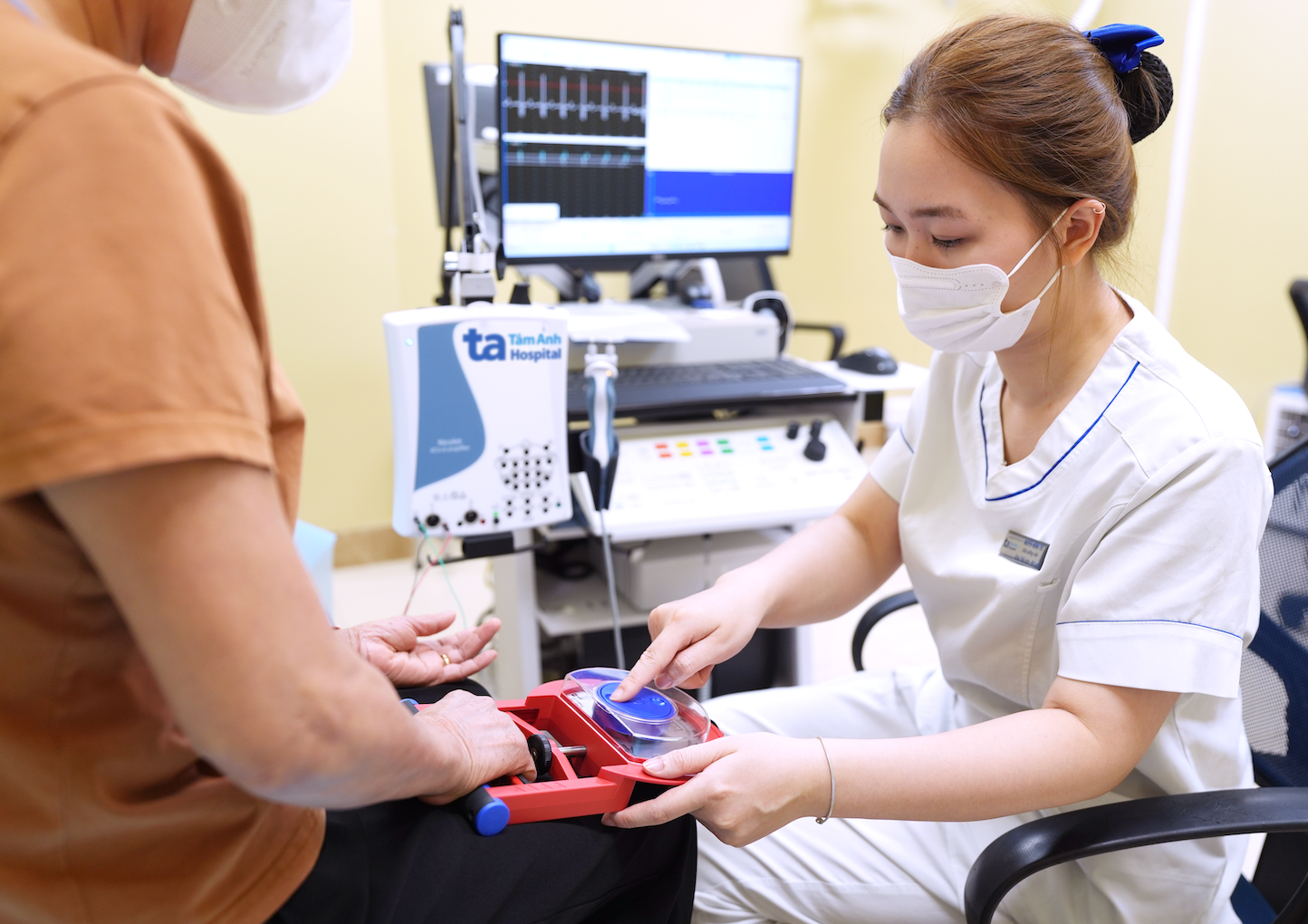 |
A healthcare worker performs an electromyography (EMG) on a patient with peripheral neuropathy. Illustration: Tam Anh Cau Giay General Clinic
Autonomic neuropathy disrupts involuntary bodily functions that people cannot consciously control. Patients may experience chronic constipation or diarrhea accompanied by bloating, nausea, slow digestion, and belching.
Nerve damage affecting blood pressure regulation can cause dizziness, lightheadedness, or fainting when suddenly changing position from sitting to standing. Some cases involve rapid heart rate and excessive sweating. The condition can also lead to urinary dysfunction, loss of bowel control, or sexual dysfunction, such as erectile dysfunction in men.
Mononeuropathy is a condition where only one peripheral nerve is damaged. Symptoms depend on the type of nerve affected.
If a nerve in the head, face, or related to vision is damaged, individuals might experience double vision, difficulty focusing their eyes, ocular motor paralysis, pain around the eye socket, or facial paralysis on one side.
Damage to the median nerve in the wrist, causing carpal tunnel syndrome, can result in numbness, burning pain, or tingling in the thumb, index finger, middle finger, and part of the ring finger.
Individuals with nerve damage in the lower limbs often experience pain, numbness, or weakness in the feet and calves, affecting their ability to walk.
Dr. Huyen noted that peripheral neuropathy symptoms often begin subtly and are easily mistaken for fatigue, musculoskeletal conditions, or peripheral circulatory disorders. Individuals should visit a specialized neurology hospital when they notice unusual symptoms for careful examination and assessment by a doctor.
Doctors will gather information about symptoms and perform a neurological examination, combined with techniques such as nerve conduction studies, blood tests, and magnetic resonance imaging. This helps doctors identify the cause, initiate early treatment, and prevent irreversible nerve damage.
Thanh Long
| Readers can submit questions about neurological conditions here for doctors to answer. |