Answer:
Breast cancer during pregnancy refers to cases where cancer is detected while a woman is pregnant or breastfeeding. Malignant tumors in pregnant women often grow at a faster rate, especially endocrine-positive breast cancer.
During pregnancy, estrogen and progesterone hormone levels surge to maintain the fetus and stimulate the mammary gland system to develop and produce milk. These physiological changes inadvertently create a favorable environment for tumor growth.
Endocrine-positive breast cancer requires estrogen and progesterone hormones to develop. The increased levels of estrogen and progesterone during pregnancy cause cancer cells to continuously receive hormone signals, leading to continuous division and multiplication.
 |
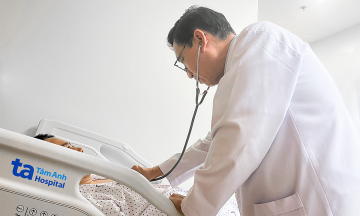
Doctor Manh consults a patient. Illustration: Tam Anh General Hospital |
Furthermore, blood vessels proliferate during pregnancy to prepare for milk secretion and provide nutrition to the fetus. The vascular system surrounding breast glandular tissue develops rapidly, increasing blood and nutrient supply to the pregnant woman's breasts. This inadvertently becomes "food" for tumors to grow quickly.
However, breast tissue naturally increases in density and volume and becomes lumpy during pregnancy. This can obscure malignant tumors, making them easily mistaken for breast cysts, clogged milk ducts, or abscesses.
During the first trimester of pregnancy, screening mammograms and breast examinations are limited. MRI scans with contrast agents are absolutely contraindicated for pregnant women because the agents cross the placenta. Breast tumor biopsies during pregnancy often yield false positive or false negative results due to changes in breast tissue structure. These factors cause breast tumors to silently increase in size. Most pregnant women with breast cancer are diagnosed when the tumor is already large.
Modern medicine has made significant advancements, combining multidisciplinary approaches with new generation drugs to allow expectant mothers to undergo treatment while safely maintaining their pregnancy, provided the disease is detected early. However, cancer treatment options for pregnant women are often more limited. Treatment protocols are typically based on the type of cancer, disease stage, the pregnant woman's health status, and gestational age.
If cancer is detected near the end of pregnancy (around after 34-35 weeks), the patient may postpone treatment until after delivery or the doctor may induce labor a few weeks earlier than the due date.
Since you are preparing for pregnancy and have a lump in your breast, you should undergo breast cancer screening as advised by a doctor to determine if the lump is benign or malignant. This will help establish an appropriate treatment plan to ensure a safe pregnancy.
Master of Science, Doctor, Second-Degree Specialist Pham Tuan Manh
Department of Surgical Oncology, Oncology Center
Tam Anh General Hospital TP HCM
| Readers can submit questions about cancer here for doctor consultation |