The Ministry of Health recently issued professional guidelines for periodic health check-ups for children under 6. These check-ups are comprehensive, including vital sign measurements, nutritional assessments, tracking physical, mental, and motor development, and verifying vaccination status.
Doctors also conduct general examinations of various organ systems, including skin, eyes, ear, nose, throat, dental, cardiovascular, respiratory, digestive, musculoskeletal, nervous, and reproductive systems, while also screening for the risk of autism spectrum disorder.
The Ministry of Health mandates that examination records be created using a standardized template and updated in an electronic health book. This data will connect and integrate with healthcare management systems, national health databases, health insurance assessment systems, and the VNeID application.
When organizing a check-up session, local authorities must develop a plan, widely inform parents, and compile lists of children by village or residential group to arrange suitable schedules. Each examination station requires at least one doctor, one medical assistant, nurse, or midwife responsible for basic measurements, along with one supporting healthcare worker. All personnel must undergo training on the procedures.
Each examination site must be fully equipped with examination tables, beds, scales, height measuring devices, thermometers, stethoscopes, ear, nose, and throat examination kits, reflex hammers, toys for assessing child development, and technological equipment for managing the electronic health book.
Localities should prioritize organizing check-ups at commune or ward health stations if they have sufficient personnel and equipment. Additionally, these activities can take place at mobile clinics or qualified public or private healthcare facilities, offering convenience for parents to bring their children for examinations.
During the check-up, doctors will gather the child's health history from birth and the mother's medical history during pregnancy. They will comprehensively assess the child's health, provide care advice, and offer follow-up guidance. If any abnormal signs or suspected illnesses are detected, the doctor will advise referring the child to an appropriate facility for timely diagnosis and treatment.
The Ministry of Health emphasizes that periodic check-ups not only monitor a child's development in their early years but also aid in the early detection of developmental disorders, malnutrition, congenital diseases, and other health issues. Digitizing this data also establishes a foundation for creating continuous electronic health records for each child, facilitating nationwide health management, care, and data connectivity.
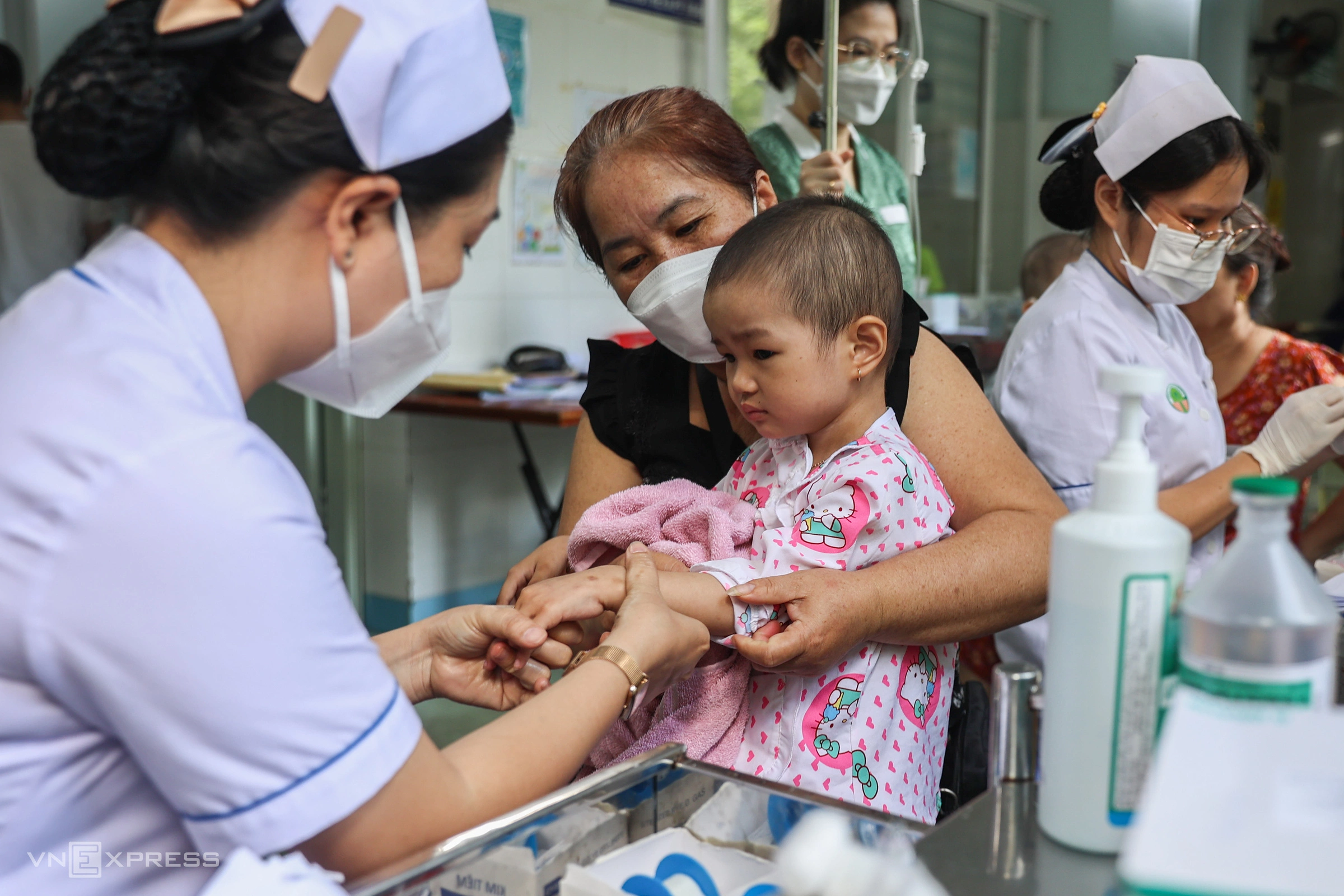 |
Children undergoing examination and treatment at Nhi Dong 2 Hospital. Photo: Quynh Tran |
In mid-May, the Ministry of Health announced a list of services for the nationwide free periodic health check-up program, which will be implemented starting in 2026. The implementation roadmap is divided into two phases. From 2026, the program will prioritize the elderly, poor households, people with disabilities, chronic patients, and residents in remote areas. By 2028, the healthcare system will expand these services to all remaining population groups.
According to the latest regulations, individuals aged 18 and older will have access to a comprehensive clinical examination and basic laboratory tests. Doctors will take medical histories, measure body metrics, check blood pressure, and conduct internal medicine and ear, nose, and throat examinations.
Additionally, the healthcare sector will provide services such as complete blood count, blood sugar, liver and kidney function tests, urinalysis, and chest X-rays. If abnormal signs like tuberculosis or lung tumors are detected, healthcare facilities will immediately order specialized tests or refer patients for timely treatment.
For women, children, and specific occupational groups, authorities apply separate professional standards. Doctors will conduct gynecological examinations for female workers following an independent procedure. Children under 6 will adhere to pediatric guidelines, while the 6-18 age group will use school health check-up forms and undergo tests only when requested by a doctor. Professions with rigorous physical demands, such as police, military, aviation, and railway personnel, will continue to follow their existing specialized examination regulations.
Currently, Ho Chi Minh City and Hanoi have organized free health check-ups and common disease screenings for residents. This initiative concretizes Politburo's Resolution 72, which aims for all citizens to receive free periodic health check-ups, moving towards basic hospital fee exemption by 2030.
Le Nga