Spinal conditions typically seen in middle-aged adults are becoming increasingly common among young people in their twenties. Musculoskeletal disorders are no longer confined to adults but have infiltrated schools. While parents often focus on their children's height, weight, and vision, scoliosis has emerged as the third largest health threat to children and adolescents in China, trailing only obesity and myopia, according to Huxiu.
From a posterior view, a normal person's spine appears as a straight line. However, in individuals with scoliosis, this bone structure curves, forming a C-shape or S-shape. Clinically, scoliosis is diagnosed if the Cobb angle, measured on a full-spine X-ray taken in a standing position, is 10 degrees or more. If the angle reaches or exceeds 20 degrees, it is classified as moderate or severe.
Children with the condition often exhibit noticeable physical characteristics, such as one shoulder or pant waistline being higher than the other, a collar sagging to one side, or uneven wear on shoe soles between both feet after prolonged use. This seemingly unfamiliar condition is now widespread in schools, from primary to secondary levels.
Preliminary epidemiological data from 2022, provided by the Spinal Disease Prevention Committee of the Chinese Preventive Medicine Association and expert consensus, estimates that the number of primary and secondary school students with scoliosis in China has surpassed 5 million, with approximately 300,000 new cases annually. A meta-analysis of 1,15 million students across mainland China also revealed a prevalence rate of 1,6% for the 2016-2024 period, nearly double the 0,9% rate recorded from 2000-2015.
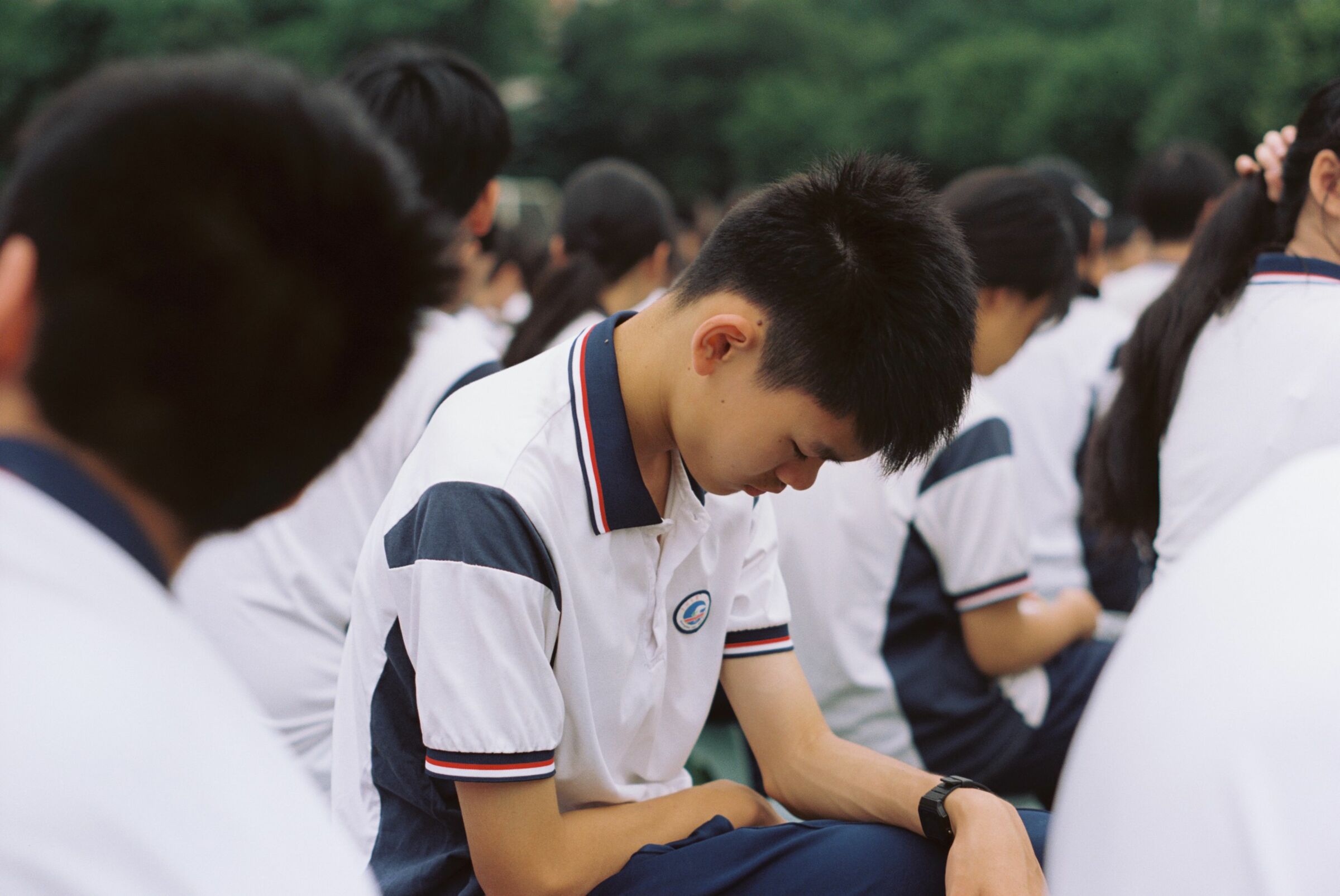 |
Illustration of a student with a curved spine. Photo: Pexels. |
Considering gender, the prevalence of scoliosis is notably higher in females than in males, approximately 1,6 times greater. Females also tend to experience more severe deformities and a peak onset age that is one to two years earlier. This trend is attributed to females generally having weaker muscle strength, less physical activity, and entering puberty's skeletal development phase earlier. Despite being identified with spinal abnormalities during routine school health check-ups, some children do not seek timely follow-up examinations or interventions at a hospital.
A 5-year study involving over 90,000 adolescents in Eastern China revealed that despite a relatively high rate of abnormal screening detections, the number of students who actually visited a hospital for an X-ray and specialized examination was very low, at only 14,4%.
Most cases among school-aged children are classified as idiopathic scoliosis, meaning no single cause can be identified after ruling out congenital defects or injuries. Puberty is a period of rapid height growth, but the skeletal and muscular systems are not yet fully developed, making thin children or those deficient in micronutrients like calcium and vitamin D highly susceptible to spinal misalignment. Beyond physiological factors, intense academic pressure, school bags exceeding 10 kg, prolonged sitting for many hours, and a lack of outdoor physical activity further intensify the stress on the skeletal frame.
This condition not only causes postural deformities and affects respiratory and digestive functions but also leads to negative psychological impacts, making children prone to low self-esteem, anxiety, and depression. However, scoliosis is entirely manageable. Depending on the severity—mild, moderate, or severe—patients can improve their condition through rehabilitation exercises, core muscle training, or specialized medical intervention.
Experts recommend the most practical solutions for spinal protection: maintaining an upright sitting posture, actively reducing school bag weight to under 10% of a child's body weight, and increasing daily physical activity instead of relying on anti-hunchback bags or unverified horizontal bar exercises.
Binh Minh (According to Huxiu)