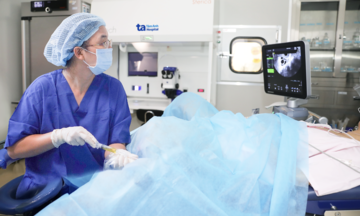
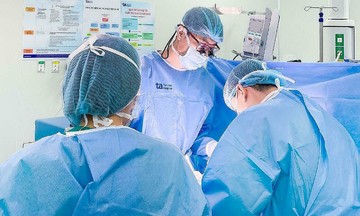
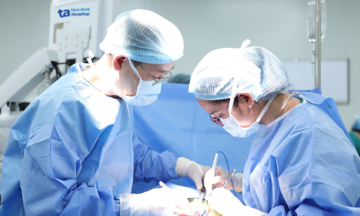
The baby was born via C-section at Tam Anh General Hospital, TP HCM. During the cord cutting, doctors collected about 200 ml of blood from the umbilical cord and placenta, along with a 25 cm segment of cord tissue. These samples were then transferred to the hospital's tissue bank for processing and storage. Stem cells are processed within 24 hours of collection and preserved in liquid nitrogen at -196°C, ensuring their quality for an extended period.
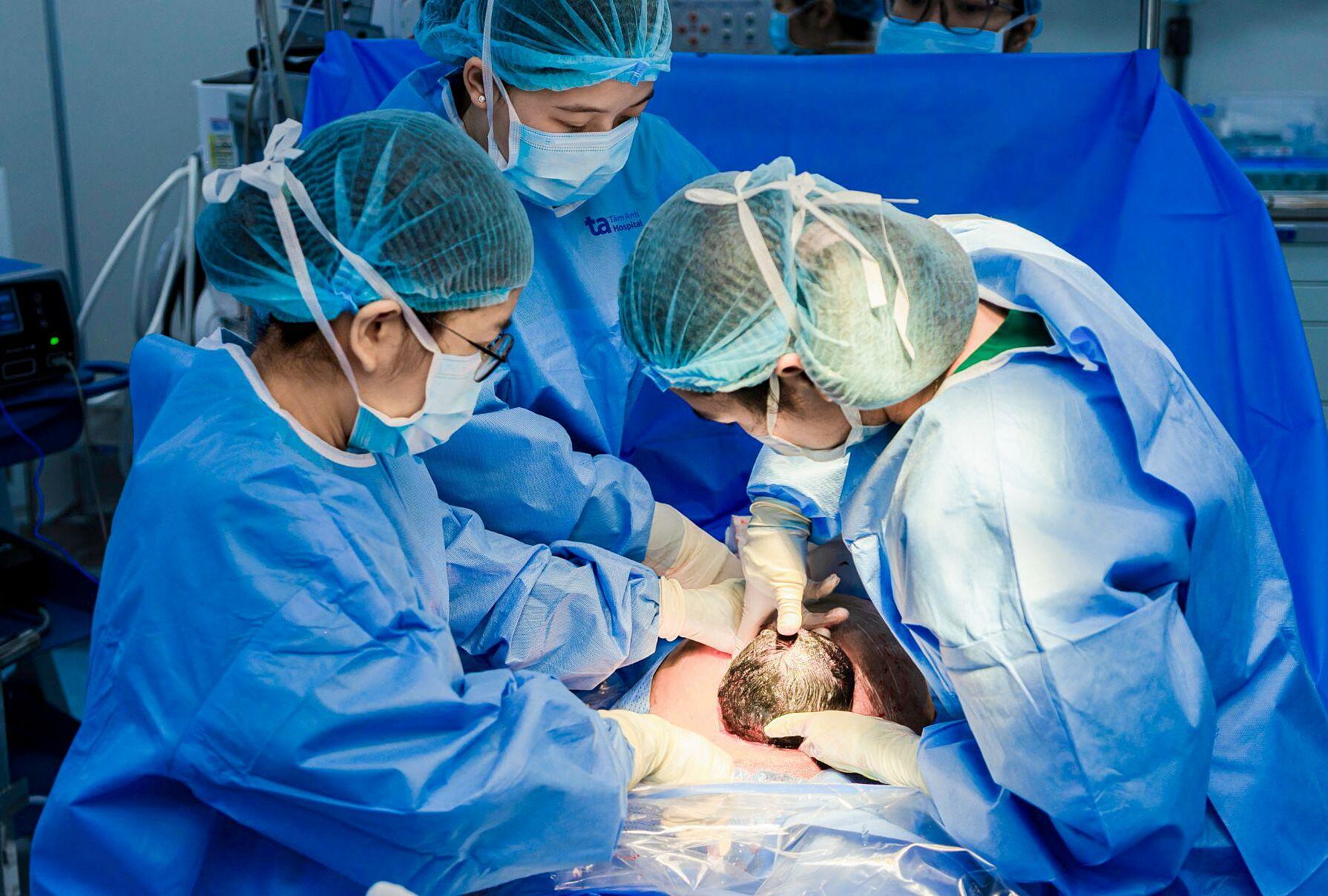 |
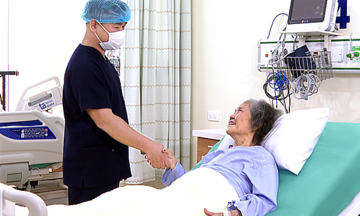
Anh Thanh's son was born at Tam Anh General Hospital, TP HCM, weighing 3,2 kg, and had stem cells stored immediately after birth. *Photo: Tue Diem*
The decision to store the stem cells was prompted by a family history of acute lymphoblastic leukemia, a type of blood cancer, which the baby's paternal grandmother suffers from. She underwent chemotherapy and radiation therapy 20 years ago and is currently in stable health. The hereditary risk for this disease within the family is 5-10%. Concerned about this genetic predisposition, the baby's father, Anh Thanh, 30, chose to store his son's stem cells as a preventative measure for potential future family treatment.
Doctor Tham Thi Thu Nga, Head of Lab at the Stem Cell Center, Tam Anh General Hospital system, stated that hematopoietic stem cell transplantation is a crucial cancer treatment method. This method is particularly effective for advanced, recurrent, or unresponsive cases to conventional regimens. A child's hematopoietic stem cells are haploidentical with their parents and, in many cases, are also partially immune compatible with siblings and other relatives.
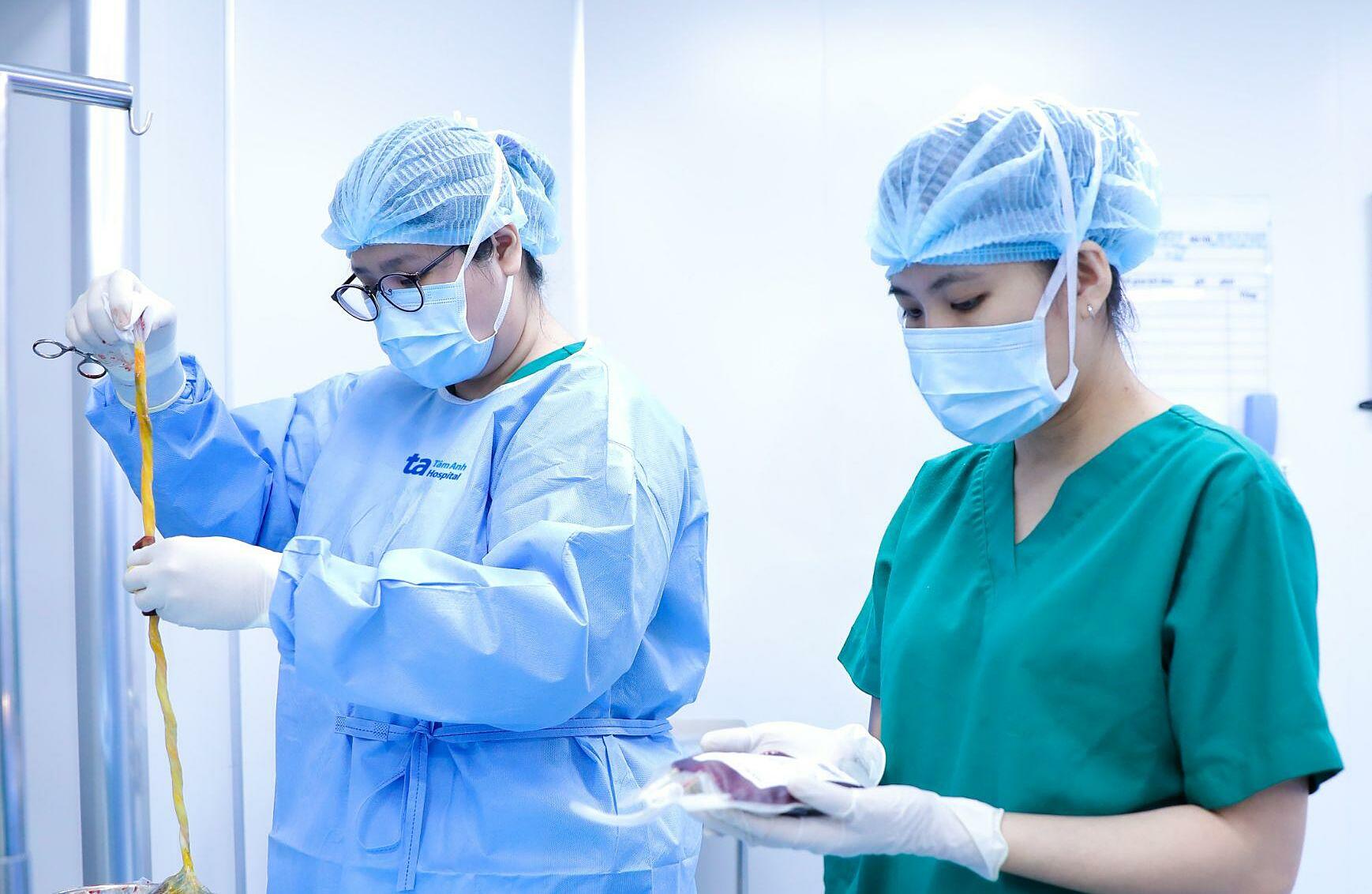 |
Staff at the Tissue Bank, Tam Anh General Hospital, TP HCM, collected cord blood and tissue for Anh Thanh's son. *Photo: Tue Diem*
In medicine, stem cells are categorized into two main groups based on their origin and clinical application: hematopoietic stem cells and mesenchymal stem cells. Hematopoietic cells can be sourced from cord blood, bone marrow, or peripheral blood. Mesenchymal stem cells are obtained from adipose tissue, cord tissue, bone marrow, and the placenta.
These cells possess anti-inflammatory, immune-modulating, and tissue-regenerating capabilities, properties vital for regenerative medicine applications. Mesenchymal stem cells from cord tissue can also be used to treat diseases in family members, including siblings, parents, and grandparents, and even unrelated individuals.
Tissue cells are used in treating various conditions, including those related to bones and joints, neurological disorders, skin and soft tissue diseases, and immune and autoimmune conditions. Blood cells are currently the most widely applied in medicine, particularly for blood cancers like acute and chronic leukemia, lymphoma, multiple myeloma, and congenital blood disorders such as thalassemia, aplastic anemia, bone marrow failure, and congenital immune disorders.
Stem cells derived from cord blood and tissue offer advantages: they are nascent, accumulate fewer mutations from environmental factors, remain undifferentiated, and possess a high capacity for rapid proliferation. "In stem cell transplantation, this is a very valuable cell source," stated Doctor Thu Nga.
Tue Diem
*Character's name has been changed